Advanced Prompt Engineering and Evaluation
Evaluation Frameworks and Metrics
Beyond “Looks Good”
When you're starting out, improving a prompt is mostly guesswork. You tweak a word here, add a sentence there, and see if the output feels better. But to move from casual prompting to professional prompt engineering, you need a more rigorous system. You need to replace intuition with data.
An evaluation framework is just a structured way to measure the quality of a model's output. It allows you to objectively score responses, so you know for sure if your changes are making things better or worse. This process relies on two types of feedback: quantitative and qualitative.
Quantitative metrics are the numbers. Think scores, ratings, or binary checks (yes/no). They're great for tracking performance at a glance. For example: “On a scale of 1-5, how accurate is this summary?”
Qualitative metrics are descriptive. They capture the nuance that numbers can miss. Think of written feedback or notes. For example: “The summary was factually correct but missed the sarcastic tone of the original article.”
A good framework uses both. The numbers tell you what happened, and the descriptive feedback tells you why.
Creating a Scorecard
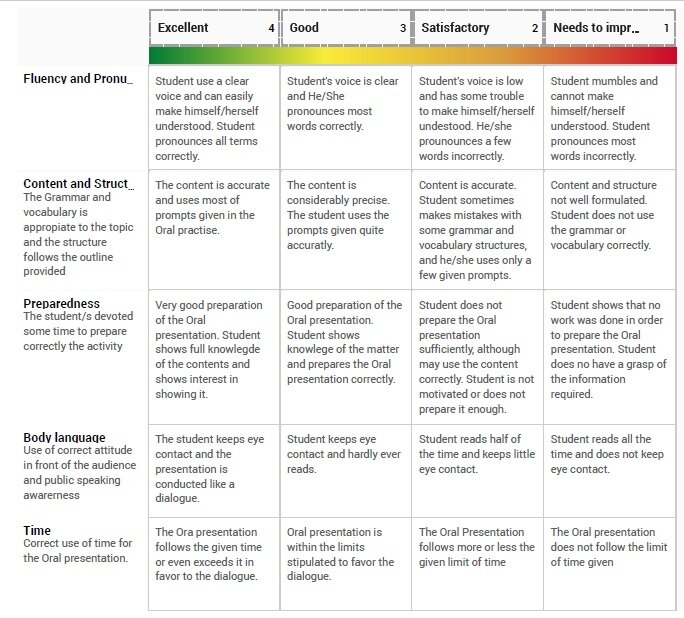
The core of any evaluation framework is a rubric. A rubric is simply a scorecard that breaks down “a good response” into specific, measurable criteria. Instead of just asking, “Is this good?”, you ask a series of more precise questions: “Is it accurate? Is it concise? Does it follow the requested format?”
For each criterion, you define what different levels of quality look like. This removes ambiguity and ensures that everyone involved in the evaluation is using the same standards. The key is to make your rubric specific to your goal. A rubric for generating marketing copy will prioritise tone and style, while a rubric for extracting information from legal documents will focus almost exclusively on factual accuracy and avoiding a key challenge in AI.
A good rubric turns a subjective feeling (“I like this one better”) into an objective measurement (“Version B scored 4/5 on conciseness, while Version A scored 2/5”).
Here's a simple example of a rubric for a task that summarises news articles.
| Criterion | 1 (Poor) | 3 (Average) | 5 (Excellent) |
|---|---|---|---|
| Accuracy | Contains significant factual errors or misinterpretations. | Mostly accurate but misses some key details or nuance. | Accurately reflects all key facts and nuances of the source. |
| Conciseness | Much longer than necessary; contains fluff and repetition. | Gets to the point but could be more direct. | Clear, direct, and free of unnecessary words. |
| Tone | The tone is completely inappropriate for a news summary. | The tone is acceptable but generic. | The tone is neutral, professional, and objective, as requested. |
| Formatting | Ignores all formatting instructions (e.g., bullet points). | Follows some but not all formatting instructions. | Perfectly adheres to all formatting instructions. |
The Golden Standard
A rubric gives you a consistent way to score outputs, but you also need a consistent set of test cases. This is where a golden dataset comes in. It’s a curated collection of high-quality, representative examples that serve as your benchmark.
Think of it as the answer key for your exam. Each item in the dataset includes an input prompt and an ideal, hand-crafted response. This ideal response is your — the perfect answer you'll measure the AI’s attempts against.
When you want to test a new prompt, you run it against all the inputs in your golden dataset. Then, you use your rubric to score how closely the AI's new outputs match the ground-truth answers. This process ensures that when you make a change to improve performance on one type of input, you don't accidentally make it worse on others.
Automating the Judge
Manually scoring hundreds of outputs is slow and expensive. A powerful technique for speeding this up is the pattern. The idea is to use another, often more powerful, LLM to do the scoring for you.
You provide the judge LLM with the original prompt, the generated response, the ground-truth answer (if you have one), and your evaluation rubric. Then, you prompt the judge to act as an impartial evaluator and score the response based on the criteria.
This isn't a perfect replacement for human evaluation, as LLMs can have their own biases. For instance, they sometimes favour longer, more verbose answers. However, it’s an incredibly effective way to quickly compare two prompt variations at scale. You can have the judge LLM evaluate a thousand responses in the time it would take a human to do a few dozen.
By combining a clear rubric, a solid golden dataset, and an automated judge, you create a powerful system. This framework allows you to iterate on your prompts with confidence, knowing that every change is measured against a consistent and objective standard.
What is the primary purpose of an evaluation framework in prompt engineering?
A 'golden dataset' is a curated collection of input prompts and their ideal, hand-crafted responses. What is this ideal response known as?