Advanced Professional Communication Strategies
Logical Persuasion
Start with the Answer First
In professional communication, clarity is king. Your audience, whether it's one executive or a full boardroom, is time-poor and results-focused. They don't want to follow a meandering path of discovery; they want the conclusion, and they want it now. This is the core of the a top-down communication structure that starts with the answer.
Instead of building your case from the ground up and revealing your conclusion at the end, you state your main assertion immediately. Then, you support that assertion with a set of key arguments, arranged in a logical, mutually exclusive, and collectively exhaustive (MECE) way. Each of these arguments is, in turn, supported by data and evidence. The structure resembles a pyramid, with the single main point at the apex.
This approach respects your audience's intelligence. It gives them the main takeaway upfront, allowing them to understand the context for all the supporting details that follow. If they're short on time, they have what they need. If they want to challenge your logic, they know exactly which supporting pillar to inspect.
Frame Your Story with SCQA
Before you can build your pyramid, you need to establish the narrative. The SCQA framework is a simple, powerful tool for storytelling in a business context. It hooks your audience by creating a clear, logical progression that leads directly to your main point (the top of your pyramid).
It consists of four parts:
- Situation: A non-controversial statement of fact about the current state. This establishes common ground. Everyone in the room should agree with this.
- Complication: The event or change that creates a problem or opportunity within the situation. This is the 'so what?' that disrupts the status quo.
- Question: The implicit or explicit question that arises from the tension between the Situation and the Complication.
- Answer: Your proposed solution or main assertion. This is the top of your Minto Pyramid.
Situation: Our quarterly sales have consistently grown 5% for the past two years. Complication: This quarter, sales are flat. Question: How can we reignite our sales growth? Answer: We must enter the untapped mid-size business market.
Using SCQA to introduce your argument creates a compelling narrative. You're not just presenting data; you're telling a story with a clear beginning (Situation), a turning point (Complication), a central conflict (Question), and a resolution (Answer). This structure makes your message more memorable and persuasive.
Audit Your Logic
A strong structure is useless if the arguments within it are flawed. Once you've outlined your pyramid, you must audit it for logical gaps and fallacies. The two primary paths of reasoning in persuasion are deductive and inductive.
Deductive reasoning moves from a general premise to a specific conclusion. If the premises are true, the conclusion must be true. For example: "All our top-performing projects had a dedicated project manager. This new project is a top priority. Therefore, it must have a dedicated project manager."
Inductive reasoning moves from specific observations to a broader generalization. The conclusion is probable, but not guaranteed. For example: "The last five marketing campaigns we ran on social media had a high ROI. Therefore, our next campaign on social media will likely have a high ROI."
In business, you'll use both. Deductive logic provides airtight certainty when your premises are accepted. Inductive logic is essential for forecasting and strategy, where you must make decisions based on patterns and incomplete information. The key is to know which you're using and how strong your conclusion really is.
Your final step is to hunt for logical fallacies These are errors in reasoning that weaken your argument. Common fallacies in a professional setting include the Straw Man, where you misrepresent an opposing view to make it easier to attack, or the False Dichotomy, where you present only two options when others exist.
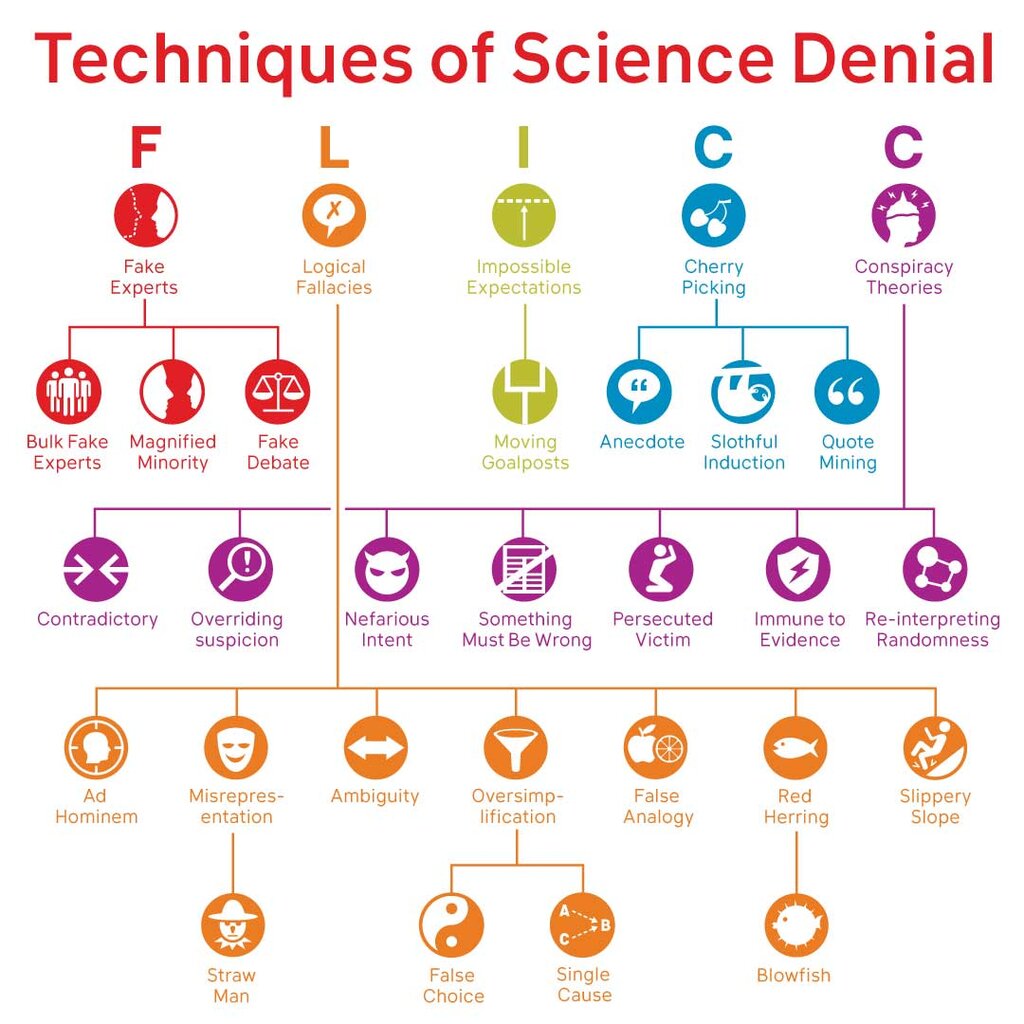
A rigorous logical audit involves asking questions like: Does each piece of evidence directly support its argument? Do the key arguments, taken together, fully support the main assertion? Are there any hidden assumptions? Eliminating these gaps ensures your pyramid is built on solid ground, making your communication not just clear, but convincing.
What is the core principle of the Minto Pyramid Principle for communication?
In the SCQA framework, what is the role of the 'Complication'?