Advanced Principles of Human Nutrition and Metabolic Health
Macronutrient Metabolism Dynamics
The Fed State: Processing Incoming Fuel
After a meal, your body enters the absorptive, or fed, state. Bloodstream levels of glucose, amino acids, and fats rise, and the pancreas responds by releasing insulin. This hormone is the master signal for your cells to take up and store energy. For glucose, this process relies on specialized doorways called glucose transporters.
In muscle and fat cells, the primary transporter is , which normally resides inside the cell. Insulin acts like a key, signaling GLUT4 to move to the cell's surface and open a channel for glucose to enter. This is a crucial aspect of insulin sensitivity; the more responsive your cells are to insulin, the more efficiently they clear glucose from the blood.
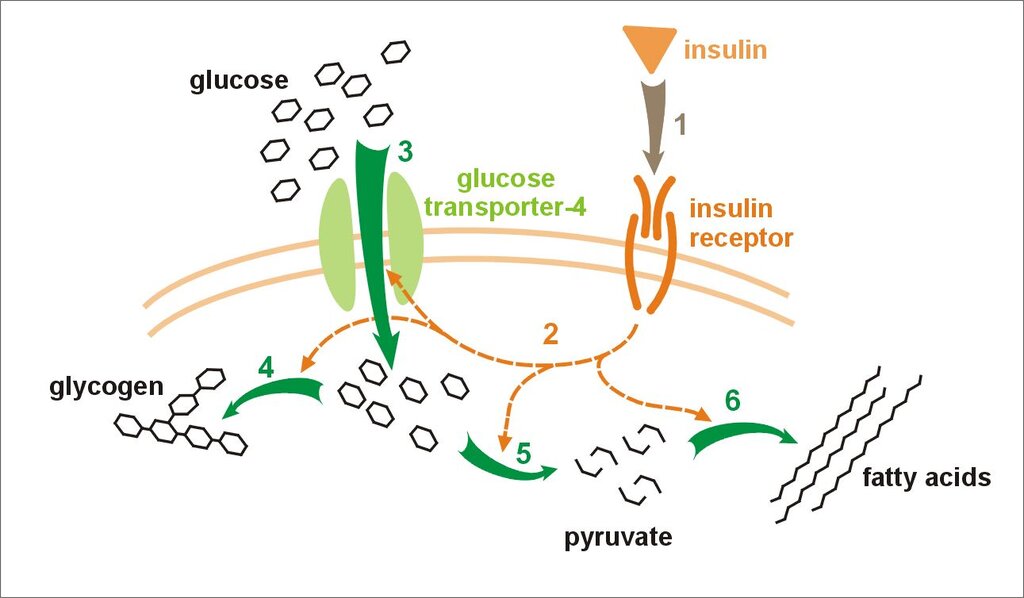
Once inside the cell, glucose is typically earmarked for glycolysis, the ten-step process of breaking it down for energy. This pathway has a critical rate-limiting step controlled by the enzyme phosphofructokinase (PFK). PFK acts as a metabolic throttle; when cellular energy levels are high (plenty of ATP), PFK slows down, preserving glucose for storage as glycogen. When energy is low, PFK speeds up to generate more ATP.
Dietary fats, meanwhile, are packaged into particles called chylomicrons in the small intestine. These lipid taxis travel through the lymphatic system before entering the bloodstream, delivering fatty acids to tissues for immediate use or storage in adipose cells.
Amino acids from protein digestion join the body's free amino acid pool—a circulating reserve used for building new proteins, enzymes, and hormones. This constant cycle of protein synthesis and breakdown is known as protein turnover.
The Fasted State: Tapping the Reserves
Several hours after a meal, as nutrient levels in the blood fall, your body transitions to the post-absorptive, or fasted, state. Insulin levels drop, and another pancreatic hormone, glucagon, takes charge. Glucagon signals the liver to break down stored glycogen (glycogenolysis) and release glucose into the bloodstream to maintain energy for the brain and other tissues.
As the fast continues, the body's primary fuel source shifts from carbohydrates to fat. Adipose tissue breaks down triglycerides into free fatty acids, which are released into the blood. These fatty acids travel to tissues like muscles and the liver, where they are broken down for energy through a process called beta-oxidation.
This process isn't instantaneous. Fatty acids must first be transported into the mitochondria, the cell's powerhouses. This transport, facilitated by the carnitine shuttle, is the rate-limiting step for fatty acid oxidation. It ensures that fat burning is tightly controlled and matched to the cell's energy needs.
If a fast is prolonged, the body can also use amino acids from the breakdown of muscle protein to create new glucose in the liver, a process called gluconeogenesis. This is a survival mechanism to ensure the brain has a steady supply of its preferred fuel.
Metabolic Flexibility
Metabolic flexibility is the capacity to efficiently switch between burning carbohydrates and fats for fuel in response to nutrient availability.
Think of a metabolically flexible person like a hybrid car. When accelerating (like after a high-carb meal or during intense exercise), it burns gasoline (glucose). When cruising (like during fasting or low-intensity activity), it switches to its electric motor (fat oxidation). This ability to adapt is a hallmark of metabolic health.
Metabolic inflexibility, on the other hand, is a state where cells struggle to make this switch. This is often seen in insulin resistance, where muscle cells can't properly take up glucose and also have impaired ability to burn fat. The result is a kind of metabolic gridlock, contributing to elevated blood sugar and fat accumulation.
The Cost of Doing Business
It takes energy to make energy. The process of digesting, absorbing, and processing nutrients burns calories. This is known as the (TEF), and it differs significantly between macronutrients.
| Macronutrient | Approximate TEF (% of calories consumed) |
|---|---|
| Protein | 20-30% |
| Carbohydrates | 5-10% |
| Fat | 0-3% |
Protein has the highest thermic effect by a wide margin. This isn't just because it's complex to break down. A significant portion of this energy cost comes from the demands of protein turnover. The constant synthesis of new proteins is an energy-intensive process that contributes directly to your metabolic rate, even at rest. This is why higher-protein diets can have a slight metabolic advantage beyond just their calorie count.
What is the primary role of insulin during the absorptive (fed) state?
In muscle and fat cells, insulin signals the glucose transporter __________ to move to the cell's surface, allowing glucose to enter.
Understanding how your body partitions fuel in fed and fasted states is key to grasping the foundations of metabolic health. These dynamic shifts allow you to store energy when it's abundant and efficiently use it when it's scarce.