Advanced Plant Nutrition and Metabolic Pathways
Mineral Uptake Mechanisms
The Root Cell Battery
Plant roots don't just passively soak up nutrients. They actively manage what comes in and what stays out. The key to this control lies in an electrical and chemical difference between the inside of a root cell and the surrounding soil. This is known as the electrochemical gradient—a form of stored energy, much like a tiny biological battery.
Inside a root cell, the concentration of positive ions (cations) like potassium () is often much higher than in the soil, while the overall electrical charge is negative compared to the outside. This dual gradient—one based on concentration and one based on electrical charge—drives the entire process of mineral uptake.
Charging the Battery
How does the plant create this electrochemical gradient? It uses a specialized protein called a proton pump, or pump. Embedded in the cell membrane of root hairs, this pump uses energy from ATP (the cell's main energy currency) to actively push protons () out of the root cell and into the soil.
This action has two immediate effects:
- The inside of the cell becomes more negatively charged than the outside.
- The concentration of protons becomes much higher in the soil right next to the root, making it slightly more acidic.
This creates what's known as a proton motive force. The protons that were just pumped out now have a strong 'desire' to flow back into the cell, down their electrochemical gradient. The plant cleverly harnesses the energy of this return trip to power other transport processes.
Gateways for Nutrients
With the proton motive force established, the cell can now selectively import the minerals it needs. It does this using specialized transport proteins that act as specific gateways through the cell membrane.
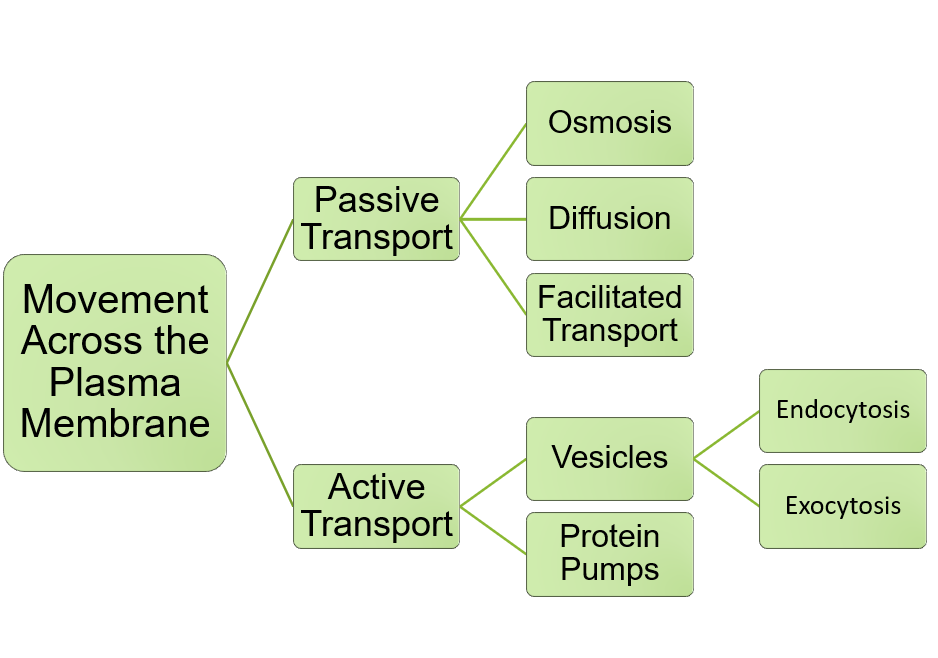
Passive Transport: This is the simpler method. It relies on ion channels, which are pores that open to allow specific ions, like potassium (), to flow down their electrochemical gradient into the negatively charged cell. No extra cellular energy is required.
Active Transport: This is how plants absorb nutrients against a concentration gradient, which is often the case for essential minerals like nitrate () or phosphate (). This process requires energy, but instead of using ATP directly, it cleverly uses the energy stored in the proton gradient. This is called secondary active transport, and it relies on carrier proteins.
There are two main types of carrier proteins involved:
-
Symporters: These proteins move a proton back into the cell along with another molecule or ion. For example, a nitrate symporter allows a proton () to flow back into the cell, but it brings a nitrate ion () along for the ride, even if the nitrate concentration inside the cell is already high.
-
Antiporters: These proteins also use the flow of protons back into the cell, but they exchange one ion for another. As a proton enters, the antiporter simultaneously pushes an unwanted ion, such as sodium (), out of the cell. This is a crucial way for plants to deal with toxic salt concentrations in the soil.
Ready to check your understanding of how plants control nutrient flow?
What is the primary role of the H+-ATPase pump in the membrane of a plant root cell?
The movement of protons out of the root cell creates a form of stored energy known as the...
By using this combination of pumps, channels, and carriers, a plant root becomes a highly selective and efficient filter, pulling in exactly what it needs from the soil to grow.