Advanced Phycology and Algal Biotechnology
Algal Diversity and Phylogeny
A Tangled Evolutionary Tale
The term "algae" is a bit of a catch-all. It doesn't represent a single, neat branch on the tree of life like land plants or animals do. Instead, algae are polyphyletic, meaning they evolved from multiple, independent ancestral lines. They are a collection of diverse organisms grouped together mostly out of convenience because they perform photosynthesis and live in water. Think of it less like a family tree and more like a club whose members all happen to share a similar hobby, even though they aren't related.
This evolutionary jumble is a direct result of a remarkable process called endosymbiosis, which happened not just once, but multiple times throughout history. This process is the key to understanding why algae are so incredibly diverse.
Borrowed Powerhouses
The chloroplast, the tiny green engine of photosynthesis, wasn't always a part of eukaryotic cells. Its story begins over a billion years ago with an event called primary endosymbiosis.
Primary Endosymbiosis: A heterotrophic eukaryotic cell (one that eats other things) engulfed a photosynthetic cyanobacterium. Instead of being digested, the cyanobacterium took up permanent residence inside the host cell. Over millions of years, it evolved into the chloroplast.
This single event gave rise to the first photosynthetic eukaryotes, creating the ancestors of three major algal groups: the red algae (Rhodophyta), the green algae (Chlorophyta), and a small group called glaucophytes. All land plants are descendants of the green algae line. The chloroplasts in these groups are relatively simple, typically surrounded by two membranes—the original inner and outer membranes of the engulfed cyanobacterium.
But evolution didn't stop there. Several other non-photosynthetic eukaryotes got in on the action by engulfing a red or green alga. This is called secondary endosymbiosis.
This process created much more complex chloroplasts, often surrounded by three or four membranes. These extra membranes are remnants of the engulfed alga's cell membrane and the host's food vacuole. This evolutionary nesting doll is responsible for the massive diversity seen in groups like the brown algae (Phaeophyceae), diatoms (Bacillariophyceae), and dinoflagellates.
Organizing the Chaos
Given this messy evolutionary history, how do we classify algae? Early systems, like that of F.E. Fritsch in the 1930s, relied heavily on observable traits like morphology, pigments, and life cycles. Later, phycologists like Harold Bold and Michael Wynne refined these systems, but the framework remained largely based on what could be seen under a microscope.
The game changed with electron microscopy and molecular genetics. These tools allowed scientists to see the fine details of cell structures (ultrastructure) and to read the genetic code itself. This led to modern classification systems, such as the one proposed by Robert Edward Lee, which organizes algae into evolutionarily coherent groups based on their endosymbiotic origins.
| Evolutionary Group (Lee's System) | Chloroplast Origin | Key Algal Divisions Included |
|---|---|---|
| Algae with cyanobacterial chloroplasts | Primary Endosymbiosis | Glaucophyta, Rhodophyta (Red Algae) |
| Algae with green algal chloroplasts | Primary/Secondary Endosymbiosis | Chlorophyta (Green Algae), Euglenophyta |
| Algae with red algal chloroplasts | Secondary Endosymbiosis | Cryptophyta, Haptophyta, Stramenopila (incl. Phaeophyceae & Bacillariophyceae) |
| Algae with dinoflagellate chloroplasts | Tertiary Endosymbiosis | Dinophyta (some) |
Clues in the Colors
One of the most useful tools for algal classification, even before genetics, was pigmentation. While all algae use chlorophyll for photosynthesis, they possess a variety of accessory pigments that capture different wavelengths of light. These pigments not only give algae their characteristic colors but also serve as powerful chemotaxonomic markers—chemical fingerprints that help reveal their evolutionary lineage.
| Pigment Type | Chlorophyta (Green Algae) | Rhodophyta (Red Algae) | Phaeophyceae (Brown Algae) |
|---|---|---|---|
| Chlorophylls | , | , | |
| Phycobilins | Absent | Phycoerythrin, Phycocyanin | Absent |
| Carotenoids | Carotenes, Lutein | Carotenes, Lutein | Carotenes, Fucoxanthin |
For example, the presence of phycobilins gives red algae their distinct color and allows them to absorb the blue-green light that penetrates deep into ocean water. The golden-brown hue of brown algae and diatoms comes from fucoxanthin, a carotenoid they acquired through secondary endosymbiosis with a red alga.
Distinctive Designs
Beyond pigments, algal diversity is expressed in their physical structures. Flagella—the whip-like tails used for movement—have different arrangements and ultrastructures across groups. Some have smooth flagella, while others have ones covered in fine, hair-like mastigonemes. These subtle differences point to separate evolutionary paths.
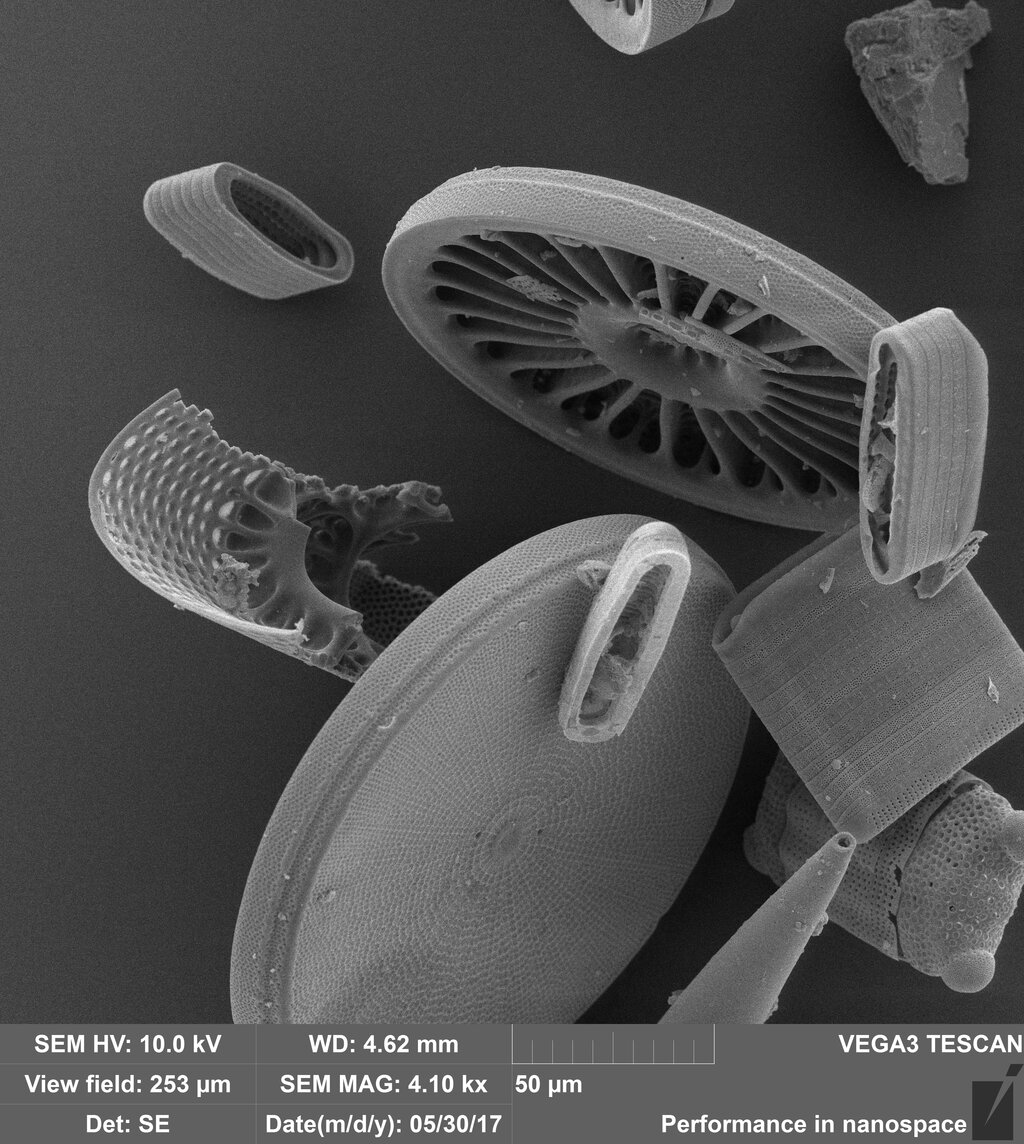
Perhaps the most stunning example of structural diversity is found in the Bacillariophyceae, or diatoms. These single-celled algae build intricate cell walls called frustules out of silica (glass). Each species constructs a frustule with a unique and often breathtakingly complex pattern of pores and ribs. These glass houses are not only beautiful but are also a key taxonomic feature.
Understanding this deep evolutionary context is crucial. It explains why a kelp forest (brown algae) is more closely related to a microscopic diatom than to the green seaweed (green algae) growing next to it. It's a reminder that in biology, outward appearances can be deceiving, and the true story is often hidden within the cell.
The term "algae" is described as polyphyletic. What does this mean?
An organism is discovered to have a chloroplast surrounded by four distinct membranes. This complex structure is most likely the result of what evolutionary process?