Advanced Pain Management and Analgesics
Analgesic Mechanism Dynamics
The Molecular Battleground of Pain
Pain relief isn't about flipping a single switch. It's about intervening in a complex cascade of molecular signals. Different analgesics target different checkpoints in this pathway, from the site of tissue injury to the processing centers in the brain.
We can broadly divide these interventions into two camps. First, there are the non-opioids like NSAIDs, which fight inflammation at its source. Second, there are the opioids, which modulate the perception of pain within the central nervous system itself.
Halting the Prostaglandin Factory
When you sprain an ankle or get a cut, damaged cells release a fatty acid called arachidonic acid. This is the raw material for a family of inflammatory messengers called prostaglandins which cause the classic signs of inflammation: pain, swelling, redness, and heat. The enzymes responsible for this conversion are called cyclooxygenases, or COX enzymes.
There are two main forms. COX-1 is a "housekeeping" enzyme, constantly active and responsible for protecting the stomach lining and maintaining kidney function. COX-2, on the other hand, is an "inducible" enzyme. It’s produced in high amounts specifically at sites of tissue injury and inflammation.
Most Non-Steroidal Anti-Inflammatory Drugs (NSAIDs), like ibuprofen, work by blocking the active site of both COX enzymes. By doing so, they prevent arachidonic acid from being converted into prostaglandins, thereby reducing pain and inflammation.
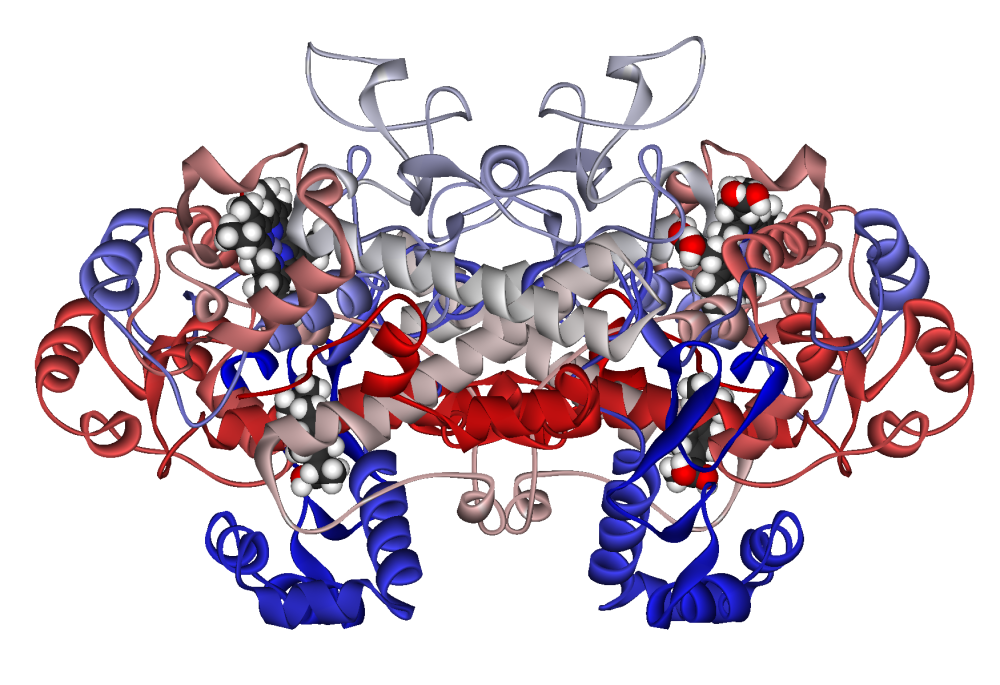
This binding is typically competitive and reversible. The NSAID molecule occupies the enzyme's active site, but eventually detaches, allowing the enzyme to function again. The duration of pain relief depends on how long the drug remains at a high enough concentration to keep the enzymes occupied.
Aspirin, however, is unique. Instead of just temporarily blocking the active site, it forms a permanent, covalent bond through a process called irreversible acetylation. It transfers an acetyl group to a serine residue within the enzyme's active channel, permanently disabling it. The body must synthesize entirely new COX enzymes to restore prostaglandin production, which is why a single low dose of aspirin has a prolonged effect on platelet function.
Most NSAIDs reversibly block COX enzymes. Aspirin irreversibly acetylates them, permanently shutting them down.
Modulating Signals in the Brain
Opioids take a different approach. They don't target the source of the pain signal but rather how that signal is processed and perceived in the central nervous system. They achieve this by binding to a specific family of receptors known as G-protein coupled receptors (GPCRs), primarily the mu (), delta (), and kappa () opioid receptors.
These receptors are embedded in the membranes of neurons. When an opioid molecule binds to one, it triggers a conformational change in the receptor, activating the associated G-protein inside the cell.
This G-protein activation leads to two key downstream effects that reduce neuronal excitability.
First, it inhibits the enzyme adenylyl cyclase, which decreases the intracellular concentration of cyclic AMP (cAMP). Since cAMP is a crucial second messenger that activates many signaling pathways, its reduction dampens overall cellular activity.
Second, the G-protein directly influences ion channels. It opens potassium channels, allowing positively charged potassium ions to flow out of the neuron. Simultaneously, it inhibits voltage-gated calcium channels, preventing positively charged calcium ions from flowing in. The net effect is an efflux of positive charge, making the inside of the neuron more negative relative to the outside. This state, known as hyperpolarization, makes it much harder for the neuron to fire an action potential and release pain-signaling neurotransmitters.
The Role of Secondary Analgesics
Beyond NSAIDs and opioids, a class of drugs known as secondary or adjuvant analgesics are crucial for managing complex pain states, especially neuropathic pain. These drugs weren't originally designed for pain but are effective because they target specific mechanisms of central sensitization.
Gabapentinoids like gabapentin and pregabalin are a prime example. They were first developed as anti-epileptics. Their analgesic effect comes from their ability to bind to the α2δ-1 subunit of voltage-gated calcium channels in the central nervous system. This binding reduces the influx of calcium into presynaptic nerve terminals, which in turn decreases the release of excitatory neurotransmitters like glutamate and substance P.
Another important target in central sensitization is the N-methyl-D-aspartate (NMDA) receptor. During chronic pain, these receptors become overactive, leading to a wind-up phenomenon where neurons become progressively more responsive to stimuli. NMDA antagonists like ketamine can block these receptors, preventing excessive neuronal firing and helping to reset the hypersensitive state. By targeting these distinct pathways, secondary analgesics provide a powerful tool for managing pain that doesn't respond well to traditional approaches.
Let's test your understanding of these molecular pathways.
What is the primary molecular target of Non-Steroidal Anti-Inflammatory Drugs (NSAIDs) like ibuprofen?
Aspirin is unique among NSAIDs because it forms a permanent, covalent bond with its target enzyme. What is this process called?
By understanding these distinct molecular mechanisms, clinicians can make more informed decisions, combining analgesics to target multiple pathways for more effective pain management.