Advanced Orchid Cultivation Mastery
Dynamic Growth Cycles
The Orchid Clock
Unlike a typical houseplant that grows steadily, most orchids operate on a precise internal schedule. Think of it as an 'Orchid Clock' with distinct seasons for growing leaves, developing roots, and flowering. Synchronizing your care with this natural rhythm is the key to unlocking consistent, spectacular blooms. Instead of a one-size-fits-all routine, you'll learn to respond to your plant's specific needs at each stage.
We can broadly categorize these stages into three phases. The vegetative or 'green' phase is when the plant focuses its energy on producing new leaves and pseudobulbs. This is its growth engine. Following this, the 'yellow' phase marks the shift to reproduction, culminating in the emergence of a flower spike, or inflorescence an d the eventual bloom. Finally, the 'pink' phase is dedicated to root development, where the plant expands its anchor and nutrient-gathering system. These phases don't always happen in a neat, linear order, and can overlap, but recognizing them is the first step.
Reading the Signs
Your orchid will give you clear visual cues about its current growth phase. During the vegetative 'green' phase, look for shiny new leaves unfurling or new pseudobulbs beginning to swell. This is the time to support that growth with a high-nitrogen fertilizer, which fuels foliage development. Once the newest pseudobulb matures, the plant often enters a brief rest before its next task.
The transition to the 'yellow' or flowering phase is the moment many growers wait for. A new growth will emerge that looks different from a leaf; it's often thinner, pointer, and may grow from the base or side of a pseudobulb. This is the flower spike. Once you spot it, it's time to switch to a high-phosphorus 'bloom booster' fertilizer. This nutrient encourages the development of buds and vibrant flowers. Continue this feeding until the flowers open, then cease fertilizing to prolong the life of the blooms.
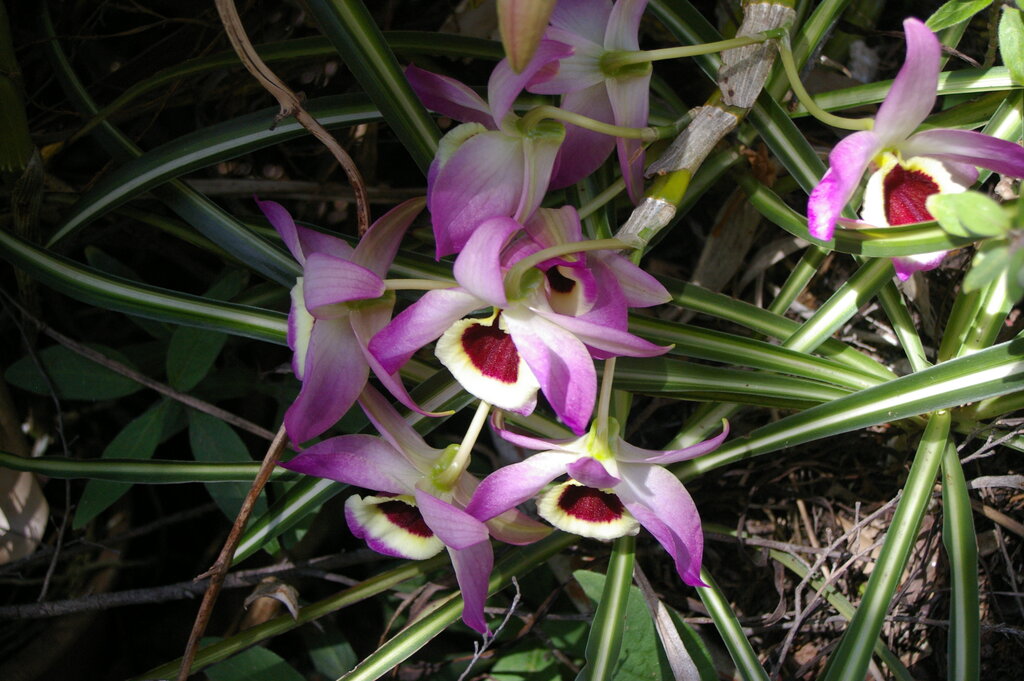
Finally, the 'pink' or rooting phase is often most active after a blooming cycle. You'll see new roots, identifiable by their bright green or reddish tips, emerging from the base of the plant. These new roots are fragile. It's a great time to repot if necessary, as the plant is actively seeking to establish itself. Healthy roots are essential for absorbing water and nutrients to power the next vegetative phase.
Dormancy and Bloom Triggers
While some orchids like Phalaenopsis grow year-round, many popular genera require a strict period of dormancy to trigger blooms. Deciduous orchids, such as Catasetum and many Dendrobium nobile types, take this to an extreme. After their growing season, they drop their leaves and need an almost complete cessation of water and fertilizer for the winter. Giving them water during this time can cause rot or encourage the plant to produce s instead of flowers.
For these deciduous types, the rule is simple: no leaves, no water. Resume watering only when you see new growth starting at the base of the plant in the spring.
Other orchids don't need a dry rest, but they do need a different kind of trigger: a temperature drop. Many Cattleya orchids, for example, will refuse to bloom without a distinct temperature difference between day and night. To initiate a flower spike on a mature plant, you need to provide a 10-20°F (about 5-11°C) temperature drop at night for several weeks in the fall. This mimics the natural environmental cues that tell the plant it's time to reproduce.
What is the primary focus of an orchid during its vegetative or 'green' phase?
You've identified a new flower spike starting to grow on your orchid. What type of fertilizer should you switch to?
By learning to read the signs and respect the Orchid Clock, you can move from just keeping your orchids alive to helping them truly thrive.