Advanced Nutritional Science and Nutritionology
Advanced Metabolic Pathways
The Cell's Economic Policy
Your body doesn't just burn calories; it makes complex economic decisions every second. After a meal, it's in a state of abundance, like a booming economy. In this 'fed' state, the primary goal is to use the incoming glucose and store the excess. The key pathway here is glycolysis, which breaks down glucose for immediate energy. But this process isn't a free-for-all. It's tightly controlled by specific enzymes that act like financial regulators, deciding whether to 'spend' or 'save' the energy.
One of the most critical regulators is phosphofructokinase-1 (PFK-1). Think of it as a gatekeeper. When ATP levels are high, the cell has plenty of energy cash on hand. This high ATP level signals PFK-1 to slow down, inhibiting glycolysis. Why make more energy when you're already rich? Conversely, when ATP is used up and its byproduct, AMP, accumulates, it signals a cash-flow problem. AMP activates PFK-1, telling it to speed up glucose breakdown and generate more ATP. This is a classic feedback loop.
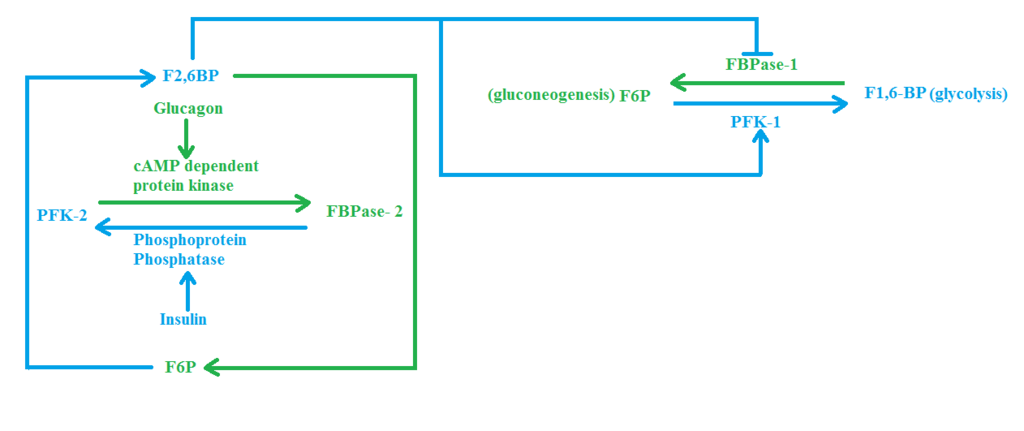
But what happens when the glucose runs out, and you enter the 'fasted' state? The body must reverse course. The liver begins gluconeogenesis, the process of creating new glucose from non-carbohydrate sources like amino acids and lactate. This is like a government initiating austerity measures to generate revenue. Here, the regulatory logic is flipped. The enzyme fructose-1,6-bisphosphatase, which opposes PFK-1, becomes active. High levels of ATP and citrate (a sign that other fuel sources are being used) stimulate this enzyme, promoting glucose synthesis to ensure the brain has a steady supply.
Switching to Fat and Ketones
As fasting continues, the body shifts its primary fuel source from glucose to fat. Stored triglycerides are broken down into fatty acids, which are then transported to the mitochondria to undergo . This process is a highly efficient assembly line that systematically cleaves the long fatty acid chains into two-carbon units of acetyl-CoA. Each round of this cycle produces energy carriers, NADH and FADH₂, which head straight to the electron transport chain.
Beta-oxidation is the reason fats are so energy-dense. A single 16-carbon fatty acid can yield over 100 ATP molecules, far more than the ~32 ATP from one glucose molecule.
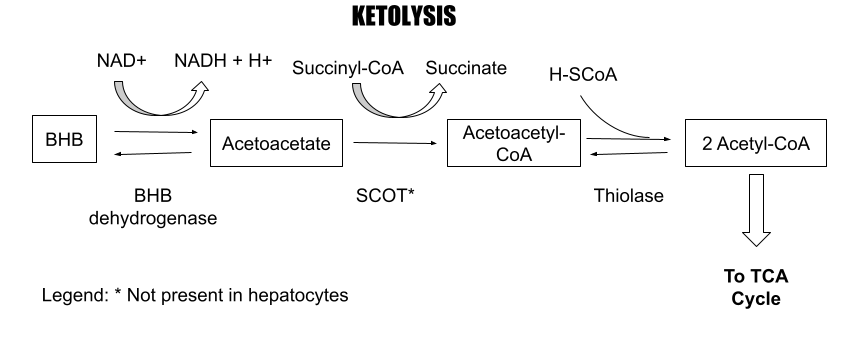
However, there's a catch. When beta-oxidation runs at full throttle, it can produce more acetyl-CoA than the Krebs cycle can handle. This excess acetyl-CoA is diverted by the liver into an alternative pathway: ketogenesis, the synthesis of ketone bodies. These molecules, primarily acetoacetate and beta-hydroxybutyrate, are water-soluble and can travel through the blood to serve as an alternative fuel for the brain and muscles, which cannot directly use fatty acids for energy.
The Central Powerhouse
Whether the starting fuel is glucose, fatty acids, or ketone bodies, the final destination for their breakdown products (acetyl-CoA) is the Krebs cycle, also known as the tricarboxylic acid (TCA) cycle. This cycle is the central hub of cellular metabolism, a series of reactions that completes the oxidation of fuels to carbon dioxide.
Each turn of the cycle generates a small amount of ATP directly, but its main output is a wealth of high-energy electrons, carried by the molecules NADH and FADH₂. These carriers then shuttle their electrons to the final stage of respiration: oxidative phosphorylation. Here, a series of protein complexes embedded in the mitochondrial membrane, known as the electron transport chain, uses the energy from these electrons to pump protons, creating a powerful electrochemical gradient. The flow of protons back across the membrane drives an enzyme called ATP synthase, which acts like a molecular turbine to produce the vast majority of the cell's ATP.
| Pathway Stage | Input | Key Output | ATP Yield (Approx.) |
|---|---|---|---|
| Glycolysis | 1 Glucose | 2 Pyruvate, 2 NADH | 2 ATP |
| Pyruvate Oxidation | 2 Pyruvate | 2 Acetyl-CoA, 2 NADH | 0 ATP |
| Krebs Cycle | 2 Acetyl-CoA | 6 NADH, 2 FADH₂, 2 ATP | 2 ATP |
| Oxidative Phosphorylation | 10 NADH, 2 FADH₂ | Water | ~28 ATP |
Metabolic Flexibility
The ability of the body to seamlessly switch between burning carbohydrates and fats is known as metabolic flexibility. This adaptability is crucial for health. At the heart of this flexibility are two master energy sensors in the cell: .
AMPK (AMP-activated protein kinase) is the 'gas pedal' for energy production. When cellular energy is low (high AMP-to-ATP ratio), AMPK is activated. It stimulates glucose uptake and glycolysis, cranks up beta-oxidation, and puts a brake on energy-consuming processes like protein and fat synthesis. It essentially shouts, "We need energy now! Burn everything!"
On the other hand, mTOR (mammalian target of rapamycin) is the sensor for abundance. When nutrients and growth factors are plentiful, mTOR is activated, promoting anabolic processes like cell growth, proliferation, and protein synthesis. It effectively says, "Times are good! Let's build and grow!" AMPK activation directly inhibits mTOR, ensuring that the cell doesn't try to build new things when it's in an energy crisis.
Metabolic flexibility, the ability to switch between fuel sources depending on availability and demand, improves with training
This intricate dance between fuel partitioning, enzymatic control, and cellular sensing allows the body to maintain energy homeostasis through a wide range of conditions, from feasting to prolonged fasting. Understanding these pathways is key to appreciating how diet and lifestyle choices influence our metabolic health at the most fundamental level.
Time to test your knowledge of these intricate pathways.
What is the primary effect of high ATP levels on the enzyme phosphofructokinase-1 (PFK-1)?
During prolonged fasting, the liver can produce an alternative fuel for the brain from excess acetyl-CoA. What is this process called?