Advanced Nucleotide Chemistry and Presentation Strategy
Advanced Nucleotide Chemistry
The Secret Life of Bases
You know that DNA's genetic code is written with four letters: A, T, C, and G. You also know the fundamental pairing rule: A pairs with T, and G pairs with C. This clean, simple model is the bedrock of molecular biology. But the chemical reality is a bit more dynamic. The nitrogenous bases aren't static, rigid structures. They flicker between different forms in a process called tautomerism.
This chemical shapeshifting is critical. The most common forms of the bases, called the keto and amino tautomers, are responsible for the faithful A-T and G-C pairings discovered by Watson and Crick. But occasionally, a base will flip into a rarer form, an enol or imino tautomer. This subtle change completely alters its hydrogen bonding preferences, leading to mismatches.
For example, the rare imino form of adenine won't pair with thymine anymore. Instead, its hydrogen bonding pattern perfectly matches cytosine. If this happens right as the DNA is being replicated, the polymerase enzyme can mistakenly insert a C where a T should be. This creates a point mutation. While cells have proofreading mechanisms, these tautomeric shifts are a fundamental source of spontaneous mutation.
Tautomeric shifts are fleeting, but their consequences can be permanent. A momentary change in a base's shape can lead to a lasting change in the genetic code.
pH and Protonation
Beyond tautomerism, the local chemical environment—specifically pH—can also alter the structure of nucleobases. Purines and pyrimidines contain nitrogen atoms within their rings that can be protonated or deprotonated depending on the acidity of their surroundings.
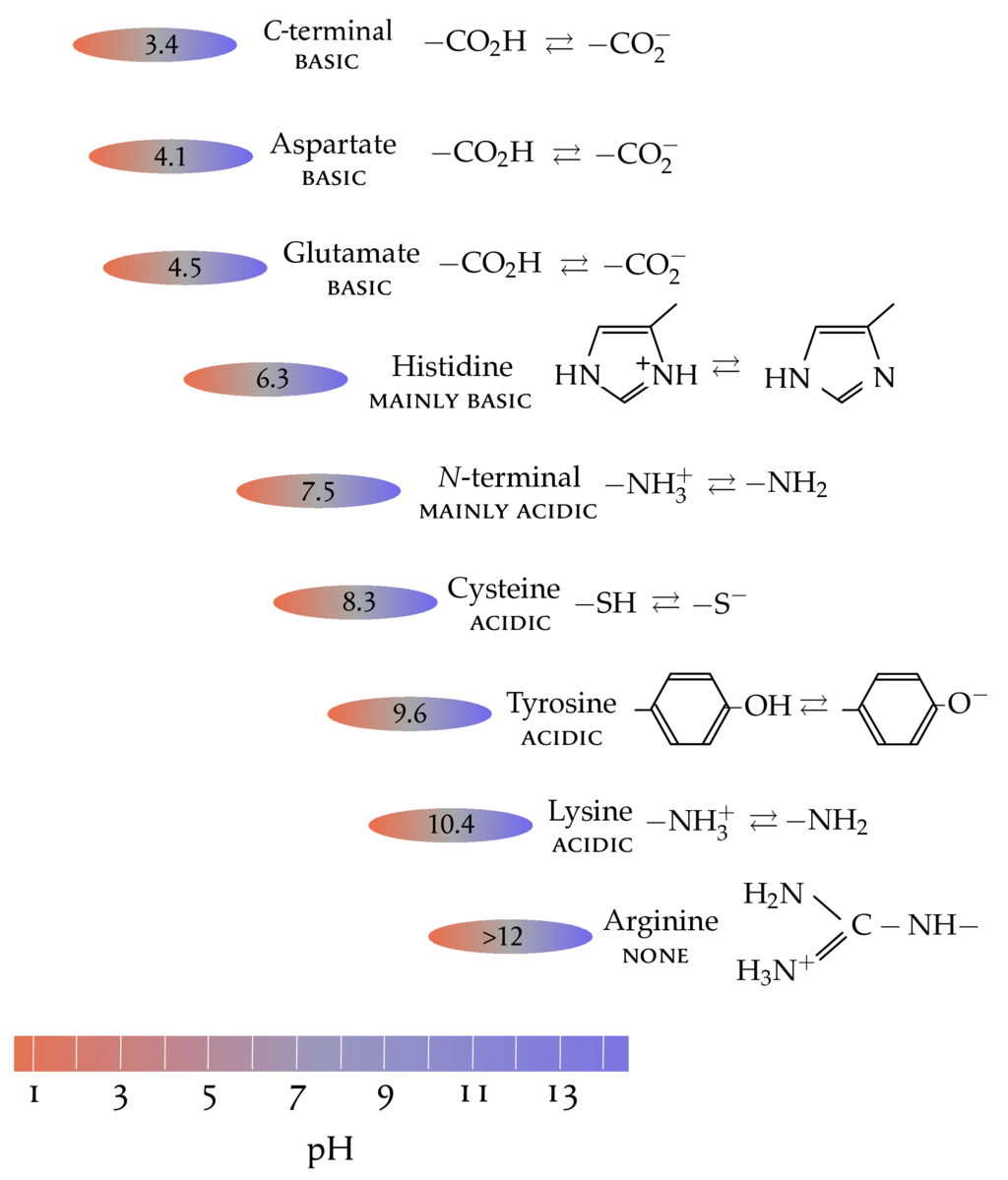
Each base has a characteristic value, which is the pH at which it is 50% protonated and 50% deprotonated. For example, adenine's N1 atom has a of about 3.5. In a neutral solution (pH ≈ 7), this nitrogen is uncharged. But in a highly acidic environment (pH < 3.5), it will readily pick up a proton, gaining a positive charge. Cytosine's N3 atom behaves similarly, with a around 4.2.
This protonation state is crucial because it directly affects hydrogen bonding. A protonated base has a different hydrogen bond donor/acceptor pattern than its neutral counterpart. This can disrupt the standard Watson-Crick pairing and destabilize the DNA double helix. It's one reason why extreme pH levels are denaturing to DNA.
Beyond Watson and Crick
The A-T and G-C pairs are the most stable and common, forming the rungs of the DNA ladder. However, other non-standard pairings, often called , can and do occur, particularly in RNA structures or when DNA is bent or damaged. In a Hoogsteen pair, one base flips 180 degrees relative to the sugar backbone, changing which "face" of the base is presented for hydrogen bonding.
These alternative geometries, along with wobble pairs (like G-U), are especially important in the complex three-dimensional folding of RNA molecules. An RNA strand needs to fold into a specific shape to function, much like a protein. This folding is stabilized by a combination of standard Watson-Crick pairs and these non-canonical interactions, creating loops, junctions, and other structural motifs.
By looking beyond the simple A-T, G-C rules, we see that the chemical nature of nucleotides provides a layer of structural flexibility and dynamic potential. Tautomeric shifts, ionization, and alternative pairings are not flaws in the system; they are features that contribute to mutation, regulation, and the complex architecture of nucleic acids.
Ready to check your understanding of these advanced concepts?
What is the direct consequence of a DNA base, like adenine, temporarily shifting to its rare imino tautomeric form during replication?
A Hoogsteen base pair is a non-standard pairing that differs from a Watson-Crick pair because...
These subtle chemical properties are what allow DNA and RNA to be both stable carriers of information and dynamic molecules capable of complex functions.