Advanced Neuroanatomy of Sensory and Motor Pathways
Introduction to Spinal Tracts
The Body's Information Highway
Your brain is the command center, but how does it talk to the rest of your body? The answer lies in the spinal cord, a long bundle of nerves extending from the base of your brain down your back. Think of it as the main data cable connecting your brain to your peripheral nervous system, the network of nerves that reaches every part of your body.
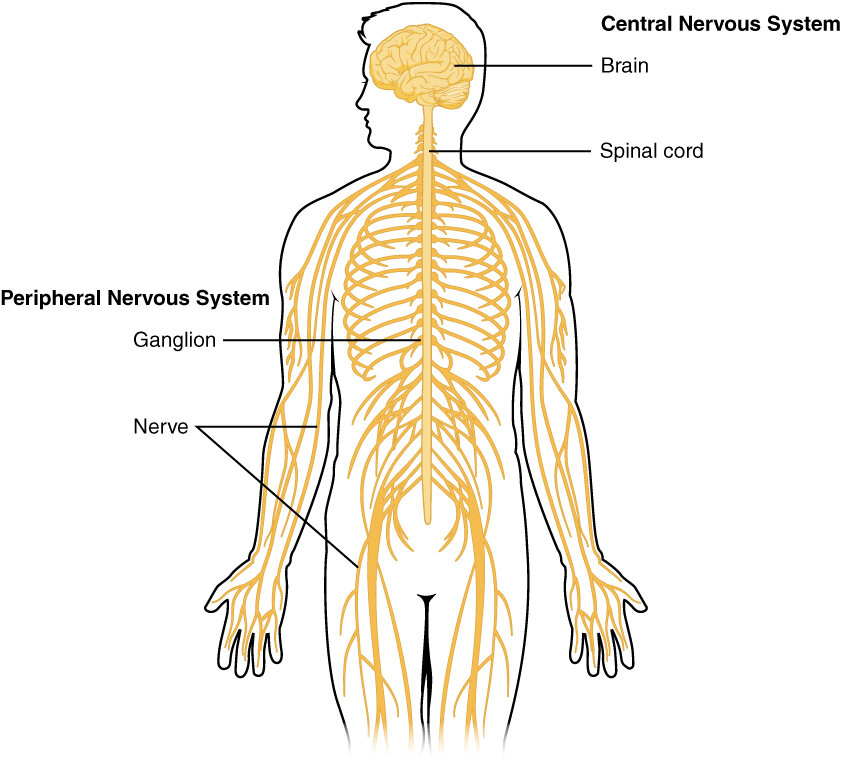
This vital structure is protected by the bones of your spine, called vertebrae. If you could look at a cross-section of the spinal cord, you would see two distinct areas: a butterfly-shaped core of gray matter, and an outer layer of white matter. The gray matter is where information is processed, much like a local data center. The white matter is composed of bundles of nerve fibers, called axons, which act as the long-distance cables. These bundles form organized pathways known as spinal tracts.
The spinal column encases and protects the spinal cord, which serves as a conduit for motor, sensory, and autonomic signals between the brain and the body.
Two-Way Traffic
Information doesn't just flow in one direction. The spinal tracts create a sophisticated two-way highway system. There are two main types of tracts, distinguished by the direction they carry signals.
Ascending tracts carry sensory information from the body up to the brain. When you touch a hot surface or feel the texture of a fabric, nerve endings in your skin send signals through these tracts. This allows your brain to perceive sensations like temperature, pressure, pain, and your body's position in space.
Descending tracts carry motor commands from the brain down to the muscles and glands. When you decide to walk, pick up a pen, or even take a breath, your brain sends signals down these pathways to initiate and control the movement.
Ascending tracts are for sensation (input), while descending tracts are for motion (output).
An Organized System
These nerve highways aren't just a random jumble of wires. The white matter of the spinal cord is highly organized. Tracts are grouped together based on their function and the type of information they carry. For example, tracts that transmit the sensation of touch are located in a different area from those that carry pain signals. Similarly, tracts controlling fine motor movements of the hands are distinct from those controlling posture.
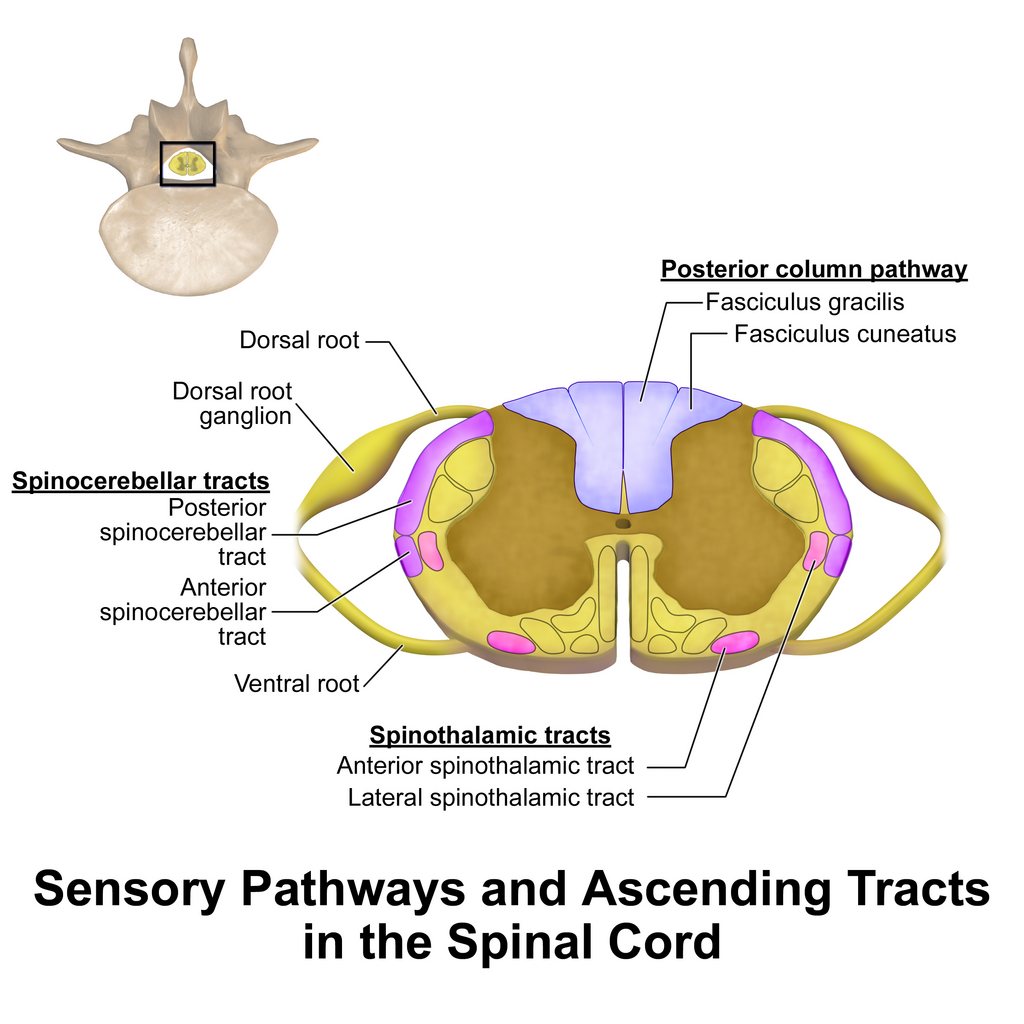
This organization is consistent from person to person. Generally, sensory (ascending) tracts are located more towards the back of the spinal cord (posterior), while motor (descending) tracts are found more towards the front (anterior). This predictable layout is crucial for understanding how the nervous system functions and for diagnosing issues when they arise.
By understanding this basic framework of ascending and descending tracts, we can begin to see how the brain and body maintain a constant, seamless dialogue.
What is the primary role of the spinal cord?
In a cross-section of the spinal cord, what are the two distinct areas of nerve tissue called?