Advanced Network Engineering and Implementation
Protocol Architecture and Flow
Models for Communication
To get computers to talk to each other reliably, we need a set of rules and procedures. Network models provide this framework, acting like a blueprint for data communication. The two most important models are the Open Systems Interconnection (OSI) model and the TCP/IP model.
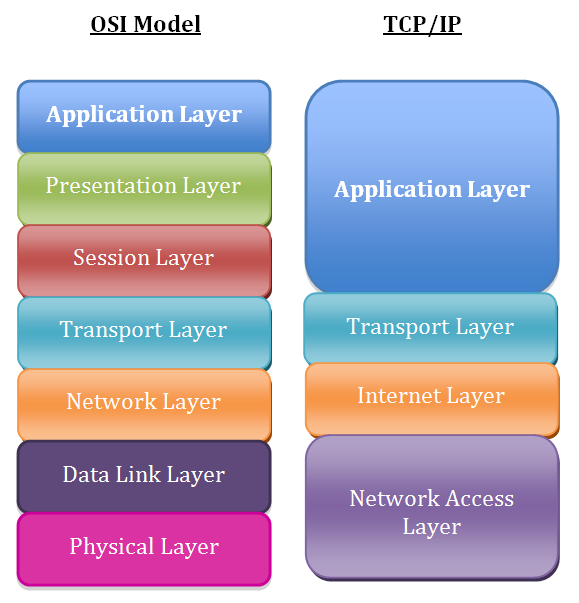
The OSI model is a conceptual framework with seven layers that standardizes the functions of a telecommunication system. It’s primarily a tool for understanding and designing network architectures. The TCP/IP model is more practical; it’s the suite of protocols that the internet actually runs on. It has four layers and is less rigid than the OSI model.
The Top of the Stack
The most significant difference between the two models lies at the top. The OSI model splits its upper-level functions into three distinct layers: Application (Layer 7), Presentation (Layer 6), and Session (Layer 5).
- Session Layer (5): Responsible for opening, closing, and managing the connection, or session, between two devices. Think of it as the coordinator that starts and stops the conversation.
- Presentation Layer (6): This layer acts as a translator. It takes data from the application layer and formats it in a way the receiving system can understand. This includes tasks like data encryption, compression, and character encoding (like ASCII to EBCDIC).
- Application Layer (7): This is the layer closest to the user. It provides network services directly to user applications like web browsers and email clients.
TCP/IP combines all these functions into a single Application Layer. It doesn't formally distinguish between session management, data representation, and application interaction. Instead, protocols like HTTP, FTP, and SMTP handle these jobs as needed. For example, HTTPS handles presenting web content (Application), encrypting it (Presentation), and managing the connection (Session) all within one protocol at the TCP/IP Application Layer.
Packing and Unpacking Data
As data moves down the protocol stack from the Application Layer on a sending device, each layer adds its own header information. This process is called encapsulation. The chunk of data at each layer is called a Protocol Data Unit (PDU). You'll hear different names for PDUs at different layers.
| OSI Layer | PDU Name |
|---|---|
| 4: Transport | Segment (TCP) / Datagram (UDP) |
| 3: Network | Packet |
| 2: Data Link | Frame |
| 1: Physical | Bit |
For example, the Transport Layer receives data from the Application Layer and splits it into smaller pieces, adding a TCP or UDP header to each one to create a segment or datagram. The Network Layer then takes that segment and adds an IP header (with source and destination IP addresses), creating a packet. This continues until the data is a stream of bits on the physical wire.
The receiving computer reverses the process. As the data moves up the stack, each layer strips off its corresponding header, reads the information, and passes the remaining PDU up to the next layer. This is called decapsulation.
Communication Flow
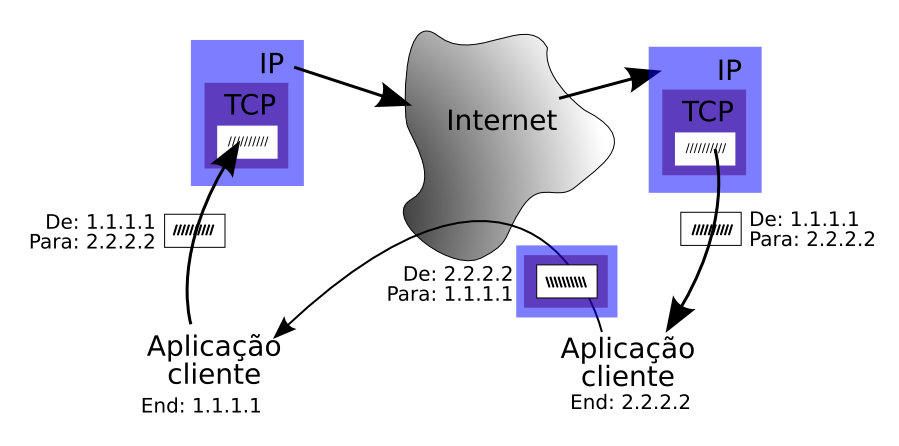
Communication within the stack happens in two ways: vertically and horizontally.
Vertical communication happens on a single device as data moves up or down the layers. The Application Layer on your computer communicates with the Transport Layer on the same computer, which communicates with the Network Layer, and so on. It's an internal process of passing data between adjacent layers.
Horizontal communication is the logical connection between the same layer on two different devices. The Application Layer on the sending device is conceptually communicating with the Application Layer on the receiving device. They speak the same language using a shared protocol, like HTTP. Even though the data physically passes down through all the layers on the sender's machine and up through the layers on the receiver's, the protocol in each layer is designed to be understood by its peer on the other end.
This layered separation is crucial for troubleshooting. When a network issue occurs, engineers use the OSI model as a diagnostic map. Is the problem physical (a bad cable, Layer 1)? Is it a routing issue (an incorrect IP configuration, Layer 3)? By isolating the problem to a specific layer, it becomes much easier to solve, especially in complex environments with equipment from multiple vendors. Each vendor's hardware is responsible for its specific layer, so you know where to look.
What is the most significant difference between the OSI model and the TCP/IP model regarding their upper layers?
In the OSI model, which layer is responsible for data translation, such as character encoding, compression, and encryption?
Understanding these models provides a powerful mental framework for how data traverses networks, from a click in your browser to the bits flowing over a cable.