Advanced Model Context Protocol
Introduction to MCP
A Common Language for AI
Large Language Models (LLMs) are powerful, but they have a fundamental limitation: they exist in a bubble. By themselves, they can't browse the web, check a database, or read a file on your computer. To perform useful tasks, they need to connect to the outside world.
Historically, connecting an AI to an external tool required custom code for every single connection. Linking a model to a calendar API was one project. Connecting it to a customer database was another. Each new tool meant reinventing the wheel, creating a tangle of one-off integrations that were brittle and hard to maintain.
Think of it like the early days of computers. Before USB, every device—keyboards, mice, printers—had its own unique plug. The result was a mess of incompatible cables. The AI world has faced a similar problem with tool integration.
The Model Context Protocol (MCP) solves this. Introduced by the AI company Anthropic in late 2024, MCP is an open standard designed to be the universal connector for AI.
The Model Context Protocol (MCP) is an open source standard designed by Anthropic (Creators of Claude) to standardize how AI systems interact with external tools and resources.
How MCP Works
MCP works like a universal translator between an AI model and the tools it needs to use. Instead of building dozens of custom bridges, developers can build one connection to MCP. The protocol handles the rest.
It uses a client-server architecture. The AI application acts as the client. The external tools (like APIs, databases, or file systems) are exposed through MCP servers. The client makes a request in a standardized format, and the server understands how to translate that request into a specific action for its tool.
This setup makes the entire system modular and scalable. If you want to add a new tool, you just create a new MCP server for it. The AI model can immediately communicate with it without any changes. Similarly, you can swap out one AI model for another, and as long as it speaks MCP, it will work with all the existing tools.
Core Components
MCP isn't just a single piece of software; it's a framework made of a few key parts.
| Component | Purpose |
|---|---|
| Protocol Specification | The official rulebook. It's a technical document that defines exactly how MCP clients and servers must communicate. |
| SDKs | Software Development Kits that provide pre-written code and tools to make it easier for developers to build MCP-compliant applications. |
| Server Implementations | An open-source library of ready-to-use MCP servers for common tools and services, saving developers from building them from scratch. |
The SDKs are a crucial piece of the puzzle, as they lower the barrier to adoption. Anthropic has released official SDKs for popular programming languages like Python, TypeScript/JavaScript, and Go, with more planned for the future. This allows developers to integrate MCP into their existing projects, regardless of the technology stack they use.
The goal is interoperability. By providing a shared standard, MCP allows different AI systems from different companies to seamlessly connect with a vast ecosystem of tools. An AI model built by one company can use a tool exposed through an MCP server built by another, with no custom integration required.
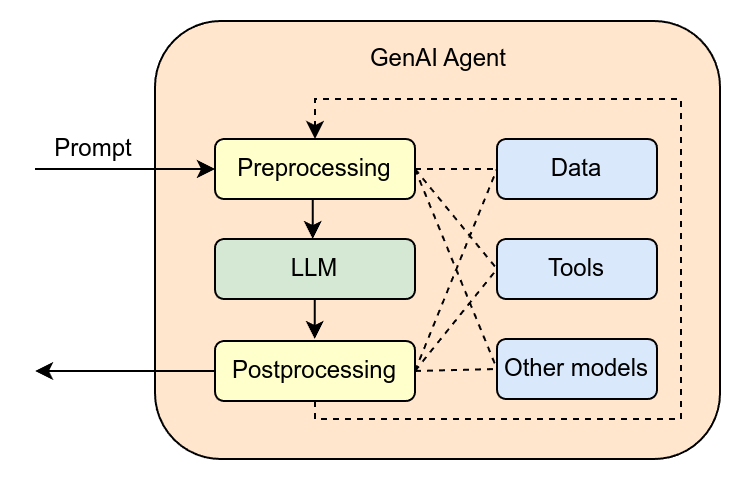
This standardization is what makes the protocol so powerful. It encourages the creation of a rich ecosystem where developers can build and share tools, confident that they will work with any AI model that adheres to the MCP standard.
Ready to check your understanding?
What is the primary problem the Model Context Protocol (MCP) is designed to solve?
In the MCP architecture, an external tool like a database or API is made available to the AI through a component called the ______.
By establishing a common ground for communication, MCP paves the way for more capable and integrated AI applications.