Advanced MLOps Pipeline Engineering
MLOps Fundamentals
From Lab to Live
Building a machine learning model is like creating a prototype of a new car engine. It might run perfectly in the controlled environment of a lab, but getting it to perform reliably on the open road is a completely different challenge. Many data science projects end at the prototype stage. A model shows promise, but it never gets integrated into a real product where it can provide value.
This gap between the lab and the real world is where MLOps comes in. The term is a combination of "Machine Learning" and "Operations." It borrows ideas from DevOps, the software development practice that combines software development (Dev) and IT operations (Ops) to shorten the development lifecycle and deliver high-quality software continuously.
MLOps
noun
A set of practices for collaboration and communication between data scientists and operations professionals to help manage the production machine learning lifecycle.
MLOps applies a similar discipline to machine learning. It's about creating a smooth, automated, and reliable process for taking models from an idea to production and keeping them running effectively.
MLOps is a set of practices that combines Machine Learning and DevOps to standardize and streamline the ML lifecycle.
The Full Lifecycle
A machine learning model isn't a one-and-done project. It has a lifecycle that needs to be managed. The process is a continuous loop, not a straight line from A to B. It involves collecting data, training models, deploying them, and then monitoring their performance to decide when they need to be retrained or replaced.
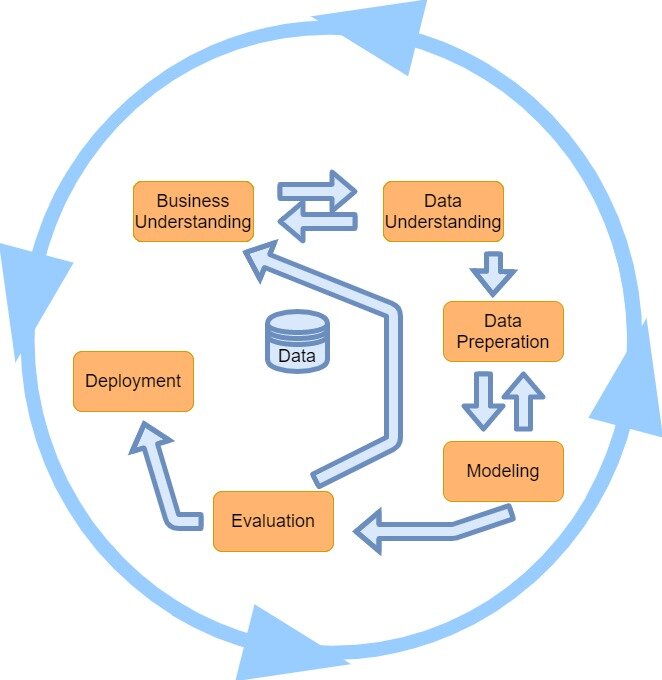
This cycle involves several key principles:
• Continuous Integration (CI): This isn't just about code. In MLOps, CI also involves automatically testing and validating new data and models. • Continuous Deployment (CD): This is the automatic release of a model into production once it has passed its tests. • Continuous Monitoring: After deployment, models are watched closely to track their performance and business impact.
Challenges in the Real World
So why is a special practice like MLOps needed? Because deploying ML models presents unique challenges that traditional software development doesn't face.
One of the biggest hurdles is data drift. The world changes, and the data a model sees in production can slowly start to look different from the data it was trained on. A model trained to predict housing prices using data from 2018 might not be very accurate in 2024. Without monitoring, this
Without MLOps, even the most advanced ML models can lose their value over time due to data drift—a gradual change in the data that the model was trained on versus the data it sees in production.
This leads to model decay, where the model's performance gets worse over time. MLOps creates systems to detect this drift and trigger alerts or automatic retraining to keep the model fresh and accurate.
Another challenge is the experimental nature of data science. Data scientists might try dozens of models and features to find the best one. MLOps provides a structured way to track these experiments, manage different model versions, and ensure that the process is repeatable and auditable.
The Benefits of a System
Adopting MLOps practices brings significant advantages. The primary benefit is speed and reliability. Automation reduces the manual effort needed to test and deploy models, allowing teams to release updates faster and with more confidence.
| Benefit | Description |
|---|---|
| Speed | Automate the model release process to deploy new models in hours or days, not months. |
| Reliability | Ensure models are rigorously tested before they reach users. |
| Scalability | Build systems that can train, deploy, and manage hundreds or thousands of models. |
| Collaboration | Create a common language and workflow for data scientists, ML engineers, and IT staff. |
Ultimately, MLOps transforms machine learning from a research-focused, artisanal craft into a scalable, engineering discipline. It builds the factory that produces and maintains high-quality models, ensuring they deliver consistent value to the business.
What is the primary goal of MLOps?
What is the term for the phenomenon where a model's performance worsens over time because the data it encounters in production starts to differ from the data it was trained on?