Advanced Military English for Airborne Operations
Advanced Airborne Communication
The Language of the Skies
In airborne operations, every word matters. Standard military English gets you on the plane, but specialized aeronautical phraseology ensures you can operate safely and effectively once you're in the air and on the objective. This isn't just jargon; it's a system built for clarity and speed, where misunderstanding can have critical consequences.
Aeronautical phraseology prioritizes brevity and removes ambiguity. For example, you say "say again" to request a repeat of a transmission. You never say "repeat," as that is the specific term used by artillery units to call for a repeat of a fire mission.
This standardized language forms the bedrock of communication between pilots, air traffic control, and ground elements. It ensures that regardless of accent or background noise, the message gets through exactly as intended. Mastering this phraseology is non-negotiable for anyone involved in coordinating air assets.
Connecting the Domains
Effective communication isn't just about using the right words; it's about having the right people in the loop. In complex joint operations, specialized units act as translators and coordinators between different military branches, ensuring that an Army platoon on the ground can seamlessly call in air support from the Navy or Air Force.
ANGLICO
noun
A U.S. Marine Corps and Royal Marines unit that provides a liaison between marine, naval, and air forces to coordinate fire support and close air support for ground units.
Think of an ANGLICO team as the ultimate communication specialists for the ground commander. They embed with Army, Marine, or allied ground forces and bring the ability to talk to fighter jets, bombers, and naval ships. They are experts in planning and calling for fire support from both the air and the sea, translating the ground commander's intent into action.
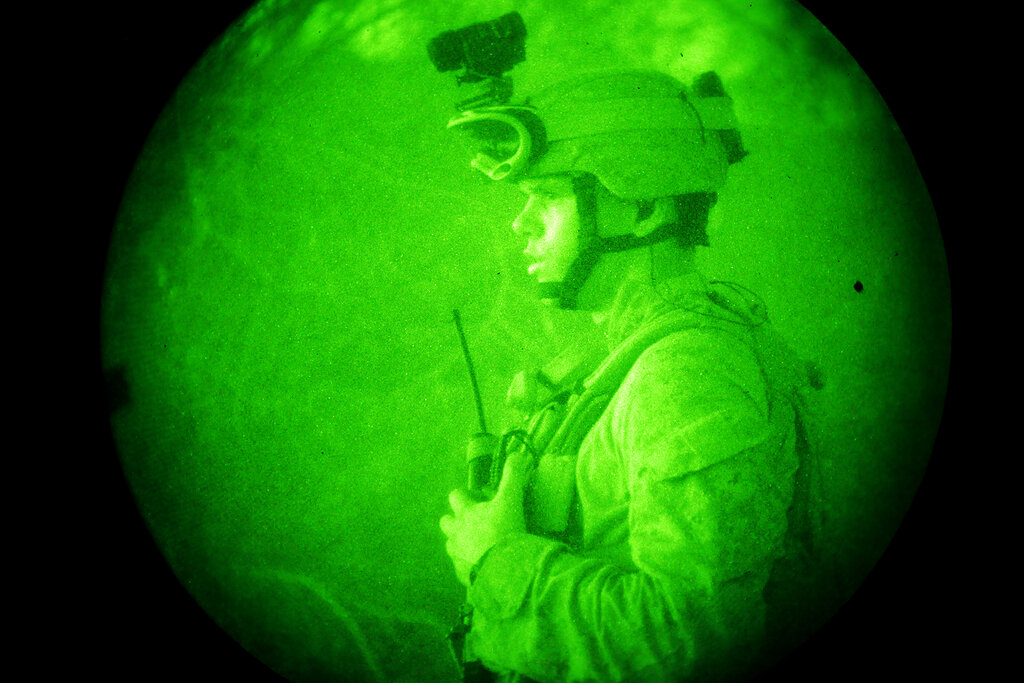
While ANGLICO connects ground forces with air and naval fire support, another key entity ensures smooth cooperation between the Army and the Air Force at a higher level.
BCD
noun
The Battlefield Coordination Detachment is an Army liaison element located at an Air Force Air Operations Center. Its primary role is to coordinate Army requests for air support and exchange operational information.
The BCD is less about direct control of aircraft in a firefight and more about operational-level coordination. They work inside the Air Force's command and control centers, providing the Air Component Commander with a clear picture of the Army's situation, plans, and needs. This ensures that airpower is allocated and used in a way that best supports the ground scheme of maneuver.
Extending the Signal
Mountainous terrain, vast distances, and enemy jamming can all disrupt communications. When ground units can't talk to each other or to their air support, the mission is at risk. This is where airborne communication relays come into play. A relay is simply an aircraft, drone, or satellite that receives a signal from one unit and retransmits it to another, acting like a communications tower in the sky to extend line-of-sight.
A simple airborne radio relay can be the difference between a unit being isolated and cut off, or being able to coordinate for reinforcement and extraction.
One of the most advanced relay and translation systems is the Battlefield Airborne Communications Node, or BACN.
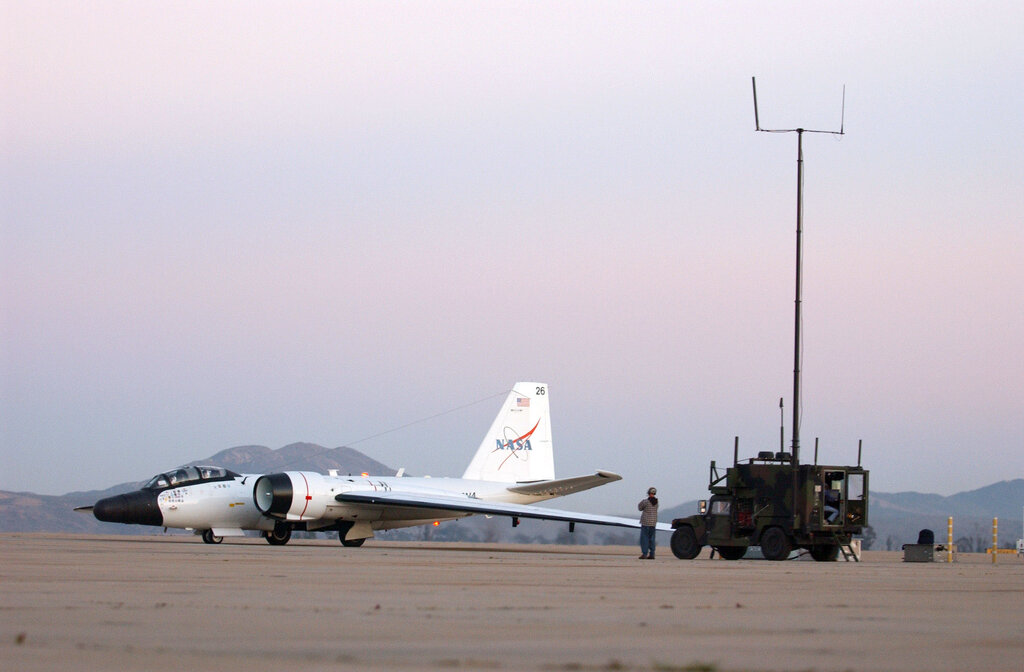
BACN is more than just a simple relay. It's a high-tech communications gateway. Different units and different aircraft often use radios that operate on different frequencies or use different data formats, meaning they can't talk directly to each other. BACN acts as a universal translator. It can receive data from an Army ground radio, translate it, and retransmit it in a format that an Air Force fighter jet's systems can understand. This creates a seamless network across the battlefield, connecting disparate forces and providing leaders with a common operational picture.
What is the primary reason for using specialized aeronautical phraseology instead of standard military English during airborne operations?
An Army platoon commander on the ground needs to coordinate fire support from a Navy fighter jet. Which entity is specifically trained and equipped to act as the liaison for this task?
Understanding these roles and technologies is the first step. The next is applying them under pressure in realistic scenarios.