Advanced Mental Models for Complex Thinking
Introduction to Advanced Mental Models
Beyond the Basics
You already know that mental models are frameworks for thinking. They help you make sense of the world. Basic models like 'Supply and Demand' or 'The 80/20 Rule' are excellent tools for everyday problems. But some challenges are more tangled, with many moving parts and unclear outcomes. This is where advanced mental models come in.
Advanced models aren't necessarily more complicated. Instead, they are more specialized. They provide structured ways to think about dynamic, complex systems where cause and effect are not always obvious. They help you see the hidden connections and anticipate future consequences.
Mental models are frameworks that help you simplify complexity, think more clearly, and make better decisions.
Navigating Complex Problems
Complex problems rarely have simple, linear solutions. Think about launching a new product, changing careers, or improving a team's workflow. These situations involve people, unpredictable markets, and feedback loops. A simple pro-and-con list won’t cut it.
Advanced models give you a more sophisticated map for this kind of territory. They equip you to analyze intricate scenarios, identify the most important factors, and make decisions with more confidence. Instead of reacting to events, you can start to anticipate them.
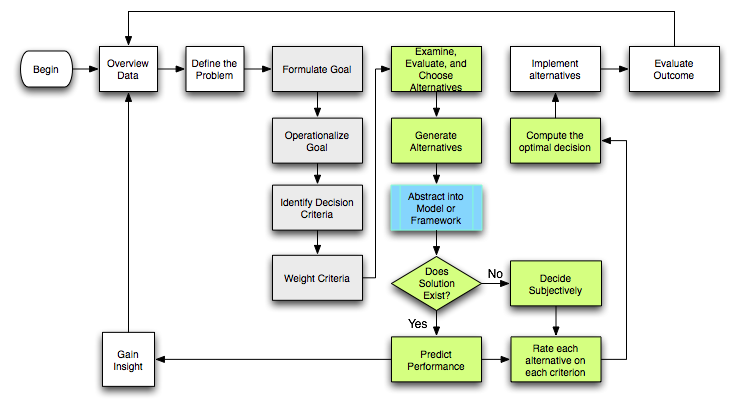
By applying these frameworks, you move from guesswork to strategic thinking. You learn to ask better questions, spot underlying patterns, and understand the second-order effects of your choices—the consequences of the consequences.
Your New Toolkit
As we move forward, we’ll explore several powerful mental models. You won't just learn what they are; you'll learn how to use them. We'll start with Second-Order Thinking, a method for considering the long-term consequences of your decisions.
Next, we'll cover Systems Thinking, which helps you understand how different parts of a system influence one another. Then, we’ll dive into the Regret Minimization Framework for making big life choices and Inversion, a technique for solving problems by thinking backward.
These are not just academic concepts. They are practical tools for clearer thinking.
According to the text, what is the primary difference between basic and advanced mental models?
Which of the following situations would be most appropriate for applying an advanced mental model like Systems Thinking?