Advanced Medieval Baking Practices
Cereal Chemistry and Sourdough
The Baker's Alchemy
Medieval sourdough baking was a masterclass in managing unseen forces. Long before microscopes revealed the world of microbes, bakers were expert chemists and biologists, manipulating a living culture of wild yeast and bacteria. Their success depended not just on a recipe, but on the specific grains they could source, the vessels they used, and even the laws of the land. This wasn't just about making bread rise; it was about controlling a complex biochemical cascade.
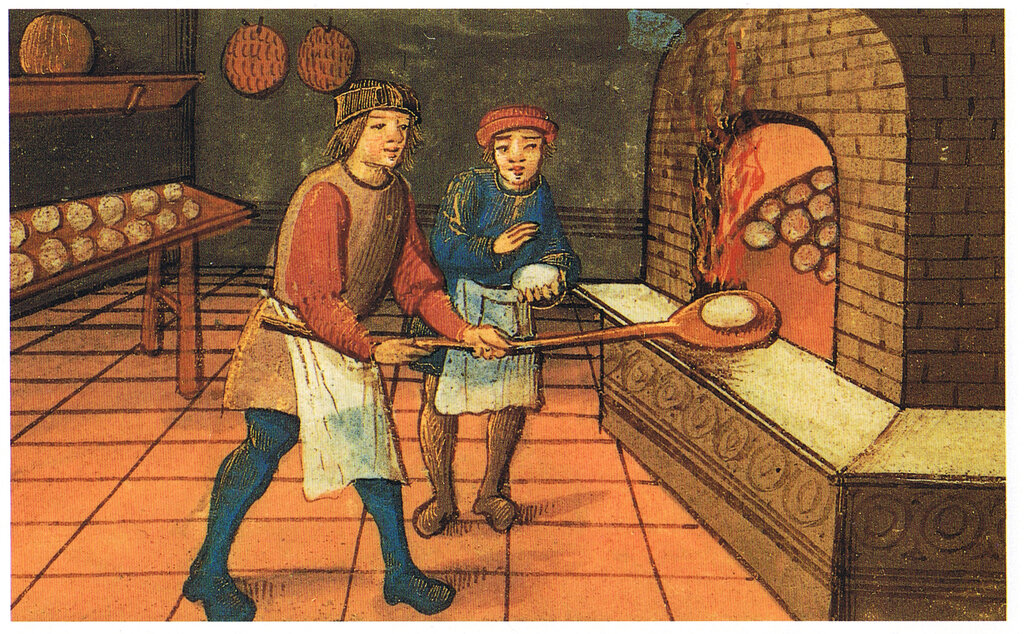
The heart of the operation was the sourdough starter, or levain. Unlike bread made with commercial yeast, sourdough relies on a symbiotic colony of wild yeasts (like Saccharomyces cerevisiae) and lactic acid bacteria (LAB). These microorganisms, captured from flour and the environment, work together to leaven the bread and create its signature tangy flavor. The yeast produces carbon dioxide gas to create lift, while the bacteria produce lactic and acetic acids, which contribute to flavor, texture, and preservation.
Grains of the Past
Medieval bakers worked with what was available, and that often meant grains other than pure, refined wheat. Rye was a common and hardy crop, as was —a field blend of wheat and rye sown and harvested together. These grains behaved very differently from modern, high-protein bread flour.
Rye flour presents unique chemical challenges. It has a much weaker gluten network than wheat. Instead, its structure comes from complex carbohydrates called pentosans, which can absorb large amounts of water. This makes rye dough sticky and dense. Furthermore, rye is rich in amylase enzymes, which aggressively break down starches into simple sugars. While this provides ample food for the yeast, too much activity can lead to a gummy, overly sticky crumb as the starch structure degrades.
Baking with these flours required different techniques. The higher acidity developed in a sourdough starter helped to temper the high enzymatic activity of rye. Bakers also relied on 'refreshment' cycles, regularly feeding the starter to manage its microbial balance and acidity, which was crucial for getting a good rise from these heavy, bran-rich doughs.
The Starter's Home
The container used to maintain the levain was another critical variable. Vessels were typically made of wood or unglazed ceramic, and each material created a distinct microbial environment.
| Vessel Type | Properties | Impact on Starter |
|---|---|---|
| Wooden | Porous, breathable | Harbors a stable, resident microbial population. Creates a consistent flavor profile over time. |
| Ceramic (unglazed) | Slightly porous, retains temperature | Can maintain a steady fermentation temperature. Microbial culture is more influenced by recent feedings. |
A wooden bowl or trough, being porous, would absorb a small amount of the starter over time. This created a 'memory' in the vessel, inoculating each new batch with a consistent and complex community of yeast and bacteria that was unique to that bakery. Unglazed ceramic, while also slightly porous, is a better insulator. A ceramic crock would help maintain a more stable temperature, shielding the starter from the fluctuations of a drafty medieval kitchen. This stability influenced which microbes thrived, directly affecting the rate of acidification and the final flavor of the bread.
The Law of the Loaf
Baking wasn't just influenced by biology and chemistry, but also by economics and law. In England, the was a series of statutes beginning in the 13th century that regulated the price, weight, and quality of bread. The law fixed the price of a loaf and dictated that its weight must fluctuate based on the market price of grain.
This meant bakers couldn't simply charge more if flour costs went up; they had to make their loaves smaller. The law also set different standards for different types of bread, such as white bread (wastel), whole wheat (cocket), and bread made from cheaper grains.
This legal framework directly impacted the chemistry of the loaf. To maximize their thin profit margins, bakers were incentivized to use the cheapest permissible grains and to incorporate as much water and bran as possible. This led to heavier, denser doughs that were more challenging to ferment. A strong, acidic starter was essential to properly leaven these loaves and to inhibit the growth of mold, extending the bread's shelf life—a crucial factor when every crumb counted.
Ready to test your knowledge of medieval baking science?
What was the primary role of lactic acid bacteria (LAB) in a medieval sourdough starter?
A medieval baker using a wooden trough to maintain their starter would benefit from the wood's porous nature creating a 'memory' that inoculated each new batch.
The interplay of grain chemistry, microbial ecology, and even legal pressures created the distinctive breads of the medieval period. Each loaf was a product of its specific environment, a testament to the baker's skill in managing a living, fermenting system.