Advanced Mass Timber Structural Engineering
Advanced Connection Engineering
Engineering High-Capacity Connections
In mass timber construction, the connections are where engineering meets reality. While you're already familiar with Glulam and CLT, the real challenge lies in joining these massive elements. The forces at play in a multi-story timber building far exceed the capacity of common nails or deck screws. We need engineered solutions that transfer significant loads safely and predictably. This involves moving beyond simple fasteners to high-capacity dowel-type connectors and proprietary systems designed for immense stress.
The strength of these connections doesn't just come from the fastener itself, but from the interaction between the steel fastener and the wood fibers around it. Predicting how this tiny system will behave under tons of force is critical. Will the fastener bend? Will the wood crush? Or will a whole group of fasteners tear out together? Answering these questions is the key to designing a stable and durable timber structure.
Predicting Failure with the EYM
For traditional dowel-type fasteners like bolts, dowels, and large-diameter screws, engineers rely on the (EYM) to calculate the load-carrying capacity. The EYM isn't a single formula, but a series of equations that represent the different ways a connection can fail under load. It compares the strength of the wood (its embedment strength) with the bending strength of the steel fastener.
The model calculates the capacity for several potential failure modes, and the lowest value becomes the design capacity of the joint. These modes range from the wood crushing around the dowel to the dowel itself yielding and forming one or more 'plastic hinges'.
The Power of Inclined Screws
While the EYM is great for traditional dowels, modern construction often favors a more versatile fastener: the (STS). These high-strength, fully-threaded screws don't need pre-drilled holes and can be installed quickly. Their real power is unleashed when they are installed at an angle, typically 45 degrees to the joint interface.
Instead of relying on the wood's bearing strength and the screw's bending strength (shear), an inclined screw connection transfers load primarily along the axis of the screw. Since the screw is incredibly strong in tension and compression, this method provides a much higher load capacity and stiffness compared to a perpendicularly installed screw.
From Single Fasteners to Joint Systems
Designing a connection isn't just about one fastener. It's about how a whole group of them work together. When fasteners are placed too close, they can cause the wood between them to fail before any single fastener reaches its full capacity. This is known as a and can lead to brittle failures like row tearing (where a whole row of fasteners tears out a block of wood) or group tear-out.
Therefore, codes specify minimum spacing requirements for fasteners—both within a row and between rows—to ensure that the load can be distributed effectively into the wood member. Optimizing this spacing is a balancing act between achieving the required strength and keeping the connection hardware compact and economical.
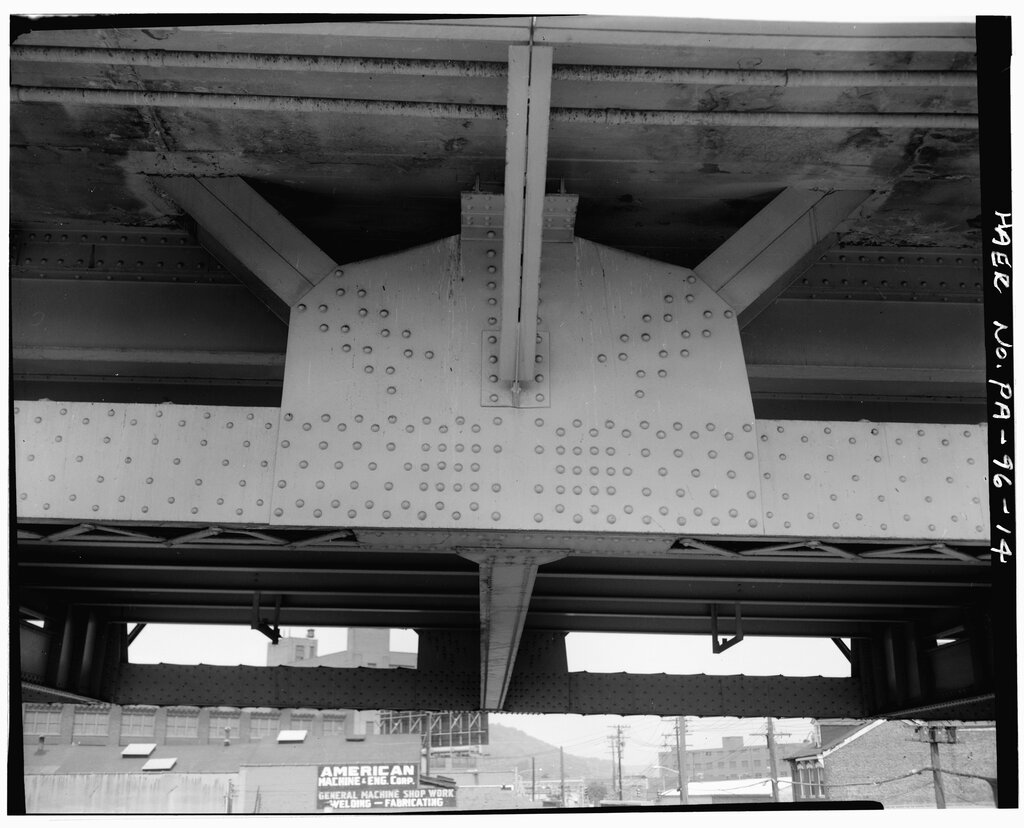
For the highest capacity joints, such as beam-to-column connections in a tall building, engineers often use prefabricated steel-to-timber connectors. Systems like concealed knife plates or "bucket" style connectors provide robust and architecturally clean solutions.
A knife plate is a steel plate hidden within a slot in the timber member, connected using a series of dowels or screws. A bucket connection involves a steel saddle that the end of a beam rests in, often secured with pins or bolts. These systems concentrate the load transfer into a compact, highly engineered component.
A final, critical consideration is reinforcing the wood itself. When a beam is loaded from the top, it wants to crush the wood fibers at the support. Even more dangerous is a load that pulls perpendicular to the grain, which can cause the wood to split. Wood is relatively weak in tension perpendicular to its grain.
To counteract this, fully-threaded self-tapping screws are often installed vertically or diagonally through the beam in high-stress areas. These screws act like rebar in concrete, stitching the wood fibers together and dramatically increasing the beam's resistance to splitting and crushing.
Effective mass timber connections must provide strength, stiffness, and stability, but also accommodate for wood's natural movement and ensure the structure is buildable.
By combining predictive models like the EYM, advanced fasteners like STS, and robust system-level thinking, engineers can design timber connections that are strong, efficient, and resilient.
Ready to test your knowledge on advanced connections?
What is the primary purpose of the European Yield Model (EYM) in timber connection design?
Why are self-tapping screws (STS) often installed at a 45-degree angle to the joint interface in mass timber connections?
Understanding these advanced principles is what makes it possible to build taller and more ambitious structures with mass timber.