Advanced Mandala Art Techniques
Advanced Grid Construction
Building a Precision Framework
Your basic circular outlines and eight-segment divisions provide a start, but creating truly intricate mandalas requires a more robust architectural approach. We need to move beyond simple sketching and into the realm of precision geometry. This means embracing a polar coordinate system as the foundation for our work. Instead of thinking in terms of left, right, up, and down (like a Cartesian grid), we'll think in terms of distance from a central point (radius) and angle of rotation.
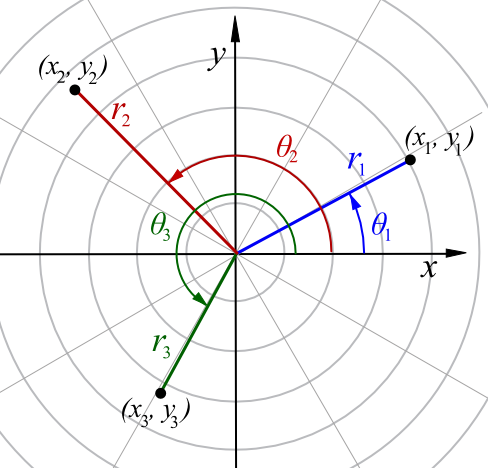
This system is perfectly suited for radial designs. It allows us to place elements with perfect rotational symmetry. By defining points with a radius () and an angle (), we can build complex, repeating patterns that are mathematically sound. The goal is to create a framework so precise that it supports even the most detailed motifs without losing structural integrity.
Mastering High-Density Grids
To achieve professional-grade detail, we must divide our canvas into a high number of segments. While 8 or 16 segments are good for practice, professional work often requires 32, 64, or even 128 segments. This density creates more opportunities for intricate patterns and nested layers. Creating these divisions requires a protractor and compass.
Start by marking your 0°, 90°, 180°, and 270° axes. Then, bisect these to get 45° increments. From there, you repeatedly bisect each segment. To get 32 segments, you need an angle of 11.25° between each line. For 64 segments, it's 5.625°. This precision is crucial.
These aren't just lines on paper; they are a nested geometric framework that supports your design. You can use different concentric circles (radii) to create distinct zones within your mandala. A pattern might begin at one radius, transform, and terminate at another. This layering adds depth and complexity. The initial grid ensures all these nested elements remain in perfect harmony.
Asymmetrical Balance
While mandalas are known for their symmetry, advanced designs often play with asymmetrical elements within a symmetrical framework. This concept is called asymmetrical balance. You might have a core pattern that repeats perfectly in every segment, but then introduce a unique, flowing element that weaves through only one quadrant of the mandala.
The underlying grid makes this possible. It provides the stability and reference points needed to ensure the asymmetrical feature doesn't feel random or chaotic. Instead, it feels intentional, creating a dynamic tension that draws the viewer's eye. The grid is your safety net, allowing you to break the rules creatively while maintaining overall harmony.
A thoughtfully chosen grid leads to a wealth of possibilities and any number of exciting designs.
By mastering the construction of high-density grids, you're not just learning to draw circles and lines. You are building the skeleton that gives your artistic vision form and strength. The precision of your framework directly translates to the power and beauty of the final piece.
Ready to test your knowledge?
Why is a polar coordinate system the preferred foundation for creating intricate mandalas?
To achieve a professional level of detail, a mandala artist might use 64 or 128 segments. What is the angle between the lines for a 64-segment division?
With a solid framework, you can now build intricate patterns with confidence. The next step is to explore the motifs and symbols that will bring your mandala to life.