Advanced LLM Training for Predictive Tasks
Introduction to Large Language Models
What Are Large Language Models?
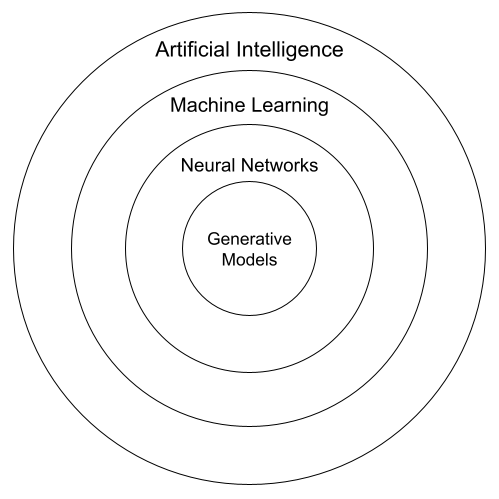
Large Language Models, or LLMs, are a type of artificial intelligence designed to understand and generate human language. They're called "large" because they are built with a massive number of parameters and trained on enormous datasets of text and code. Think of them as incredibly sophisticated pattern-recognition machines for language.
The core purpose of an LLM is to process an input sequence of text, called a prompt, and predict the most likely sequence of text to follow it.
This simple capability allows them to perform a wide range of tasks, from answering questions and writing essays to translating languages and generating computer code. They learn the grammar, facts, reasoning abilities, and even biases contained within the data they're trained on.
The Transformer Revolution
The journey to modern LLMs saw a major breakthrough in 2017 with the invention of the Transformer architecture. Before this, models struggled to keep track of context in long sentences. If a sentence began with "The cat..." and ended 50 words later with "...so it purred," the model might forget that "it" referred to the cat.
The Transformer solved this with a mechanism called self-attention. It allows the model to weigh the importance of different words in the input text when processing any given word. It learns the relationships between words, no matter how far apart they are in a sentence. This ability to handle long-range dependencies was the key that unlocked the ability to create much larger and more powerful models.
This new architecture paved the way for a rapid scaling up of models. The Generative Pre-trained Transformer, or GPT, series from OpenAI clearly shows this evolution. GPT-1 was a proof of concept, but GPT-2 showed remarkable coherence in text generation. GPT-3 was a massive leap, demonstrating the powerful, emergent abilities that come with scale.
| Model | Year | Parameters | Key Feature |
|---|---|---|---|
| GPT-1 | 2018 | 117 million | Demonstrated the viability of the Transformer. |
| GPT-2 | 2019 | 1.5 billion | Generated coherent paragraphs of text. |
| GPT-3 | 2020 | 175 billion | Showed strong performance on many tasks with no prior training. |
| PaLM | 2022 | 540 billion | Pushed the boundaries of scale and reasoning. |
How LLMs Are Trained
Training an LLM typically involves two main stages: pre-training and fine-tuning.
Pre-training is the foundational, computationally intensive phase. The model is trained on a vast corpus of text from the internet, books, and other sources. Its only goal is to learn to predict the next word in a sequence. By doing this billions of times, it internalizes grammar, facts, and reasoning skills.
After pre-training, the model is a generalist. To make it more useful for specific tasks, it undergoes fine-tuning. This involves training the model further on a smaller, curated dataset tailored to a particular application. For example, a general model could be fine-tuned on a dataset of customer service conversations to create a specialized chatbot. This process aligns the model's capabilities with desired behaviors like following instructions or maintaining a helpful tone.
Common Applications
The general-purpose nature of LLMs makes them useful for a wide array of natural language processing (NLP) tasks. Some common applications include:
- Text Generation: Writing emails, articles, and creative stories.
- Summarization: Condensing long documents into key points.
- Translation: Translating text between different languages.
- Question Answering: Extracting answers from a provided text or its internal knowledge.
- Sentiment Analysis: Determining if a piece of text is positive, negative, or neutral.
- Code Generation: Writing code snippets based on a natural language description.
These models act as a powerful foundation, enabling developers to build specialized applications that understand and interact with humans in a more natural way.
Let's check your understanding of these core concepts.
What does the "Large" in Large Language Model primarily refer to?
What key mechanism, introduced by the Transformer architecture in 2017, was a major breakthrough for LLMs?
By understanding the Transformer architecture and the pre-training process, you can appreciate both the power and the limitations of today's language models.