Advanced Linux Kernel Internals
Advanced Scheduling Algorithms
The Completely Fair Scheduler
The Completely Fair Scheduler (CFS) moves beyond traditional time-slice accounting to achieve a more equitable distribution of CPU time. Its core principle is to model an "ideal, precise multi-tasking CPU" where each of the runnable tasks would receive exactly of the processor's power. Since this ideal isn't physically possible, CFS emulates it by ensuring each task gets a fair share of CPU time over a given period.
The scheduler's intelligence lies in its use of a red-black tree, a self-balancing binary search tree, to manage the queue of runnable tasks. Instead of using static priorities to order tasks, CFS uses a metric called virtual runtime, or vruntime.
The task with the lowest vruntime is always at the leftmost node of the red-black tree, making it the next candidate for execution. When a task runs, its vruntime increases. Once it exceeds the vruntime of the next task in the tree, a preemption may occur. The scheduler then picks the new leftmost node and the cycle continues.
Two key tunables, sched_latency_ns and sched_min_granularity_ns, control this behavior. The former defines the target period over which all runnable tasks should run at least once, while the latter sets a floor on how small a time slice can be to avoid excessive context-switching overhead.
While CFS provides excellent fairness for general-purpose computing, it has limitations. It doesn't inherently optimize for NUMA locality or cache affinity, which can lead to performance degradation in high-performance computing (HPC) environments where data locality is paramount.
Real-Time Guarantees
For tasks where latency is more critical than fairness, Linux provides real-time scheduling policies. These policies, SCHED_FIFO and SCHED_RR, operate on a static priority scheme ranging from 1 to 99. A real-time task will always preempt any CFS task, regardless of its vruntime. They are designed for applications like industrial control, high-frequency trading, or professional audio processing.
To meet the requirements of real-time systems, an RTOS must include certain key features, such as preemptive, priority-based scheduling, a preemptive kernel, and minimizing latency.
SCHED_FIFO (First-In, First-Out) is a simple, non-preemptive policy among tasks of the same priority. A SCHED_FIFO task runs until it blocks, yields, or is preempted by a higher-priority task. It has no time slice.
SCHED_RR (Round-Robin) is similar but adds a time slice. When a SCHED_RR task exhausts its time slice, it's moved to the back of the queue for its priority level, allowing other tasks at the same priority to run.
| Policy | Priority Scheme | Preemption (vs. lower priority) | Time Slicing |
|---|---|---|---|
SCHED_FIFO | Static (1-99) | Yes | No |
SCHED_RR | Static (1-99) | Yes | Yes |
CFS (SCHED_NORMAL) | Dynamic (vruntime) | N/A | Yes |
A major risk with these policies is priority inversion, where a high-priority task becomes blocked waiting for a resource held by a lower-priority task. The Linux kernel implements priority inheritance as a solution. The lower-priority task temporarily "inherits" the priority of the waiting task, allowing it to run, release the resource, and unblock the high-priority task quickly.
Controlling Placement and Performance
CPU affinity is a mechanism to constrain a process to a specific subset of CPUs. This is crucial for performance tuning, especially on multi-socket NUMA (Non-Uniform Memory Access) systems. By pinning a process to a CPU core, you ensure it accesses local memory and benefits from a hot cache (L1, L2, L3), minimizing latency from remote memory access and cache misses.
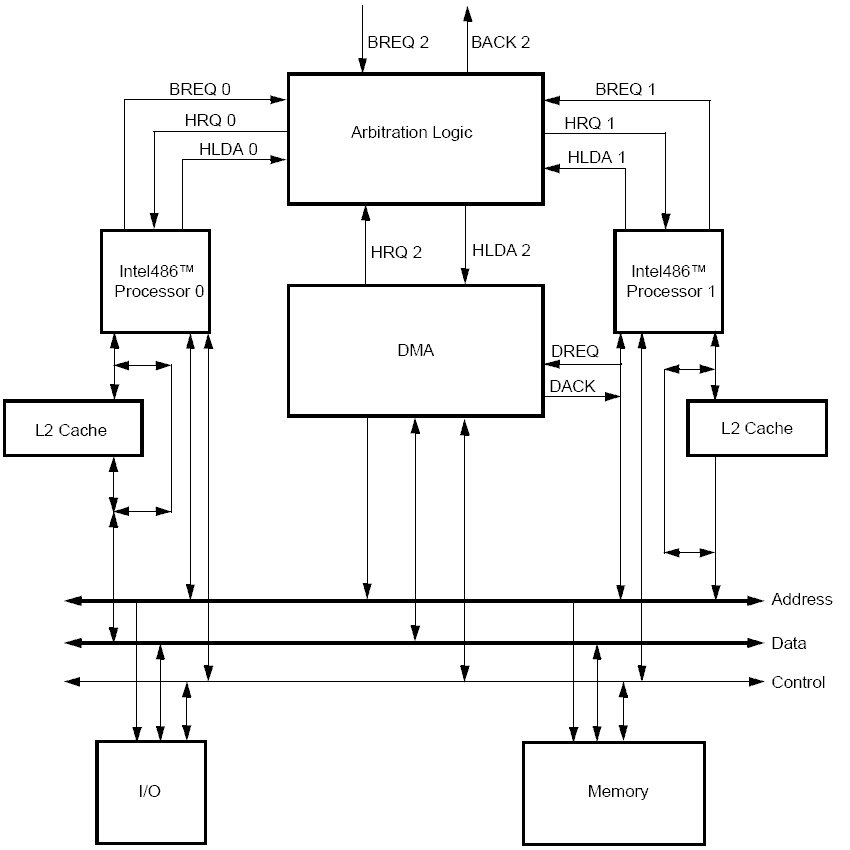
The taskset and numactl utilities are common tools for managing affinity. For example, you can dedicate specific cores to high-priority, latency-sensitive applications while isolating them from less critical system tasks. This technique, often called "CPU shielding," is common in real-time and HPC environments to guarantee predictable performance by preventing other processes from interfering.
# Pin process with PID 1234 to CPU cores 0 and 1
taskset -cp 0,1 1234

# Launch a command on NUMA node 0, using its local memory
numactl --cpunodebind=0 --membind=0 my_application
The Future: AI-Driven Scheduling
Traditional scheduling algorithms rely on heuristics that work well for general cases but may not be optimal for specific, dynamic workloads. The next frontier in process scheduling is the integration of machine learning, particularly reinforcement learning (RL), to create schedulers that adapt and tune themselves in real-time.
The OS-R1 framework is a proof-of-concept demonstrating this approach. It replaces the kernel's scheduling logic with a trained RL model. The model's "state" includes metrics like CPU utilization and cache miss rates. Its "actions" are scheduling decisions, and its "reward" is based on performance goals like minimizing latency or maximizing throughput.
By learning from past decisions, an RL-based scheduler can discover non-obvious strategies for specific hardware and workloads, potentially outperforming hand-tuned heuristics. This research opens the door to truly autonomous operating systems that can self-optimize for any given task.
What is the fundamental goal of the Linux Completely Fair Scheduler (CFS)?
How does CFS decide which task to run next?
Understanding the interplay between these advanced scheduling mechanisms is essential for extracting maximum performance and predictability from a Linux system.