Advanced Large Language Models
Introduction to LLMs
What Are Large Language Models?
Large Language Models, or LLMs, are a type of artificial intelligence designed to understand, generate, and interact with human language. Think of them as incredibly advanced predictive text systems. They've been trained on vast amounts of text from the internet, books, and other sources, allowing them to recognize patterns, context, and nuance in language.
Their significance comes from this deep understanding. Unlike older programs that followed rigid rules, LLMs can handle ambiguity, generate creative text, answer complex questions, and even write computer code. They represent a major leap forward in making computers communicate more like humans.
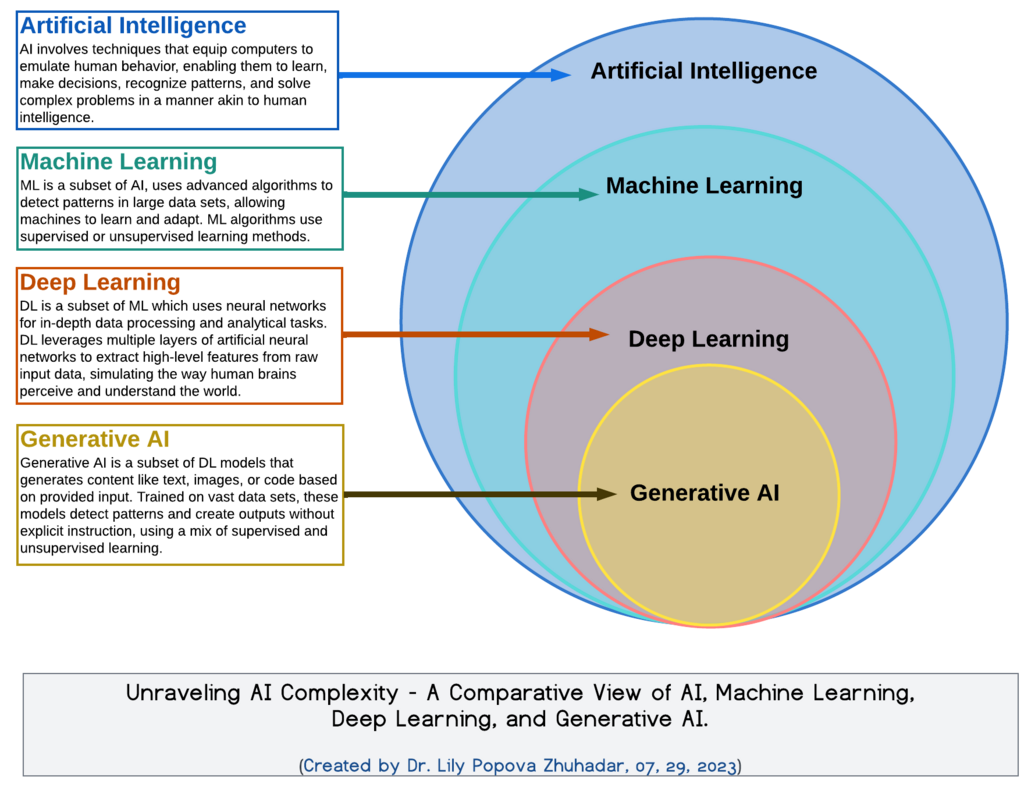
This capability didn't appear overnight. It's the result of decades of research in computer science and linguistics.
A Brief History
The journey to today's LLMs began with simpler statistical models. Early language models, known as n-gram models, looked at sequences of words (n-grams) to predict the next word. For example, after seeing "the cat sat on the," an n-gram model might predict "mat" as a likely next word based on how often that phrase appeared in its training data. These models were useful but had a very limited understanding of context.
The big breakthrough came with the development of neural networks, which are computing systems inspired by the human brain. These models could learn more complex patterns. The real game-changer was the invention of the "transformer" architecture in 2017. This new design allowed models to weigh the importance of different words in a sentence, giving them a much better grasp of long-range context and meaning.
Over extensive research spanning decades, language modeling has progressed from initial statistical language models (SLMs) to the contemporary landscape of large language models (LLMs).
This innovation paved the way for models to grow much larger—hence the name "Large Language Models"—and absorb more information, leading to the powerful AI tools we see today.
How They Work
At their core, LLMs are built on neural networks, specifically the transformer architecture. You can picture this architecture as a system with two main parts: an encoder and a decoder. The encoder's job is to read and understand the input text (your prompt). The decoder's job is to take that understanding and generate a relevant output, one word at a time.
A key mechanism in transformers is called "attention." It allows the model to focus on specific parts of the input text when generating a response. If you ask, "What is the capital of France? It's a city known for its art museums," the attention mechanism helps the model focus on "France" and "capital" while largely ignoring the extra detail about museums to produce the correct answer: "Paris."
The entire process is about probability. When an LLM generates text, it's essentially making a series of highly educated guesses about what the next word should be to form a coherent and relevant sentence. This is why their training on massive datasets is so crucial; it gives them a rich statistical understanding of how language works.
What Can LLMs Do?
The applications for LLMs are broad and continue to expand. They are becoming integral tools in many different fields.
- Content Creation: Writing emails, articles, marketing copy, and even poetry.
- Summarization: Condensing long documents, articles, or meetings into key points.
- Translation: Translating text between different languages with increasing accuracy.
- Code Generation: Writing snippets of code in various programming languages based on a natural language description.
- Customer Service: Powering chatbots that can answer customer questions and resolve issues.
- Information Retrieval: Acting as sophisticated search engines that can answer complex questions directly instead of just providing links.
From drafting a simple email to debugging a complex program, the versatility of LLMs makes them powerful assistants for a wide range of tasks.
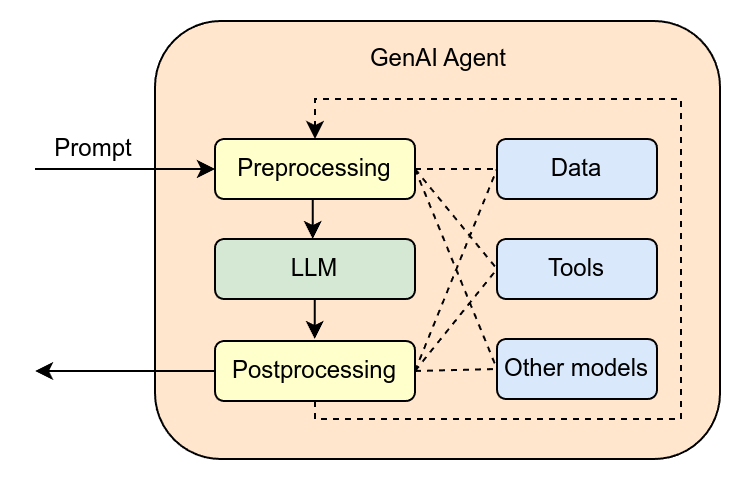
Understanding these fundamentals—what LLMs are, where they came from, and their basic mechanics—provides a solid foundation for exploring their more advanced features and capabilities.