Advanced IoT Pentesting and Ethical Hacking
IoT Ecosystem Reconnaissance
The IoT Attack Surface
Unlike a traditional server or web application, an IoT system is a layered ecosystem. A successful reconnaissance mission requires mapping all three interconnected layers: the edge, the gateway, and the cloud. Each layer communicates differently and presents unique attack vectors.
-
Edge (The Thing): This is the physical device itself—the smart lock, the sensor, the camera. It interacts with the physical world and often communicates wirelessly over protocols that your laptop's Wi-Fi card can't even see.
-
Gateway (The Hub): This is the local intermediary. It might be a dedicated hub, a mobile app on a smartphone, or even a router. It collects data from edge devices and forwards it to the cloud, often translating between different communication protocols.
-
Cloud (The Brain): This is the backend infrastructure. It consists of servers, databases, and APIs that store data, manage devices, and provide user-facing web interfaces. This is where the data from thousands of devices gets processed.
Ignoring any one of these layers means you're working with an incomplete map. An attacker might bypass a secure cloud API by directly attacking a vulnerable radio protocol on the edge device.
Mapping the Cloud and Gateway
We start our reconnaissance from the outside in, looking for the system's public-facing footprint. This is where advanced passive reconnaissance tools become invaluable. Search engines like Shodan and Censys constantly scan the internet, indexing servers and, more importantly for us, IoT devices that are inadvertently exposed.
Instead of just looking for open web ports, we can hunt for services specific to IoT. Common protocols include MQTT for messaging, CoAP for constrained devices, and mDNS for local network discovery. A simple Shodan search can reveal thousands of misconfigured devices.
# Shodan query to find open MQTT brokers
# Port 1883 is the standard unencrypted MQTT port
# Port 8883 is the standard encrypted (TLS) MQTT port

product:"MQTT" port:"1883"
Finding open ports is only the first step. The real challenge is correlating these findings with specific vulnerabilities. This is where AI-assisted tools can dramatically speed up the process. You can use custom scripts with OpenAI's API or tools like Microsoft Security Copilot to feed in a list of discovered services and ports. The AI can then cross-reference this data against databases of known and even suggest potential exploit paths based on the device types and software versions it identifies.
The goal of AI-driven analysis is to move from a list of open ports to a prioritized list of actionable targets with known weaknesses.
Probing the Physical World
The most significant and often overlooked attack surfaces in IoT exist in the wireless spectrum, far beyond standard Wi-Fi or Bluetooth. Many smart devices use proprietary or less common radio protocols in the sub-GHz bands to save power and increase range. Your computer's network adapter is blind to these signals.
This is where a tool like the Flipper Zero becomes essential. It's a multi-tool for hardware hacking that can analyze, capture, and emulate a wide range of wireless signals.
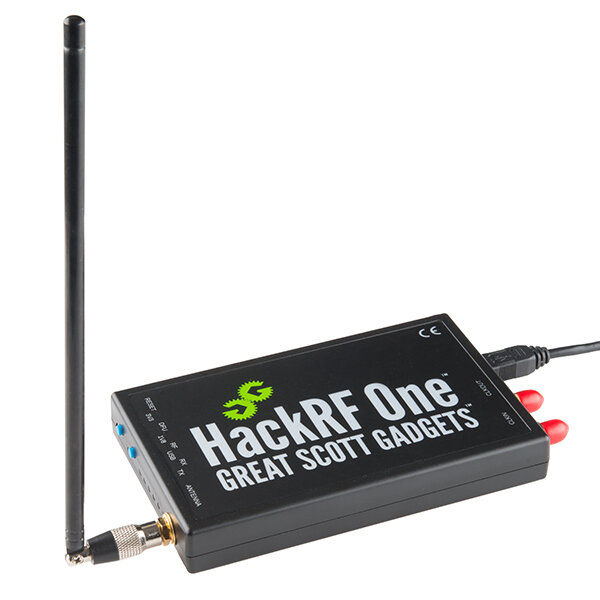
With a Flipper Zero, you can discover hidden communication channels that are invisible to traditional network scanners:
- Sub-GHz: Capture the signals from key fobs, garage door openers, and proprietary smart home sensors. You can analyze these signals to look for replay attacks or other weaknesses.
- RFID & NFC: Read and emulate the tags used for access control, payments, and device pairing. Many IoT devices use NFC for a "tap-to-configure" process, which can sometimes be intercepted or spoofed.
By actively probing the physical layer, you build a complete picture. You might discover that the encrypted traffic going to the cloud is secure, but the local sub-GHz commands between the sensor and the gateway are sent in the clear, allowing for easy interception and control.
Time to test your knowledge of IoT reconnaissance.
What are the three interconnected layers that form a complete IoT ecosystem, each presenting unique attack vectors?
Why might a standard network scanner on a laptop fail to detect communication from certain IoT edge devices?
Effective IoT reconnaissance requires a multi-layered approach. By combining cloud intelligence from tools like Shodan with on-the-ground wireless discovery, you can uncover the true attack surface of an entire ecosystem.