Advanced Instructional Design Strategies
Advanced Adult Learning Theories
How Adults Really Learn
Moving beyond basic principles, we find richer theories that explain how adults truly grow and change. These frameworks aren't just academic; they're practical tools for designing learning that sticks. They focus on shifting perspectives, learning through action, and empowering learners to take control.
Shifting Perspectives
Some learning experiences don't just add knowledge, they fundamentally change how we see the world. This is the core of Transformative Learning Theory. It suggests that real growth happens when we question our deepest assumptions.
The process often starts with a challenge to our worldview. It’s a moment that makes us stop and think, “Huh, I never thought of it that way before.” This triggers a period of reflection, where we examine our old beliefs and explore new ones. If the new perspective makes more sense, we adopt it, and our frame of reference is transformed.
Disorienting Dilemma
noun
An experience that challenges a person's long-held beliefs or assumptions, triggering a process of critical reflection and potential transformation.
As an instructional designer, your goal isn't just to present facts. It's to create the conditions for these perspective shifts. You might design a simulation where the “standard” approach fails, forcing the learner to find a new strategy. Or, you could use case studies that present complex, ambiguous problems with no easy answer.
The aim is to move learners from simply knowing something to fundamentally understanding it in a new way. This is done by encouraging critical reflection through journaling, group discussions, or structured debates.
Learning by Doing
Experiential learning is built on a simple idea: we learn best when we are actively involved. It's not enough to just read about a topic; we need to interact with it. David Kolb's Experiential Learning Theory maps this out as a four-stage cycle that transforms experience into knowledge.
Let’s break this down. It starts with a Concrete Experience—doing something. This is followed by Reflective Observation, where the learner steps back and asks, “What happened?” Next comes Abstract Conceptualization, the “aha!” moment where the learner forms a new idea or theory. Finally, in Active Experimentation, the learner tests this new idea, which creates a new concrete experience, and the cycle begins again.
For instructional design, this means building learning around this cycle. Instead of a lecture, start with a hands-on activity. Follow it with a guided discussion or a journaling exercise to encourage reflection. Then, introduce the formal concepts or models that explain the experience, and finally, provide a new challenge where learners can apply their new understanding.
Learners in the Driver's Seat
Self-Directed Learning (SDL) is the idea that adults are most effective when they take ownership of their learning journey. This doesn't mean leaving them completely on their own. It means designing a learning environment that empowers them to identify their needs, set their own goals, find resources, and evaluate their own progress.
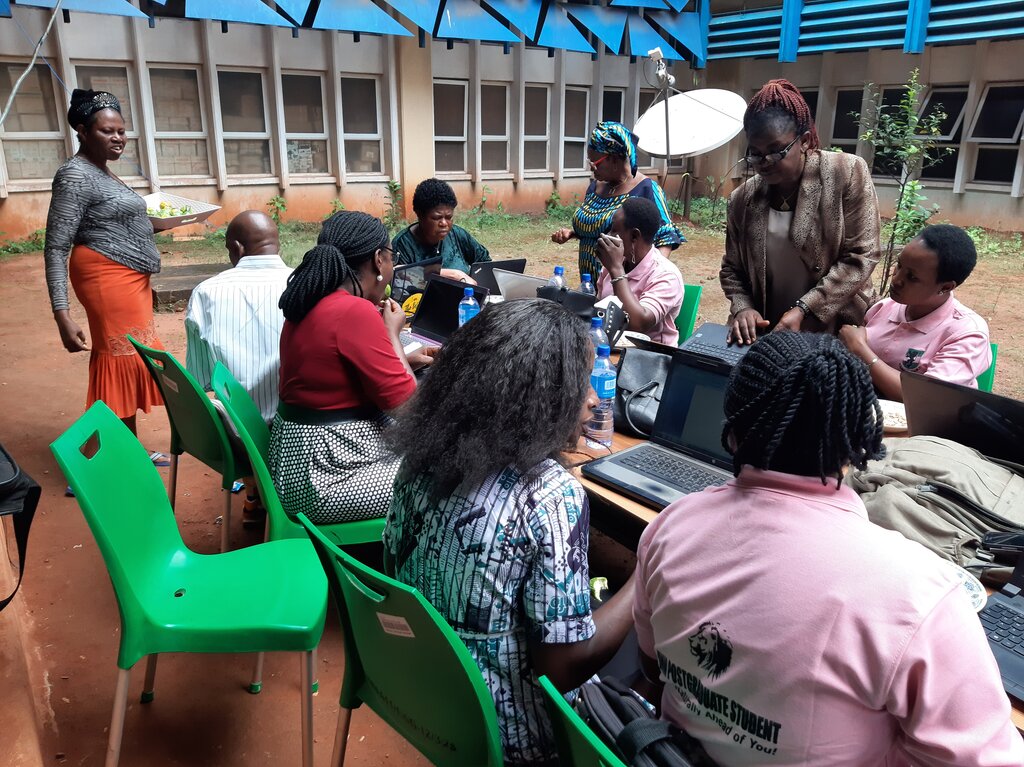
This model thrives on autonomy and relevance. Adult learners are motivated when they see a direct link between the learning and their personal or professional goals. As a designer, you can foster SDL by creating flexible learning paths. Instead of a single, linear course, you might offer a library of resources, project-based options, or learning contracts where individuals map out what they will learn and how they will demonstrate mastery.
The instructor's role shifts from being a “sage on the stage” to a “guide on the side.” They provide support, resources, and feedback, but the learner is the one steering the ship.
Self-Directed Learning: Adults thrive when they have control over their learning paths, emphasizing the importance of autonomy, goal-setting, and reflection.
Incorporating these advanced theories helps create learning that is more than just informational. It becomes meaningful, personal, and ultimately, more effective.
Ready to check your understanding of these powerful learning models?
A learner participates in a hands-on workshop (Concrete Experience), jots down notes about what worked and what didn't (Reflective Observation), develops a new mental model for the process (Abstract Conceptualization), and then tries the new approach on a different problem (Active Experimentation). This process describes which learning theory?
The central idea of Transformative Learning Theory is that significant learning happens when an individual...
By understanding and applying these frameworks, you can design instruction that truly resonates with adult learners, leading to deeper knowledge and lasting change.