Advanced Insights into Hallucinogenic Mycology and Pharmacology
Tryptamine Biochemistry
A Tale of Two Molecules
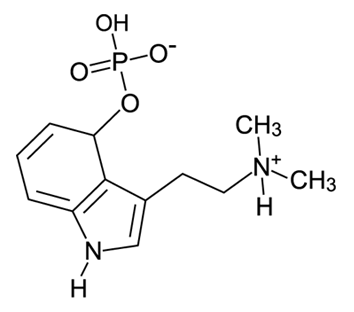
At the heart of psychedelic mushrooms are two key tryptamine alkaloids: psilocybin and psilocin. They are chemically very similar, but a tiny difference in their structure has a huge impact on their function and stability. Psilocybin is the more abundant of the two in fresh mushrooms. Its defining feature is a phosphate group attached to its indole ring.
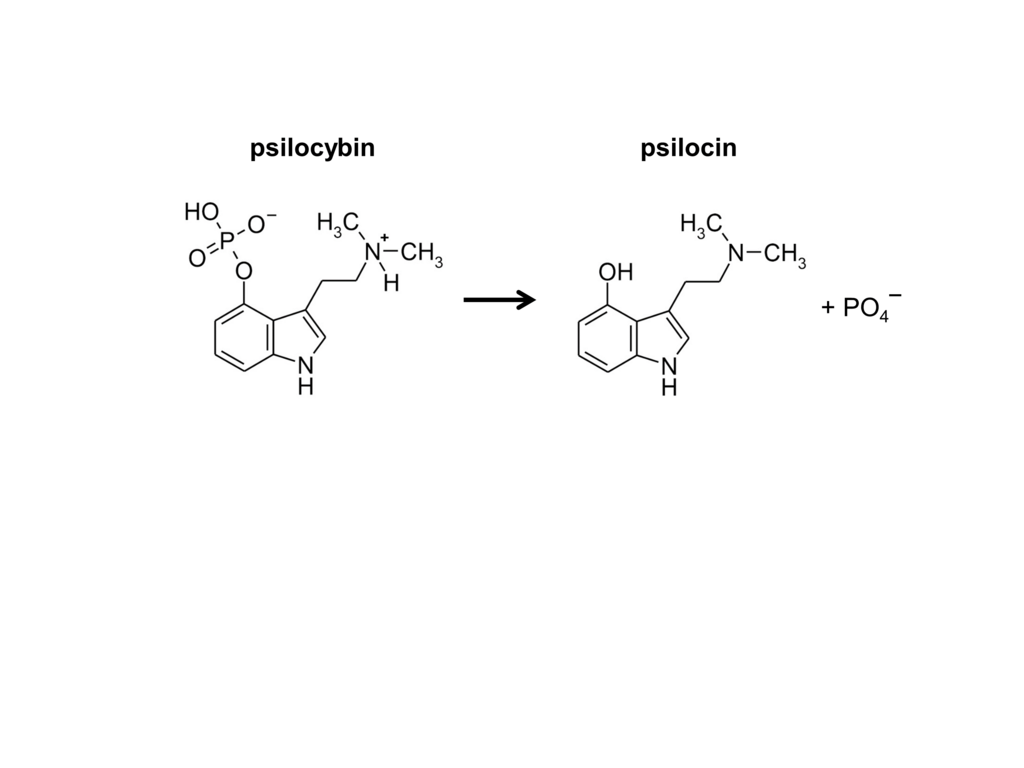
Psilocin, on the other hand, lacks this phosphate group. Instead, it has a hydroxyl (-OH) group in that position. This single change makes all the difference. While psilocybin is the primary compound found in the fungus, it's psilocin that is responsible for the psychoactive effects.
From Inactive to Active
Psilocybin is what's known as a prodrug. This means it's an inactive compound that the body metabolizes into an active one. Once ingested, psilocybin travels through the digestive system and is absorbed into the bloodstream. In the acidic environment of the stomach and through the action of enzymes in the gut wall and liver, it undergoes a crucial transformation.
Psilocybin differs from psilocin in having a phosphate group attached to the molecule at the oxygen atom.
The process is called dephosphorylation. The phosphate group is cleaved off the psilocybin molecule, converting it into psilocin. The primary enzyme responsible for this is , which is abundant throughout the body. This conversion allows the molecule to cross the blood-brain barrier and interact with serotonin receptors.
Stability and the Blue Bruise
If you've ever seen a psilocybin mushroom, you might have noticed that it bruises a distinct blue-green colour when damaged. This is a direct result of the chemical difference between psilocybin and psilocin. The phosphate group on psilocybin makes it a very stable molecule, resistant to breaking down when exposed to air and light.
Psilocin, however, is highly unstable. Its exposed hydroxyl group is susceptible to oxidation, especially in the presence of enzymes released when the mushroom's cell walls are broken. This oxidative process forms blue-coloured polymers, creating the characteristic bruising. It's a visual giveaway that psychoactive compounds are present.
This instability is why psilocin is difficult to work with in a lab. It degrades quickly, making consistent dosing and research challenging. Synthetic psilocybin, being much more stable, is the preferred compound for clinical trials and pharmaceutical research. It can be stored for long periods and provides a reliable, predictable dose that the body then converts to psilocin.
The Fungal Cocktail
Not all psychedelic mushrooms are created equal. The concentration of psilocybin, psilocin, and other related alkaloids can vary dramatically between species and even between different batches of the same species. For example, Psilocybe azurescens, which grows in the Pacific Northwest, is known to be one of the most potent species, containing significantly higher concentrations of these compounds than the more common Psilocybe cubensis.
| Species | Psilocybin (%) | Psilocin (%) | Baeocystin (%) |
|---|---|---|---|
| P. azurescens | up to 1.78 | up to 0.38 | up to 0.35 |
| P. semilanceata | up to 0.98 | up to 0.02 | up to 0.36 |
| P. cubensis | up to 0.63 | up to 0.60 | up to 0.02 |
Furthermore, mushrooms contain more than just psilocybin and psilocin. They also produce secondary metabolites like and norbaeocystin. These are structural analogs of psilocybin, meaning they have very similar chemical structures but with slight modifications. While their exact pharmacological effects are not fully understood, some researchers believe they contribute to an 'entourage effect'.
The entourage effect is the idea that the combination of all these different alkaloids working together produces a different subjective experience than pure, synthetic psilocybin alone. The subtle interplay between psilocybin, psilocin, baeocystin, and other minor compounds may be responsible for the reported differences in effects between various species of mushrooms.
What is the key structural difference between a psilocybin molecule and a psilocin molecule?
The blue bruising that appears on some mushrooms when they are damaged is a result of:
Understanding these molecular details reveals the elegant chemical processes at play, from the mushroom's own biology to the way these compounds interact with our own.