Advanced Indian Polity: Fundamental Rights Deep Dive
Constitutional Morality
The Spirit of the Constitution
Constitutional morality is not a specific clause one can point to in the text of the Constitution. Instead, it is the underlying ethos, the spirit that animates its provisions. It represents a commitment to the foundational values of the Constitution—liberty, equality, fraternity, and justice—over and above popular sentiment or transient legislative majorities. It is the implicit understanding that a constitutional democracy is more than just the mechanics of governance; it is a normative project aimed at achieving a just social order.
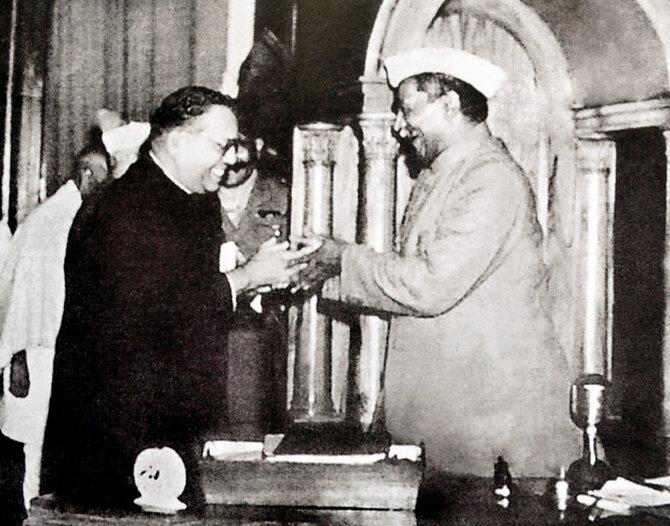
The genesis of this concept in Indian jurisprudence can be traced to the Constituent Assembly Debates. Dr. B.R. Ambedkar cautioned that the success of the Constitution would not depend merely on its structure, but on the cultivation of a constitutional morality among the people and institutions of India. He saw it as a necessary precondition for the peaceful and democratic functioning of the state, a force to temper the exercise of power and ensure that constitutional forms were not subverted for partisan ends. This morality is what transforms the Constitution from a mere rulebook into a living document.
Public Will vs Constitutional Will
A crucial distinction exists between constitutional morality and public morality. Public morality refers to the prevailing norms, beliefs, and standards of a community or a majority segment of it. It is often rooted in tradition, religion, or social convention. While it reflects the current societal consensus, it can also be exclusionary and discriminatory.
Constitutional morality, conversely, is derived from the text, structure, and ultimate vision of the Constitution itself. Its primary function is to act as a counter-majoritarian check, safeguarding the fundamental rights of individuals and minorities against the potential tyranny of the majority.
| Feature | Constitutional Morality | Public Morality |
|---|---|---|
| Source | The Constitution's text, structure, and ethos | Prevailing social norms, traditions, religion |
| Nature | Counter-majoritarian, protective of rights | Majoritarian, reflects popular consensus |
| Goal | Uphold constitutional values (liberty, equality) | Maintain social order and tradition |
| Application | Universal, based on principle | Variable, dependent on societal views |
The Doctrine in Action
The Supreme Court has increasingly invoked constitutional morality as a primary interpretive tool, particularly in cases concerning fundamental rights. It has been the intellectual fulcrum for judgments that challenge deep-seated social prejudices and expand the scope of individual liberty.
In Navtej Singh Johar v. Union of India, which decriminalised consensual homosexual conduct, the Court held that public morality, no matter how strong, could not be a valid ground to limit the fundamental rights of a segment of the population. The Court's duty was to uphold constitutional morality, which mandated equal protection and dignity for all citizens, irrespective of their sexual orientation.
Similarly, in the Indian Young Lawyers Association v. State of Kerala (the Sabarimala case), the majority opinion relied on constitutional morality to strike down the practice of excluding women of menstruating age from the temple. Justice D.Y. Chandrachud noted that devotion cannot be a justification for practices that perpetuate gender stereotypes and violate the constitutional tenets of equality and dignity. The constitution's vision of a just society had to override religious custom when the two were in conflict.
Perhaps most significantly, in K.S. Puttaswamy v. Union of India, which affirmed the right to privacy as a fundamental right, the Court anchored this right in the broader constitutional values of dignity and liberty. It established that the Constitution creates a sphere of individual autonomy that the state cannot breach without compelling reason, a principle at the heart of itself.
The basic structure of the Constitution i.e. its most fundamental features can be described as: Preamble, Fundamental Rights, Directive Principles, Secularism, Federalism, Republicanism, Independence of Judiciary, Rule of Law, and Liberal Democracy.
In these cases, the judiciary used constitutional morality not to invent new rights, but to give full meaning to the existing ones. It served as the lens through which Articles 14 (Equality), 19 (Freedom), and 21 (Life and Personal Liberty) were interpreted, ensuring they remain robust safeguards for every citizen.
Let's review these advanced concepts.
What is the primary source of 'constitutional morality'?
According to the provided text, which historical figure is credited with emphasising the need for constitutional morality during the Constituent Assembly Debates?