Advanced Indian Polity: Fundamental Rights
State Definition Evolution
The State Under Article 12
The enforceability of Fundamental Rights under Part III of the Constitution hinges on a single, crucial question: against whom can they be enforced? The answer lies in Article 12, which defines 'The State'. While this definition explicitly includes the Government and Parliament of India, state governments and legislatures, and all local or other authorities, the judiciary has progressively expanded this definition to keep pace with the changing nature of governance.
This expansion moves beyond the traditional confines of sovereign functions. It recognises that in a modern welfare state, governmental functions are often discharged by entities that are not formally part of the government. The central challenge has been to determine when a body, whether statutory or private, can be considered an 'instrumentality or agency' of the State, thereby making it amenable to writ jurisdiction under Article 32 and Article 226.
From Sovereign Function to Pervasive Control
The initial judicial interpretation was conservative. In early cases, the primary focus was whether a body was performing a sovereign or governmental function. The first significant shift came with Rajasthan State Electricity Board v. Mohan Lal, where the Supreme Court held that the term 'other authorities' is wide enough to include all authorities created by the Constitution or statute, on whom powers are conferred by law. It wasn't necessary for the authority to be engaged in performing governmental or sovereign functions.
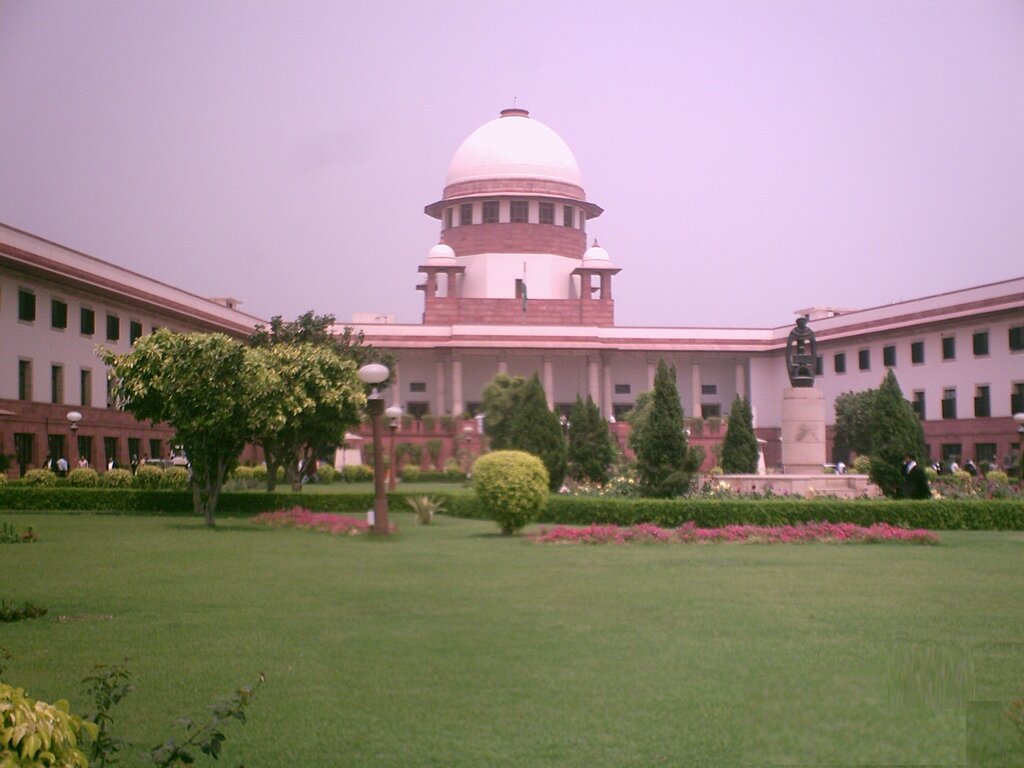
This was further crystallised in Sukhdev Singh v. Bhagatram, which dealt with statutory corporations like LIC and ONGC. The Court held that these bodies were 'State' because they were created by statute, had a degree of state control, and performed functions of public importance. This laid the groundwork for a more structured test.
The basic structure doctrine is an Indian judicial principle that the Constitution of India has certain basic features that cannot be altered or destroyed through amendments by the parliament.
The watershed moment arrived with R.D. Shetty v. International Airport Authority of India. Justice P.N. Bhagwati articulated a comprehensive five-point test to identify an 'instrumentality' of the state. This moved the focus from the body's origin (statutory or non-statutory) to the nature of its relationship with the government. The core question became whether the state exercised deep and pervasive control over the body.
Shortly after, in Ajay Hasia v. Khalid Mujib Sehravardi, the Supreme Court affirmed and consolidated the R.D. Shetty test, applying it to a society registered under the Societies Registration Act. The Court clarified that what matters is the substance, not the form. If a body is financially, functionally, and administratively dominated by the government and such control is deep and pervasive, it is an agency of the government and must be treated as such.
| Case Name | Key Finding |
|---|---|
| Rajasthan State Electricity Board | 'Other authorities' not limited to sovereign functions. |
| Sukhdev Singh | Statutory corporations can be 'State'. |
| R.D. Shetty | Introduced the five-point 'instrumentality' or 'agency' test. |
| Ajay Hasia | Affirmed the R.D. Shetty test, emphasizing substance over form. |
| Pradeep Kumar Biswas | Overruled Saboojit Tewary, holding that a combination of factors is needed to establish deep and pervasive state control. |
The Public Function Test and Privatisation
The landscape of governance has shifted dramatically with privatisation and the increasing involvement of private actors in delivering public services. This poses a new challenge: can a private body be held accountable under Part III if it performs functions traditionally reserved for the state? This is where the public function test becomes relevant. This doctrine suggests that any body performing a function of a public nature should be considered 'State' for the purposes of that function, regardless of its constitution.
The Supreme Court has cautiously applied this test. While it has subjected certain private educational institutions and bodies to writ jurisdiction, it has stopped short of declaring that all private entities performing public functions are 'State' for all purposes. The key consideration is the nature of the function and its nexus with state power.
For instance, if a private company is tasked with operating a public utility like water supply, its actions in that specific domain could be subject to judicial review under Article 226, even if the company itself isn't declared an instrumentality of the state. This functional approach ensures that fundamental rights are not rendered meaningless by the outsourcing of governmental responsibilities.
The final major recalibration came in Pradeep Kumar Biswas v. Indian Institute of Chemical Biology, where a seven-judge bench overruled an earlier decision and held that the Council of Scientific and Industrial Research (CSIR) is a 'State'. The court emphasized that the tests formulated in Ajay Hasia were not a rigid set of rules but rather guidelines. The determinative factor is the existence of significant state control, assessed holistically.
The evolving interpretation of Article 12 demonstrates the judiciary's role as the sentinel on the qui vive, ensuring that the shield of Fundamental Rights extends to wherever state power operates, regardless of its form.
Now, test your understanding of these nuanced legal doctrines.
What was the core principle established in R.D. Shetty v. International Airport Authority of India for determining if a body is an 'instrumentality' of the State?
The 'public function test' is most relevant for determining the accountability of which type of entity under Part III of the Constitution?
This judicial dynamism is essential. As the lines between public and private sectors continue to blur, the definition of 'The State' under Article 12 must remain flexible to prevent the erosion of constitutional safeguards.