Advanced Hypertrophy and Physiology
Molecular Hypertrophy Signalling
The Anabolic Master Switch
At the heart of muscle growth lies a crucial signalling network controlled by the mechanistic target of rapamycin, or mTOR. It functions as a master regulator, integrating diverse signals from nutrients, growth factors, and mechanical stress to control cell growth and proliferation. mTOR exists in two distinct multiprotein complexes: mTOR Complex 1 (mTORC1) and mTOR Complex 2 (mTORC2).
mTOR is considered a master network in the regulation of skeletal muscle growth [10,11], and its inhibition has a decidedly negative effect on anabolic processes [12].
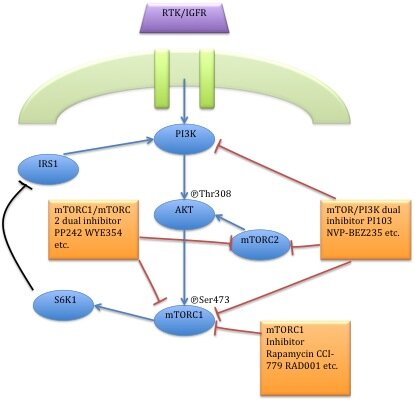
mTORC1 is the primary driver of muscle hypertrophy. Its activation directly initiates protein synthesis by phosphorylating key downstream targets like the S6 kinase 1 (S6K1) and the eukaryotic initiation factor 4E-binding protein 1 (4E-BP1). Phosphorylation of 4E-BP1 causes it to release its inhibition on eIF4E, a critical factor for initiating the translation of mRNA into protein. In contrast, mTORC2 is more involved in cell survival and cytoskeletal organization, primarily by activating the protein kinase Akt. While both are important, it's the acute, transient activation of mTORC1 that serves as the central command for muscle protein synthesis (MPS).
Mechanical and Nutrient Sensing
mTORC1 doesn't act in a vacuum. It's a sophisticated sensor. Mechanical tension from resistance exercise is transduced into biochemical signals through structures called . These complexes, rich in integrin proteins, link the extracellular matrix to the actin cytoskeleton. When muscles contract under load, these integrins sense the strain and initiate a signalling cascade that travels inward.
This mechanical signal often converges on the PI3K/Akt pathway. Growth factors like IGF-1, released in response to exercise, bind to their receptors and activate PI3K, which in turn activates Akt. Akt then phosphorylates and inhibits a complex called TSC1-TSC2 (Tuberous Sclerosis Complex). TSC2 normally acts as a brake on mTORC1 by inactivating a small GTPase called Rheb. When Akt inhibits TSC2, Rheb remains in its active, GTP-bound state, potently activating mTORC1.
Nutrient availability, particularly the amino acid leucine, provides a parallel activation signal. Leucine signals through a separate pathway involving the Rag GTPases, which helps translocate mTORC1 to the lysosomal surface, where its activator, Rheb, is located. This dual-key system ensures that protein synthesis is only initiated when both mechanical stimulus and building blocks are present.
The Energy-Sensing Brake
While mTORC1 pushes the anabolic accelerator, another kinase, AMP-activated protein kinase (AMPK), acts as the emergency brake. AMPK is the cell's primary energy sensor, activated when cellular energy status is low, indicated by a rising AMP:ATP ratio. This occurs during prolonged, high-intensity activities like endurance exercise.
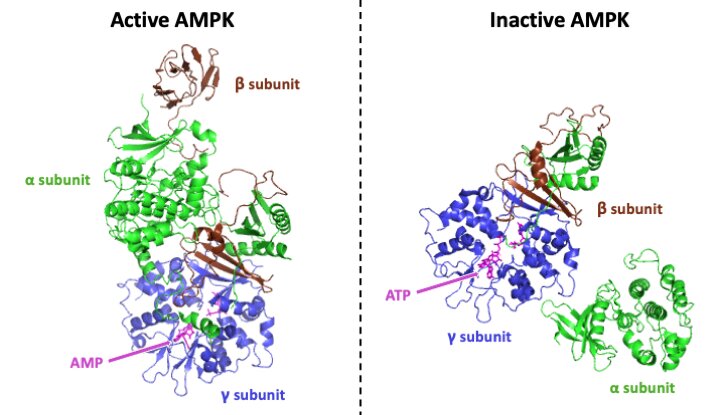
Upon activation, AMPK's mission is to restore energy homeostasis. It stimulates catabolic pathways that generate ATP (like fatty acid oxidation) and powerfully inhibits ATP-consuming anabolic processes, chief among them being protein synthesis. AMPK achieves this inhibition of mTORC1 through two primary mechanisms:
- Direct phosphorylation and activation of the TSC2 subunit of the TSC complex, which enhances its ability to inactivate Rheb and shut down mTORC1.
- Direct inhibitory phosphorylation of Raptor, a key component of mTORC1, which interferes with its ability to bind its substrates.
This antagonistic relationship is the basis for the interference effect observed in concurrent training. When endurance and strength training are performed too closely together, the strong activation of AMPK from the endurance component can override or blunt the mTORC1 signaling stimulated by the resistance exercise, potentially compromising long-term hypertrophic adaptations. Strategically timing nutrient intake and separating training sessions can help mitigate this conflict.
Signalling Dynamics
The anabolic signal from mTORC1 activation is transient. Following a bout of resistance exercise, muscle protein synthesis rates become elevated, peaking around 24 hours post-exercise and returning to baseline within 36-48 hours. This finite window is crucial.
Interestingly, chronic activation of mTORC1 does not lead to continuous, runaway growth. In fact, it can be detrimental, leading to a refractory state or even muscle wasting. The system has built-in negative feedback loops to maintain homeostasis. For example, a downstream target of mTORC1, S6K1, can phosphorylate and degrade Insulin Receptor Substrate 1 (IRS-1), creating insulin resistance and dampening the upstream signal from the PI3K/Akt pathway. This creates a refractory period where the muscle cell becomes temporarily less sensitive to further anabolic stimuli.
This highlights why more is not always better. The goal is not to maximize mTORC1 activation 24/7, but to create potent, cyclical pulses of activation followed by periods of rest, allowing the system to reset its sensitivity. This principle underscores the importance of recovery and periodization in training program design, ensuring that each workout provides a sufficiently novel stimulus to a sensitized system.