Advanced Hydrological Processes
Hydrological Cycle
The Never-Ending Journey of Water
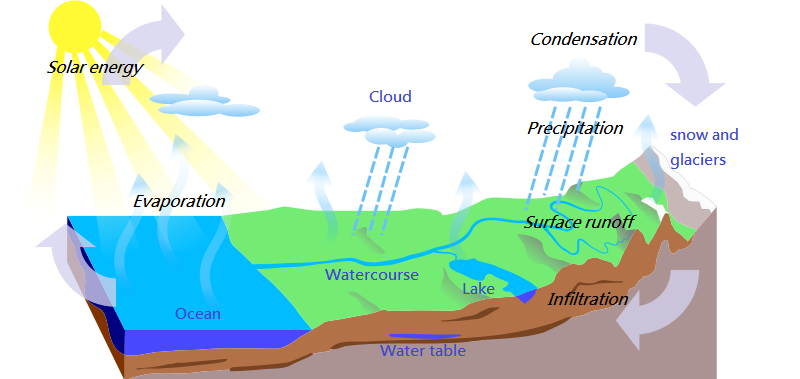
The water you drank today might have once been part of a cloud over the Amazon, a glacier in Antarctica, or a puddle on a street in Paris. Water on Earth is constantly moving. It changes form, from liquid to gas to solid, and travels around the globe in a continuous process called the hydrological cycle, or water cycle.
The water cycle is the continuous movement of water within the Earth and its atmosphere.
This cycle doesn't have a starting or ending point. It's a closed loop powered by energy from the sun and the force of gravity. Think of it as Earth's circulatory system, moving this vital resource to every corner of the planet.
From Surface to Sky
How does water get from the ground into the atmosphere? The main process is evaporation. When the sun heats up oceans, lakes, and rivers, it gives water molecules enough energy to turn into a gas called water vapor. This invisible vapor then rises into the air. You see this happen on a small scale when a puddle dries up after it rains.
Evaporation
noun
The process by which a liquid turns into a gas.
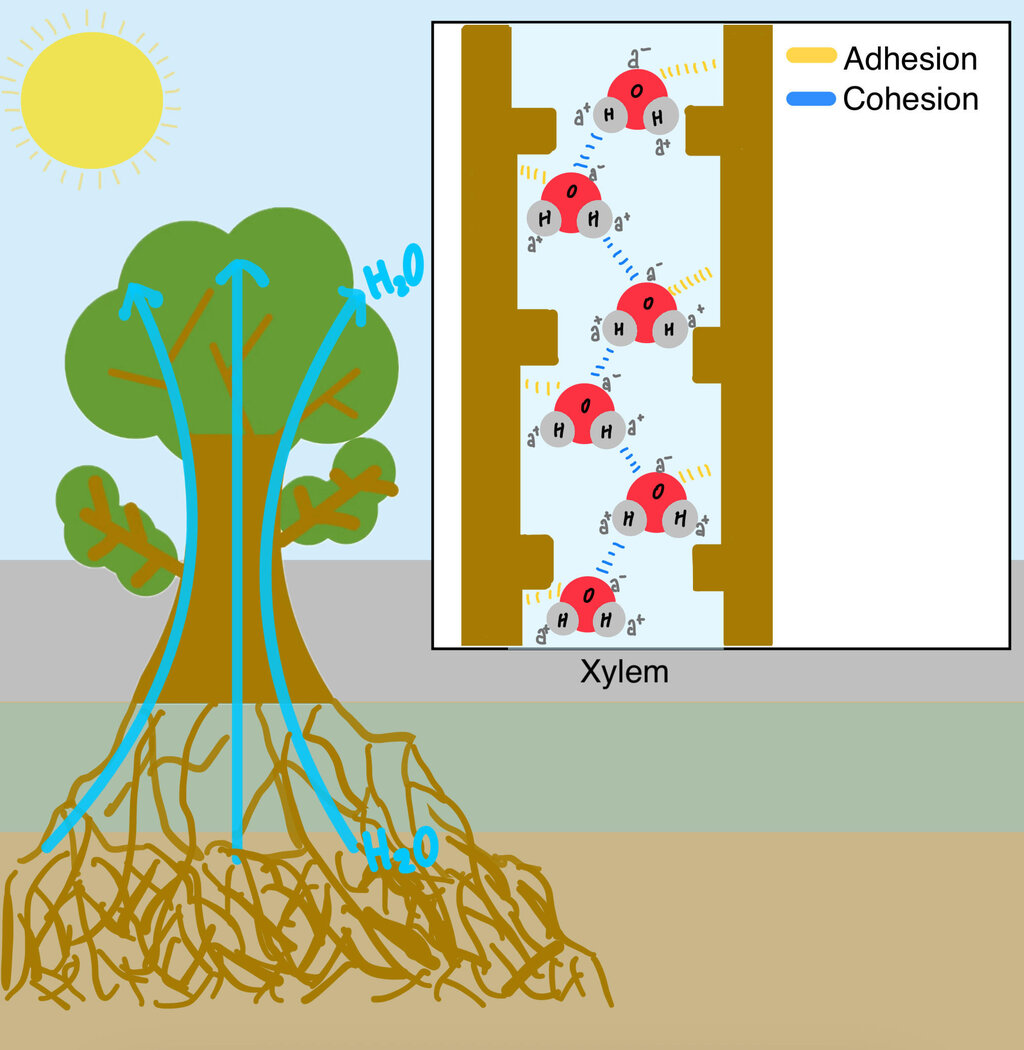
Plants also release water vapor into the air in a process called transpiration. They absorb water through their roots and then release it through tiny pores on their leaves. It's similar to how we release moisture when we breathe. A large tree can transpire hundreds of gallons of water in a single day, making it a major contributor to atmospheric moisture.
From Sky to Surface
Once in the atmosphere, water vapor doesn't stay there forever. As it rises, it cools. This cooling causes the vapor to change back into tiny liquid water droplets or ice crystals. This process is called condensation. It's the same thing you see when your cold glass of water gets “sweaty” on a warm day, or when dew forms on grass overnight.
These tiny droplets and crystals clump together to form the clouds we see in the sky.
When these droplets or crystals in the clouds become too heavy to stay suspended in the air, they fall back to Earth. This is called precipitation. Depending on the temperature, precipitation can take many forms: rain, snow, sleet, or hail. It's the primary way water returns to the Earth's surface, replenishing our oceans, lakes, and rivers.
Water on the Ground
When precipitation reaches the ground, it can take several paths. Some of it soaks into the earth, a process known as infiltration. This water might stay in the top layers of soil, where plants can access it, or it might sink deeper.
The downward movement of water through the soil and rock layers is called percolation. Through percolation, water can reach underground layers of rock that are saturated with water, known as aquifers. This stored water, called groundwater, is a massive freshwater reservoir.
Not all water soaks into the ground. If rain falls too quickly for the soil to absorb it, or if it falls on non-porous surfaces like rock or pavement, the water flows over the land. This is called runoff. Runoff collects in streams, rivers, and lakes, eventually making its way back to the ocean, where the cycle begins anew.
Ready to test your knowledge?
What are the two primary forces that drive the water cycle on Earth?
The process by which plants release water vapor into the atmosphere from their leaves is called _________.
Every drop of water is on a constant journey. Understanding these processes helps us appreciate the complex and beautiful system that sustains all life on Earth.