Advanced Human Psychology and Behavior
Neural Decision Mechanisms
The Brain's Boardroom
Decision-making isn't a single event in one part of your brain. It's a complex negotiation between different neural systems, each with its own agenda. Think of it like a boardroom meeting. You have the logical CEO, the passionate advisor, and the data-driven analyst all weighing in. Understanding how this boardroom operates is key to understanding why we choose what we do, from picking a coffee to making a life-altering decision.
The Rational Executive
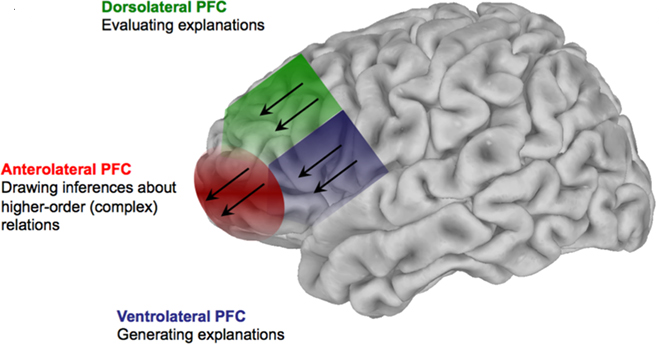
The brain's chief executive is the prefrontal cortex (PFC). Located at the very front of your brain, it's responsible for what we call executive functions: planning, predicting outcomes, and inhibiting impulses. It's the part of you that thinks about long-term consequences and tries to make the most rational, logical choice. This is the system that excels at 'cold' cognitive tasks, where emotion is less of a factor.
The prefrontal cortex is the brain's command center, responsible for executive functions like decision-making and planning.
Different regions within the PFC specialize. The dorsolateral prefrontal cortex, for instance, is crucial for working memory and weighing pros and cons. When you're carefully deliberating over a choice, this is the area doing the heavy lifting. It helps you stay focused on a goal and manage complex information.
Hot vs. Cold Decisions
Not all decisions are made with cool logic. Sometimes, emotion hijacks the process. The amygdala, a small, almond-shaped structure deep in the brain's limbic system, is the source of these rapid, emotional inputs. It acts as an early warning system, tagging situations with emotional significance, especially fear and pleasure. This creates what are known as 'hot' decisions, where gut feelings can override the PFC's careful calculations.
This interplay is managed by a conflict monitor: the anterior cingulate cortex (ACC). The ACC becomes highly active when there's a clash between the logical PFC and the emotional amygdala. It signals that a choice is difficult or that there's a discrepancy between your intentions and your actions, essentially flagging the conflict for your brain to resolve. The more conflict, the more the ACC lights up.
Reward, Risk, and Routine
How does the brain learn from its choices? The answer lies in reward processing, orchestrated largely by the striatum and a neurotransmitter called dopamine. The striatum, part of the basal ganglia, is activated by rewarding experiences. When you do something that leads to a positive outcome, dopamine is released in the striatum. This dopamine signal doesn't just feel good; it's a powerful learning signal. It reinforces the neural pathway that led to the rewarding choice, making you more likely to repeat that behavior in the future. It's the brain's way of saying, "Do that again."
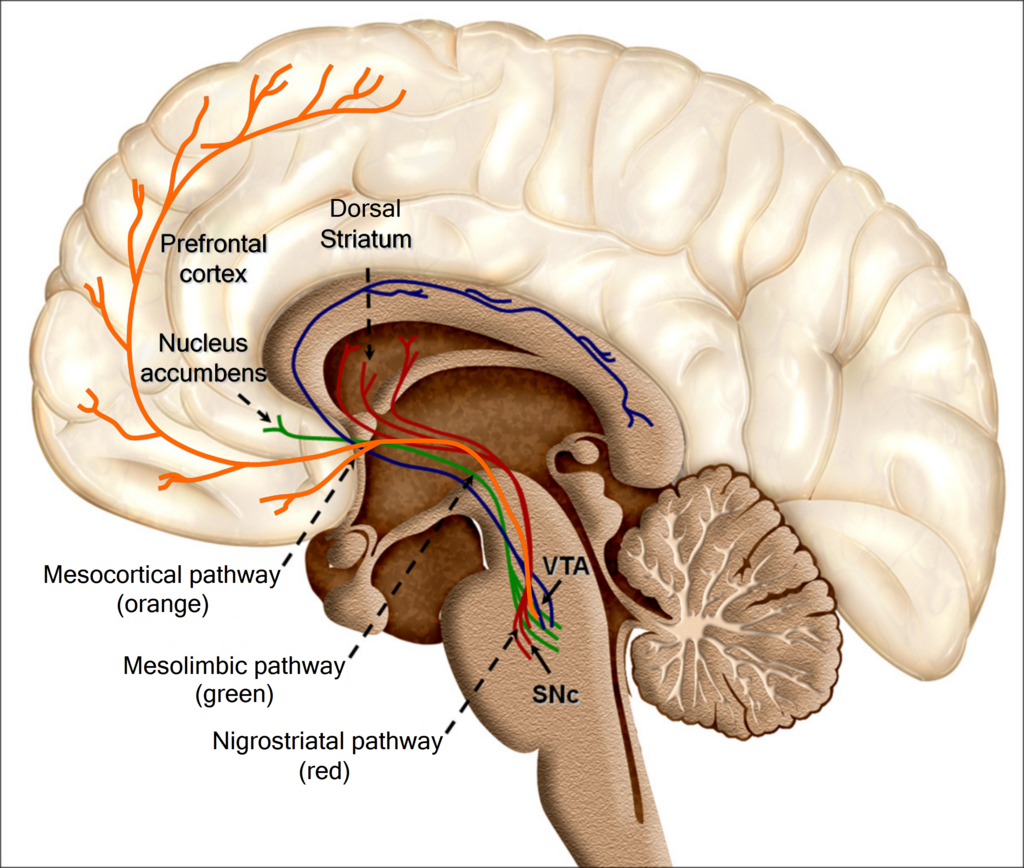
This mechanism is how habits are formed. With enough repetition, the decision-making process for routine actions gets outsourced from the conscious, effortful PFC to the automatic, efficient basal ganglia. This frees up mental resources. Instead of actively deciding each step of your morning commute, your striatum runs the show, allowing your PFC to think about other things. However, this same efficiency can make it difficult to break bad habits, as the reinforced pathways are powerful and automatic. Taking a risk, on the other hand, fully engages the PFC and ACC, which must weigh the potential for a large dopamine-fueled reward against the possibility of a negative outcome.
Now let's test your understanding of these decision-making circuits.
Which part of the brain is considered the 'chief executive' responsible for logical planning, predicting outcomes, and inhibiting impulses?
When you successfully complete a difficult task and feel a sense of accomplishment, a dopamine release in which brain region reinforces the behavior, making you more likely to repeat it?