Advanced Human Brain Neurobiology
Neuroanatomy
The Thinking Cap
The most striking feature of the human brain is its wrinkled outer layer, the cerebral cortex. This is the brain's main control and information-processing center, responsible for everything from language to problem-solving. If you were to flatten it out, it would cover the area of a large pizza, which is why it's folded into ridges (gyri) and grooves (sulci) to fit inside your skull.
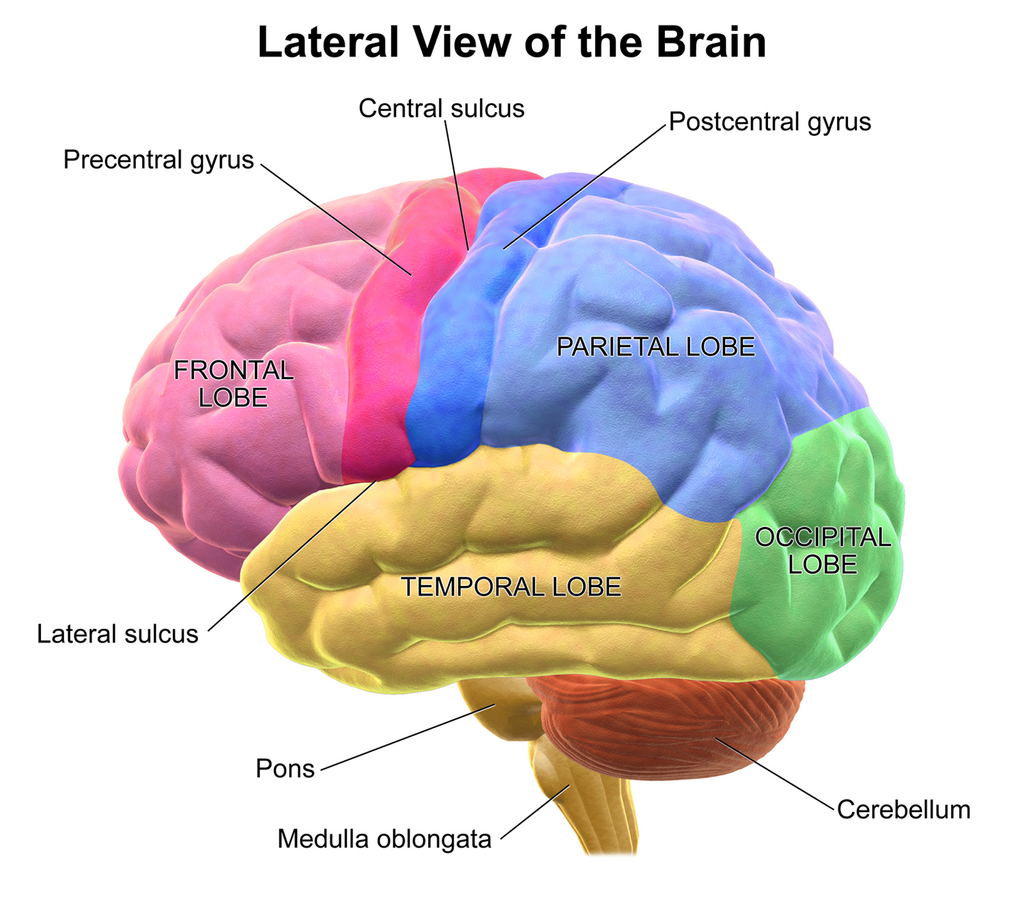
The cortex is split into two hemispheres, left and right, connected by a thick bundle of nerves called the corpus callosum. Each hemisphere is further divided into four lobes.
| Lobe | Primary Function |
|---|---|
| Frontal | Planning, decision-making, personality, voluntary movement |
| Parietal | Processing sensory information like touch, temperature, and pain |
| Temporal | Auditory processing, memory, and language comprehension |
| Occipital | Primarily responsible for vision |
While each lobe has its specialty, they all work together in a tightly integrated network. Thinking about your next move in a chess game, for instance, involves planning from your frontal lobe, spatial awareness from your parietal lobe, and recalling past strategies from your temporal lobe.
Under the Cortex
Beneath the cerebral cortex lie several vital subcortical structures. These aren't involved in conscious thought in the same way the cortex is, but they are essential for relaying information and coordinating movement.
The thalamus acts as the brain's central relay station. Almost all sensory information—sight, sound, touch, and taste—passes through the thalamus before being directed to the appropriate area of the cerebral cortex for processing. Think of it as a busy switchboard operator, routing calls to the right departments.
Another key group of structures is the basal ganglia. These are crucial for controlling voluntary movements, forming habits, and procedural learning, like how to ride a bike or type on a keyboard. Once you learn these skills, the basal ganglia help you perform them automatically.
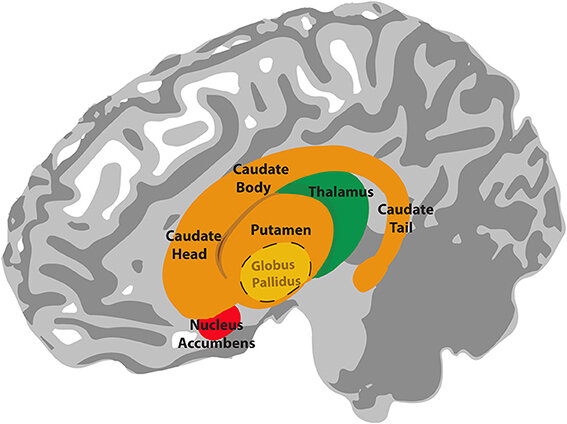
Damage to the basal ganglia can lead to movement disorders like Parkinson's disease, highlighting their critical role in smooth, controlled motion.
Core Systems
At the base of the brain, connecting it to the spinal cord, are the brainstem and cerebellum. These structures manage some of the most fundamental processes for survival.
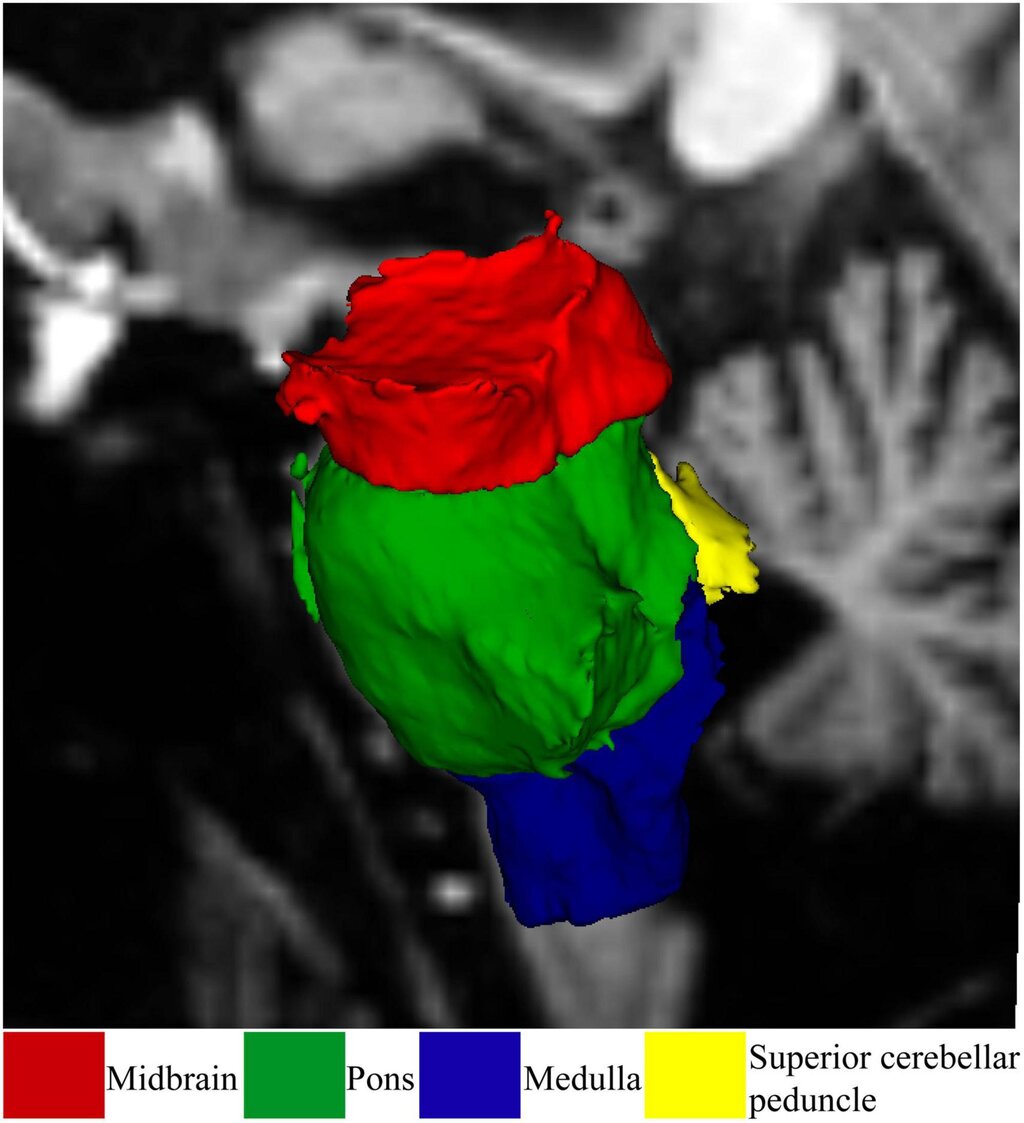
The brainstem is the oldest part of the brain evolutionarily. It controls automatic functions you never have to think about, such as breathing, heart rate, and sleep cycles. It's composed of three parts: the midbrain, pons, and medulla oblongata.
Tucked behind the brainstem is the cerebellum, which means "little brain." Its surface is also highly folded, containing more neurons than the rest of the brain combined. The cerebellum is the master of coordination, posture, and balance. It fine-tunes motor commands to make our movements smooth and precise, from walking a straight line to playing a musical instrument.
Protection and Supply
The brain is an energy-hungry organ, consuming about 20% of the body's oxygen and calories despite being only 2% of its weight. This constant demand requires a reliable blood supply, delivered by a network of arteries. A key feature of this network is the Circle of Willis, a ring of arteries at the base of the brain. This circular arrangement provides a safety net; if one artery becomes blocked, blood can still flow to the affected area from the other arteries.
Of course, this delicate organ needs protection. It's shielded by the skull, but between the bone and the brain are three protective membranes called the meninges.
| Layer | Description |
|---|---|
| Dura Mater | The tough, outermost layer, right under the skull. |
| Arachnoid Mater | A web-like middle layer. |
| Pia Mater | The delicate inner layer that clings to the brain's surface. |
Floating in the space between the arachnoid and pia mater is cerebrospinal fluid (CSF). This clear liquid acts as a shock absorber, cushioning the brain from impacts. It also circulates nutrients and removes waste products, helping to maintain a stable environment for the brain to function.
Why is the cerebral cortex, the brain's outer layer, folded into ridges (gyri) and grooves (sulci)?
Which brain structure acts as the main relay station, directing almost all incoming sensory information (like sight and sound) to the correct part of the cerebral cortex for processing?