Advanced Houseplant Mastery
Advanced Propagation Techniques
Advanced Propagation Techniques
You've mastered the basics of taking a simple cutting and watching it grow. Now it's time to explore techniques for plants that need a more specific approach. Different plants have evolved unique ways to reproduce, and by mimicking these, we can successfully propagate a wider variety of houseplants. We'll look at three key methods: stem-tip, leaf-petiole, and cane cuttings.
Stem-Tip Cuttings
This is one of the most common methods for multi-stemmed or branching plants. A stem-tip cutting is exactly what it sounds like: a piece taken from the growing tip of a plant's stem. This section contains the apical meristem, the area of most active growth, which makes it eager to produce new roots and leaves.
Plants like Ficus, Coleus, and many Pothos varieties respond well to this technique. To take a cutting, select a healthy, vigorous stem. Using a clean, sharp blade, cut a 4 to 6-inch section from the tip, making your cut just below a node. The node is a critical area where new growth originates.
After you have your cutting, gently remove the leaves from the bottom half. This prevents them from rotting in the soil or water and encourages the plant to direct its energy toward root production instead of sustaining excess foliage.
Leaf-Petiole Cuttings
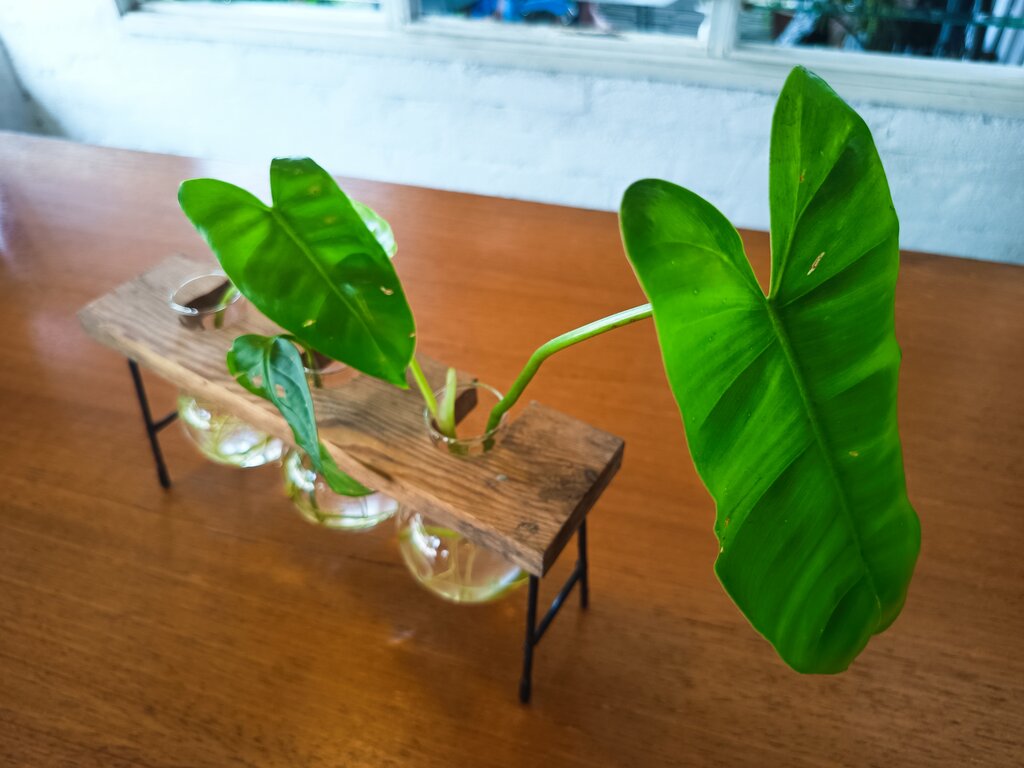
Some plants have the remarkable ability to generate an entirely new plant from just a single leaf and its stalk, the petiole. This method is perfect for species like African violets, Peperomia, and many types of Begonias.
The process is straightforward. Choose a healthy, mature leaf from the parent plant. Cut it off with about an inch of the petiole still attached. You then insert the petiole into your rooting medium, angled slightly so the leaf blade isn't lying flat on the surface. In a few weeks, you'll see tiny new plantlets forming at the base of the petiole, right where it meets the soil.
Petiole
noun
The stalk that attaches a leaf blade to the plant stem.
This technique feels a bit like magic, as it relies on undifferentiated cells at the base of the petiole to create a complete root system and new shoots.
Cane Cuttings
What about plants with thick, woody, or bamboo-like stems, such as Dracaena, Dumb Cane (Dieffenbachia), or some larger Monsteras? For these, cane cuttings are the way to go. Instead of using the tip, you use sections of the main stem or 'cane.'
You can cut the cane into sections, each about 2 to 3 inches long, ensuring each piece has at least one or two nodes (often visible as rings or bumps on the stem). These sections can then be propagated in two ways. You can either place them vertically in the rooting medium, making sure to orient them the right way up, or you can lay them horizontally on the surface of the medium, burying them about halfway.
New growth will sprout from the nodes along the cane. The horizontal method often yields multiple new shoots from a single cutting.
A Helping Hand for Roots
While many plants root easily on their own, some tougher or woodier cuttings can benefit from a little encouragement. This is where rooting hormone comes in. Available as a powder, gel, or liquid, rooting hormones contain auxins, which are plant hormones that stimulate root growth.
Using it is simple: after taking your cutting and preparing it, just dip the cut end into the rooting hormone before planting it. This can significantly speed up the rooting process and increase your success rate, especially with cuttings that are slow to root.
Always tap off any excess powder before planting. A light dusting is all that's needed; too much can actually hinder root development.
The right environment is just as crucial as the right technique. Cuttings are vulnerable because they have no roots to absorb water. To prevent them from drying out, they need high humidity. You can create a mini-greenhouse by placing a clear plastic bag over the pot, or by using a propagation tray with a dome.
Light is also a key factor. Cuttings need bright, indirect light to photosynthesize and produce the energy needed for root growth. Direct sunlight is too intense and can scorch the delicate cuttings. Finally, keep the rooting medium consistently moist but not waterlogged, as this can lead to rot.
What is the primary advantage of using a stem-tip cutting for propagation?
For which of the following plants would the leaf-petiole cutting method be most appropriate?
With these advanced techniques, you can expand your collection and share your favorite plants with confidence.