Advanced High School Chemistry Applications
Chemical Bonding Dynamics
The Drive for Stability
Atoms, like people, seek stability. For an atom, stability means having a full outer shell of electrons. This is the lowest-energy, most comfortable state it can be in. To get there, atoms interact with each other, forming chemical bonds by giving, taking, or sharing electrons. The type of bond that forms isn't random; it's a direct result of a fundamental property called electronegativity.
A chemical bond is the persistent attraction between atoms that enables the formation of chemical compounds. This attraction results from the electrostatic force between opposite charges.
Think of it as a tug-of-war for electrons. Some atoms pull very strongly, while others have a weaker grip. This atomic tug-of-war dictates everything from the salt on your table to the water you drink.
A Spectrum of Bonds
Electronegativity is the measure of how strongly an atom pulls on electrons in a bond. This property is quantified on the Pauling scale, where fluorine is the champion at 3.98 and francium is the weakest at 0.7. The key isn't the absolute value for an atom, but the difference in electronegativity () between two bonding atoms.
| Electronegativity Difference (ΔEN) | Bond Type | Electron Behavior |
|---|---|---|
| 0 - 0.4 | Nonpolar Covalent | Shared Equally |
| 0.4 - 1.7 | Polar Covalent | Shared Unequally |
| > 1.7 | Ionic | Transferred |
These numbers are guidelines, not rigid rules. Chemical bonding is a spectrum. On one end, electrons are shared perfectly. On the other, they're completely transferred. Most bonds fall somewhere in between.
The Poles of Attraction
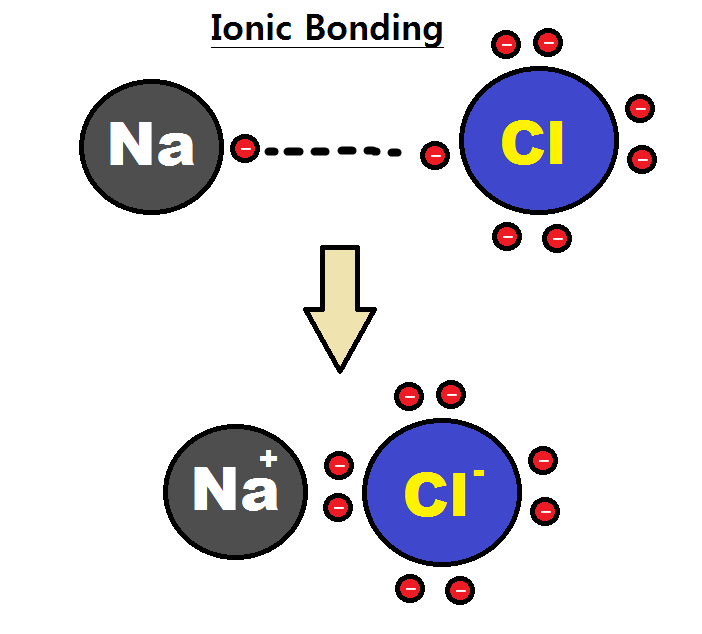
When the electronegativity difference is large (typically > 1.7), one atom is so much stronger that it rips an electron away from the other. This creates an ionic bond.
The atom that loses an electron becomes a positively charged ion (a cation), and the one that gains an electron becomes a negatively charged ion (an anion). These opposite charges attract each other powerfully, forming a rigid, crystalline structure known as an ionic lattice.
The strength of this lattice is measured by its lattice energy—the energy required to break it apart. This immense energy is why ionic compounds like table salt (NaCl) have such high melting and boiling points.
When the electronegativity difference is smaller, atoms share electrons in a covalent bond. But sharing isn't always equal.
If the difference is negligible (0 to 0.4), as between two identical atoms like in , electrons are shared equally. This is a nonpolar covalent bond, with no charge separation.
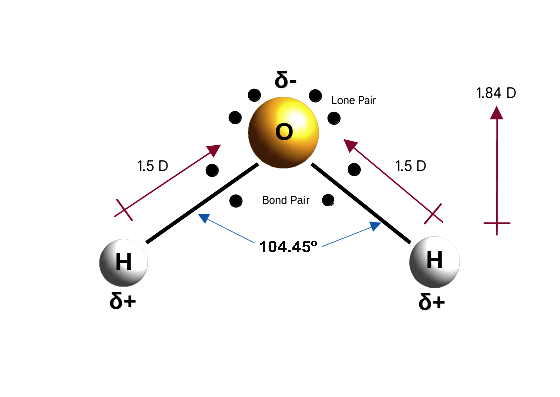
If the difference is intermediate (0.4 to 1.7), one atom pulls the shared electrons closer, creating a polar covalent bond. This results in a molecule with a slight negative charge () on the more electronegative atom and a slight positive charge () on the less electronegative one. Water () is the classic example, where oxygen pulls the electrons from hydrogen, making the whole molecule a dipole.
In some cases, nonmetal atoms form vast, three-dimensional structures linked entirely by covalent bonds. These covalent network solids, like diamond (carbon) and quartz (), are incredibly hard and have extremely high melting points because you have to break strong covalent bonds to melt them.
The Sea of Electrons
Metals have a unique approach to bonding. Metal atoms all have a relatively weak hold on their outer electrons. Instead of bonding to a specific neighbor, they pool their valence electrons into a shared "sea" that surrounds a fixed lattice of positive metal ions. This is called metallic bonding.
This "sea of electrons" model perfectly explains the properties of metals. The electrons are delocalized, meaning they aren't tied to any single atom and can move freely throughout the material. This mobility is why metals are excellent conductors of electricity and heat.
The layers of metal cations can also slide past one another without breaking the overall metallic bond, which is why metals are malleable (can be hammered into sheets) and ductile (can be drawn into wires).
Finally, it's crucial to remember that forming bonds releases energy, making the new compound more stable than the individual atoms were. This is an exothermic process. Conversely, breaking a chemical bond always requires an input of energy, an endothermic process. The balance of energy released by forming bonds and consumed by breaking them determines the overall energy change of a chemical reaction.
What is the primary factor that determines whether two atoms will form an ionic, polar covalent, or nonpolar covalent bond?
A chemical bond forms between Atom X (electronegativity 2.1) and Atom Y (electronegativity 3.4). How would you classify this bond and the resulting charge distribution?
Understanding these forces of attraction is the key to understanding why materials behave the way they do, from the hardness of a diamond to the conductivity of a copper wire.