Advanced Hepatic Physiology and Clinical Applications
Advanced Hepatic Metabolism
The Liver as Metabolic Command Center
The liver acts as the body's primary metabolic hub, constantly adjusting its processes to maintain energy balance. It's a master multitasker, deciding whether to store, use, or create fuel based on the body's immediate needs. After a meal (the post-prandial state), it takes up glucose and fats from the portal vein. During fasting, it reverses course, releasing stored energy to keep the rest of the body, especially the brain, supplied with fuel.
This constant balancing act is managed by a sophisticated interplay of hormones, primarily the ratio of insulin to glucagon. This ratio dictates which metabolic pathways are active, effectively telling the liver whether it's a time of feast or famine.
Managing Blood Sugar
Maintaining stable blood glucose is one of the liver's most critical jobs. It has two main strategies for releasing glucose into the bloodstream when levels are low.
Glycogenolysis: The rapid breakdown of stored glycogen into glucose. This is the liver's first line of defense against falling blood sugar, providing a quick energy boost.
Gluconeogenesis: The creation of new glucose from non-carbohydrate sources like lactate (from muscles), glycerol (from fat breakdown), and certain amino acids. This is a slower, more sustained process, crucial during prolonged fasting.
A key enzyme in this process is , which is found almost exclusively in the liver and kidneys. This enzyme removes a phosphate group from glucose-6-phosphate, a step that is absolutely necessary for glucose to be able to leave the liver cell and enter the bloodstream. Muscle cells lack this enzyme, which is why their glycogen stores can only be used locally for their own energy needs.
The switch between these pathways is governed by the insulin/glucagon ratio. When you eat, insulin levels rise, promoting glucose storage (glycogenesis). When you fast, insulin falls and glucagon rises. This low insulin/glucagon ratio is the signal that activates both glycogenolysis and gluconeogenesis, ensuring a steady supply of glucose to the body.
Fat and Cholesterol Logistics
Beyond glucose, the liver is the central command for lipid and cholesterol metabolism. When energy intake exceeds demand, the liver converts excess carbohydrates and fatty acids into triglycerides. But since fats aren't water-soluble, they can't just be dumped into the bloodstream. They need a transport system.
This is where lipoproteins come in. The liver packages triglycerides and cholesterol into particles called . These particles are like cargo ships, sent out from the liver to deliver fatty acids to tissues like muscles for energy or adipose tissue for storage. As VLDL particles unload their triglyceride cargo, they shrink and become denser, eventually turning into LDL (Low-Density Lipoprotein), which is rich in cholesterol.
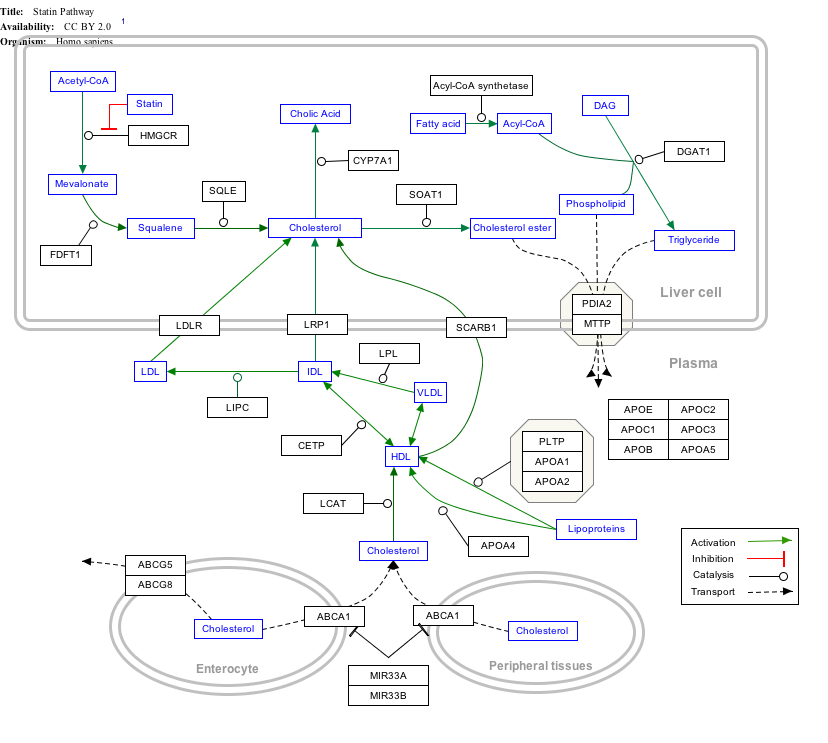
The liver also manages cholesterol synthesis. The rate-limiting step in this process is controlled by the enzyme This enzyme's activity is tightly regulated. High levels of intracellular cholesterol inhibit it, providing a negative feedback loop. This is the enzyme targeted by statin drugs, which are widely used to lower blood cholesterol.
Alternative Fuels and Waste Disposal
During prolonged fasting or on a very low-carbohydrate diet, the body needs an alternative fuel source for the brain, which cannot directly use fatty acids. In this scenario, the liver ramps up a process called ketogenesis.
The liver takes fatty acids and converts them into ketone bodies (like beta-hydroxybutyrate and acetoacetate). These are water-soluble molecules that can travel through the blood and be used by the brain, heart, and muscles as a highly efficient fuel source. This systemic energy partitioning spares glucose and muscle protein.
This shift is part of the glucose-fatty acid cycle, also known as the Randle Cycle. When fatty acid oxidation is high (as in fasting), it inhibits glucose oxidation in muscle and other tissues, thereby preserving glucose for the brain.
Finally, the liver handles protein metabolism. When amino acids are used for fuel or for gluconeogenesis, their nitrogen group must be removed. This nitrogen is toxic in the form of ammonia. The liver converts this ammonia into a much less toxic compound called urea through the Urea is then released into the blood, filtered by the kidneys, and excreted in urine. This process safely disposes of nitrogen waste while allowing the carbon skeletons of amino acids to be repurposed for energy.
This integration of carbohydrate, fat, and protein metabolism highlights the liver's indispensable role in maintaining whole-body homeostasis under a wide range of physiological conditions.
Time to check your understanding of the liver's metabolic functions.
What is the primary role of the insulin/glucagon ratio in liver metabolism?
Why can't glycogen stored in muscle cells be used to raise blood glucose levels, while liver glycogen can?
By orchestrating these complex pathways, the liver ensures every part of the body gets the fuel it needs, precisely when it needs it.