Advanced Healthcare Writing with AI and SGE
AI in Healthcare Writing
AI's Role in Health Content
Artificial intelligence, particularly large language models (LLMs) like GPT-4, is reshaping how healthcare content is created. The process is shifting from a purely manual effort to a collaboration between human experts and AI. This partnership allows writers to quickly synthesize complex medical research, generate initial drafts, and analyze data for insights that might have been missed.
Instead of spending hours on preliminary research, a writer can now use an LLM to outline an article on a specific condition, summarize recent studies, or even simplify technical jargon for a general audience. The speed and efficiency are undeniable. However, this power comes with significant responsibilities, moving the writer's primary role from creator to that of a critical reviewer, editor, and ethical guardian.
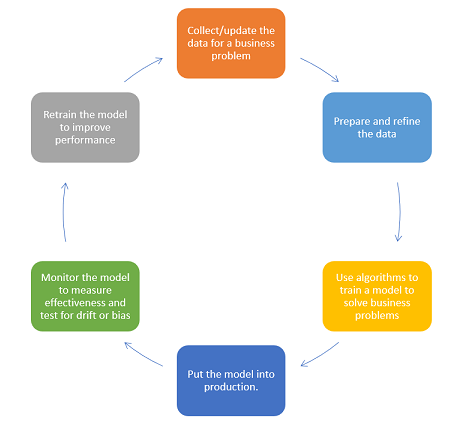
Navigating the Ethical Maze
Using AI in healthcare writing introduces complex ethical questions. Chief among them are transparency and accountability. When a piece of health content is generated with AI assistance, who is ultimately responsible for its accuracy? The answer is clear: the human writer and the publishing organization. It's crucial to be transparent about the use of AI, as this builds trust with the audience. Readers deserve to know how the information they rely on was created.
Another major concern is bias. AI models learn from the vast amounts of text they are trained on, and this data reflects existing societal biases. If the training data underrepresents certain populations, the AI's output may perpetuate harmful stereotypes or offer advice that isn't universally applicable. This can lead to content that unintentionally widens health disparities.
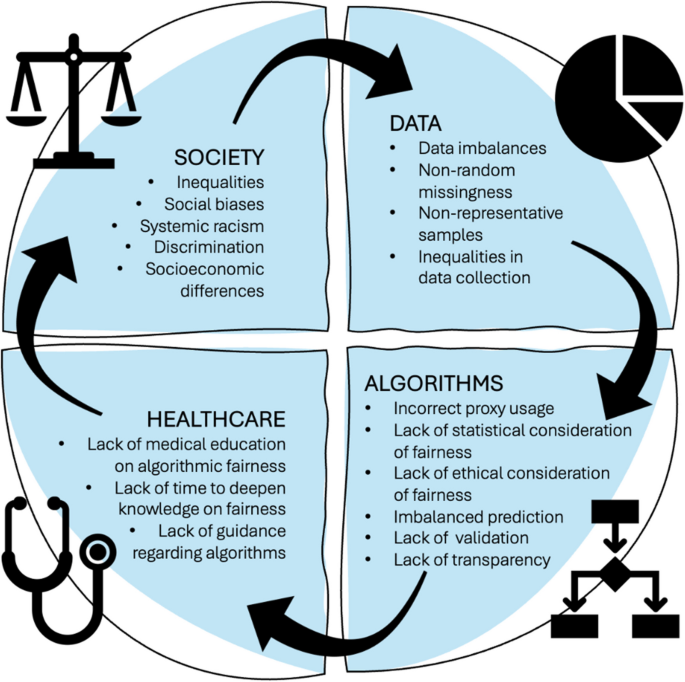
Mitigating bias requires a conscious effort. Writers must critically evaluate every piece of AI-generated text. This involves cross-referencing information with diverse and authoritative sources, ensuring that clinical examples are inclusive, and having content reviewed by people from various backgrounds. The goal is to catch and correct biases before they reach the patient or consumer.
By highlighting the importance of continuous ethical scrutiny and collaboration between AI developers, clinicians, and ethicists, we outline pathways for achieving more responsible and inclusive AI implementation in healthcare.
Compliance and Regulation
Healthcare is a heavily regulated field. Writers must adhere to strict standards like the Health Insurance Portability and Accountability Act (HIPAA) in the United States, which protects patient privacy. While AI-generated content for the public may not handle personal health information directly, the principles of accuracy, privacy, and security are still paramount.
AI tools have no inherent understanding of these legal frameworks. They cannot guarantee that a piece of content is compliant. A writer using AI must act as the final filter, ensuring that the text doesn't make unsubstantiated claims, give medical advice, or violate any regulatory guidelines. This human oversight is not just best practice; it's a legal and ethical necessity.
AI is a powerful assistant, not a compliance officer. The ultimate responsibility for accuracy and adherence to regulations always rests with the human expert.
Effective Techniques and Optimization
Leveraging AI effectively is about more than just asking a question. It requires skill in prompt engineering—crafting detailed instructions that guide the AI to produce accurate, well-structured, and appropriately toned content. For example, instead of asking, "Write about diabetes," a better prompt would be, "Write a 500-word article for a lay audience explaining the difference between Type 1 and Type 2 diabetes. Use simple language, avoid technical jargon, and adopt a compassionate and supportive tone."
| Vague Prompt | Specific Prompt |
|---|---|
| "Explain cancer treatment." | "Draft an overview of chemotherapy as a cancer treatment for a patient-focused blog. Cover what it is, common side effects, and how patients can manage them. Cite sources from the National Cancer Institute." |
| "What are vaccines?" | "Create a fact sheet for parents about the MMR vaccine. Explain what it protects against, the recommended vaccination schedule, and address common misconceptions with evidence-based information from the CDC." |
Even with a great prompt, fact-checking is non-negotiable. AI models can
hallucinate
verb
To produce false information in a confident and plausible-sounding manner.
This means every statistic, claim, and recommendation generated by an AI must be verified against primary, authoritative sources like peer-reviewed journals, government health agencies, and leading medical institutions.
Finally, consider how your content will be found. Search engines are also powered by AI. Optimizing content means using clear, structured language, answering questions directly, and demonstrating expertise and trustworthiness. AI can help identify common search queries and structure content to meet those needs, but a human writer must ensure the final piece is not just discoverable, but also empathetic, accurate, and genuinely helpful.
According to the provided text, how has the role of a healthcare writer shifted with the introduction of large language models (LLMs)?
When using AI to create healthcare content, who holds the ultimate responsibility for its accuracy and ethical integrity?
By combining the speed of AI with the critical thinking and ethical oversight of a human expert, healthcare writers can produce high-quality content that is both engaging and responsible.