Advanced Health Safety and Risk Management in Healthcare
Advanced Risk Assessment
Beyond the Basics
In a simple system, identifying risks can be straightforward. A wet floor is a slip hazard. An unlocked supply closet is a theft risk. But healthcare isn't a simple system. It's a complex web of people, processes, and technology where a small failure in one area can cascade into a major problem elsewhere.
To manage risk in this environment, we need to move beyond basic checklists and simple risk matrices. Advanced risk assessment provides a more structured and proactive way to find and fix potential failures before they happen.
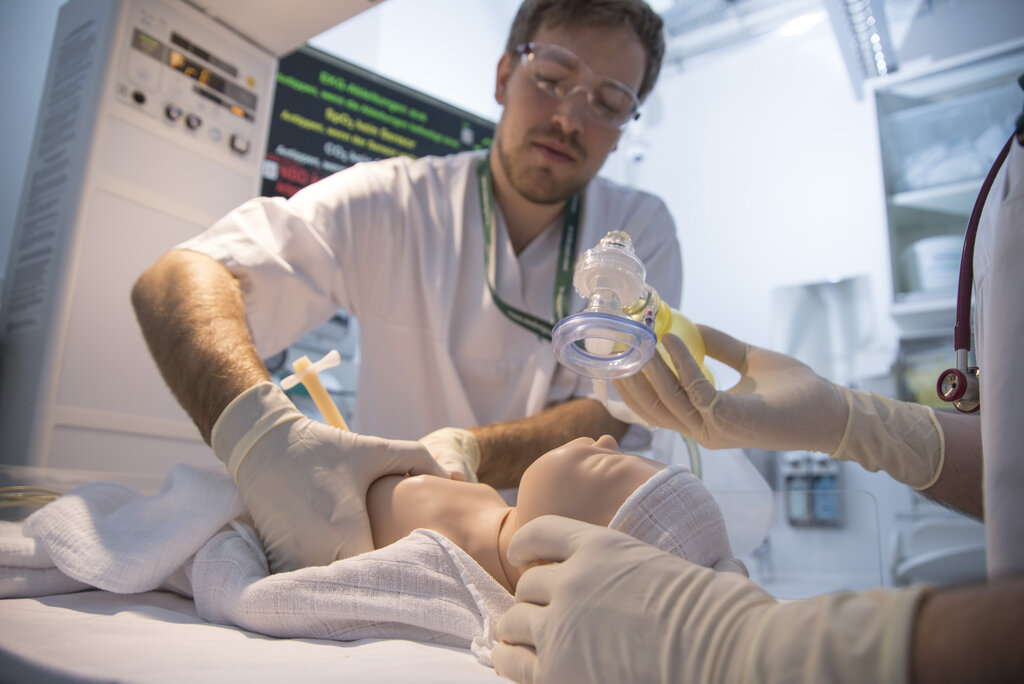
Risk assessment is a core element of health and safety management.
One of the most powerful advanced methods is Failure Modes and Effects Analysis, or FMEA. Instead of just asking "What could go wrong?", FMEA forces us to ask a series of more detailed questions about every single step in a process.
Dissecting Processes with FMEA
Failure Modes and Effects Analysis (FMEA) is a systematic, proactive method for evaluating a process to identify where and how it might fail. The goal is to figure out the potential impact of different failures to identify the parts of the process that are most in need of change.
Imagine a hospital's process for administering medication. A basic assessment might identify "wrong dosage" as a risk. FMEA goes much deeper. It looks at every step—from the doctor prescribing the drug to the pharmacist dispensing it to the nurse administering it—and analyzes the potential failure points in each one.
For each potential failure, the FMEA process assigns a score to three key factors:
- Severity (S): How badly would the patient be harmed if this failure happened? (Scale of 1-10, with 10 being catastrophic).
- Occurrence (O): How likely is this failure to happen? (Scale of 1-10, with 10 being almost certain).
- Detection (D): How likely are we to detect the failure before it reaches the patient? (Scale of 1-10, with 10 being impossible to detect).
These three scores are then multiplied to calculate a Risk Priority Number (RPN).
A high RPN signals a critical risk that needs immediate attention. The beauty of the RPN is that it reveals different kinds of risk. A rarely occurring but severe and undetectable error could have a higher RPN than a common but minor error that's easily caught.
| Failure Mode | S | O | D | RPN | Analysis |
|---|---|---|---|---|---|
| Nurse misreads handwritten dosage | 8 | 4 | 3 | 96 | High severity, moderate occurrence, but fairly detectable. |
| Pharmacy stocks wrong strength | 9 | 2 | 8 | 144 | Very severe and hard to detect, even if it happens rarely. Priority. |
| Patient allergy not in chart | 10 | 3 | 6 | 180 | Catastrophic and hard to detect. Top Priority. |
Tools for Complex Systems
While FMEA is powerful, other tools are also essential for navigating healthcare's complexity. One such tool is Root Cause Analysis (RCA). While FMEA is proactive (preventing future failures), RCA is reactive (analyzing past failures). After an adverse event, an RCA team works backward to understand not just what happened, but why. The goal is to find the fundamental system flaws that allowed the error to occur, rather than just blaming an individual.
A common RCA technique is the "5 Whys." By repeatedly asking "Why?" after each answer, you can drill down past surface-level symptoms to the underlying cause.
Another key tool is the Probabilistic Risk Assessment (PRA). This is a more quantitative approach used for highly complex systems, like a hospital's electronic health record (EHR) network. PRA uses computer models to simulate thousands of scenarios, combining the probabilities of individual component failures (like a server crash or power outage) to estimate the likelihood of a major system-wide failure. This helps organizations focus resources on shoring up the most critical vulnerabilities in their infrastructure.
By combining proactive tools like FMEA and PRA with reactive ones like RCA, healthcare organizations can create a robust system for continuous learning and improvement. They can anticipate future problems while learning valuable lessons from past mistakes.
What is the primary characteristic that distinguishes Failure Modes and Effects Analysis (FMEA) from Root Cause Analysis (RCA)?
A potential failure in a process is evaluated with the following scores: Severity (S) = 9, Occurrence (O) = 2, and Detection (D) = 6. Using the FMEA methodology, what is the Risk Priority Number (RPN)?
These advanced methods move risk management from a compliance activity to a central part of quality improvement, creating a safer environment for patients and staff.