Advanced Greek Mythology and Symbolism
Cosmogony and Theogony
The Birth of the Universe
Before the gods and goddesses, there was chaos. Not the chaos of a messy room, but a vast, formless void. From this emptiness emerged the first beings, the Primordials. These weren't gods in the way we usually think of them. They were fundamental forces and features of the universe: Gaia (the Earth), Tartarus (the pit of the underworld), Eros (Love), Erebus (Darkness), and Nyx (Night). They were the raw materials of creation.
Our main guide to this early cosmic history is a poet named Hesiod. His work, the Theogony, written around 700 BCE, is essentially a family tree of the gods. It attempts to organize and explain how the universe and its divine rulers came to be. It’s a story of creation, succession, and conflict. The very word means "birth of the gods."
From Gaia, alone, came Uranus (the Sky). She then took her son as her husband, and together they produced the next generation of deities: the twelve Titans. These beings were more defined than the Primordials, with distinct personalities and domains. They represented concepts like the sun, the moon, memory, and divine law.
A Vicious Cycle of Succession
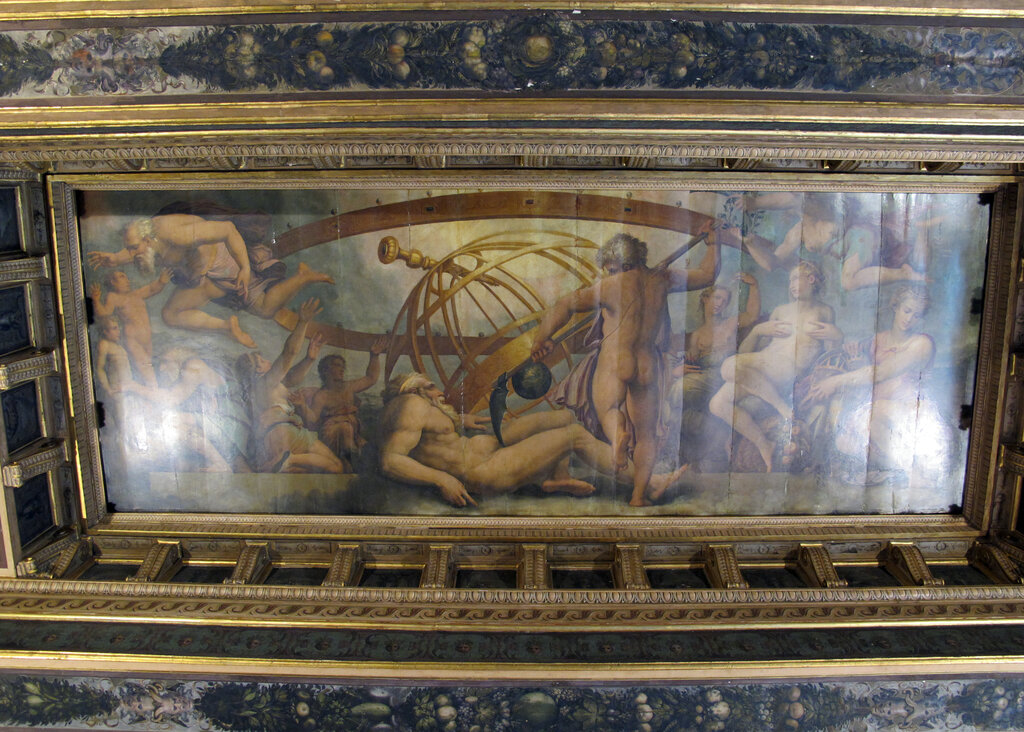
The transition of power was never peaceful. Uranus was a cruel father. He hated his children, especially the monstrous Cyclopes and Hecatoncheires (hundred-handed ones), and imprisoned them deep within Gaia. Overwhelmed with pain, Gaia pleaded with her Titan children to act. Only the youngest, Cronus, was brave enough.
Using a sickle forged by his mother, Cronus ambushed and castrated his father. This violent act separated Sky from Earth and established Cronus as the new ruler of the cosmos. The Titans were now in charge, and their era was often called the Golden Age. But Uranus cursed his son, prophesying that Cronus, too, would be overthrown by his own child.
This pattern of son overthrowing father became a central theme in Greek mythology, highlighting a deep-seated anxiety about succession and power.
Haunted by the prophecy, Cronus took drastic measures. He married his sister, the Titan Rhea, but as she gave birth to his children—Hestia, Demeter, Hera, Hades, and Poseidon—he swallowed each one whole. Rhea was heartbroken. When her sixth child, Zeus, was born, she tricked Cronus. She wrapped a stone in swaddling clothes, which Cronus promptly swallowed, while the infant Zeus was hidden away on the island of Crete to be raised in secret.
The War for the Cosmos
Once grown, Zeus returned to challenge his father. He forced Cronus to regurgitate his siblings, who emerged fully grown. This set the stage for a decade-long war for control of the universe: the Titanomachy, or War of the Titans. The younger gods, led by Zeus, fought from their base on Mount Olympus. The older Titans, led by Cronus, fought from Mount Othrys.
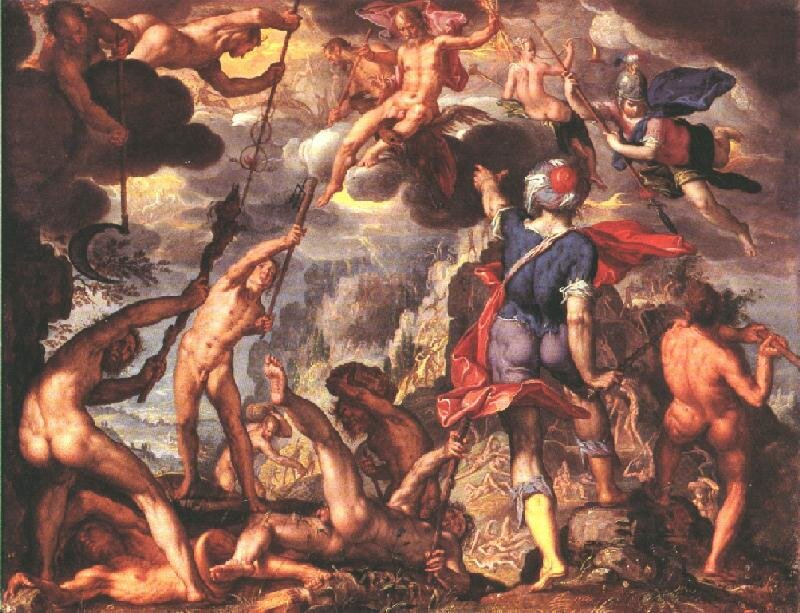
The war was a stalemate until Zeus, on the advice of Gaia, freed the Cyclopes and Hecatoncheires from Tartarus. In gratitude, the Cyclopes forged incredible weapons for the gods: the thunderbolt for Zeus, the trident for Poseidon, and the helm of darkness for Hades. With these new weapons and the raw power of the hundred-handed ones, the Olympians finally defeated the Titans, casting most of them into the eternal prison of Tartarus.
Some of the children of the Titans became the next generation of gods and goddesses.
This victory established the reign of the Olympians, but it didn't completely erase the concept of a power that stood above even Zeus. Looming over this entire cosmic drama were the , or the Fates. They were three sisters—Clotho (the Spinner), Lachesis (the Allotter), and Atropos (the Unturnable)—who spun, measured, and cut the thread of life for every mortal and, to some extent, every god. Their decrees were absolute, representing a cosmic order that not even the king of the gods could defy. The succession from Uranus to Cronus to Zeus wasn't just a power grab; it was the unfolding of a pre-written destiny.
With the Titans imprisoned and the cosmic order established, Zeus and his siblings divided the world among themselves, ushering in the age of the Olympians.
Ready to test your knowledge of how the Greek cosmos came to be?
According to Hesiod's Theogony, which of these beings emerged directly from the initial void of Chaos?
What motivated Cronus to ambush and overthrow his father, Uranus?
This struggle for divine supremacy forms the bedrock of Greek mythology, explaining why the Olympians rule and how their power was won.