Advanced Gold Investment Strategies
Macroeconomic Price Drivers
Real Interest Rates and Gold
For the advanced investor, the simple narrative of gold as a 'safe haven' is insufficient. The most critical driver of gold's price is its relationship with real interest rates. These are not the nominal rates you see advertised by banks, but rather the rates an investor receives after accounting for inflation. The correlation is strongly inverse: when real rates fall, gold tends to rise, and vice versa.
Why does this happen? It boils down to opportunity cost, a core concept in finance. Gold itself produces no yield. It doesn't pay interest or dividends. When real interest rates on other safe assets, like U.S. Treasury bonds, are high, holding gold becomes expensive. An investor forgoes a guaranteed return for an asset that just sits there. But when real rates are low or negative, the cost of holding gold disappears. Holding cash or bonds might even mean losing purchasing power to inflation, making gold a much more attractive store of value.
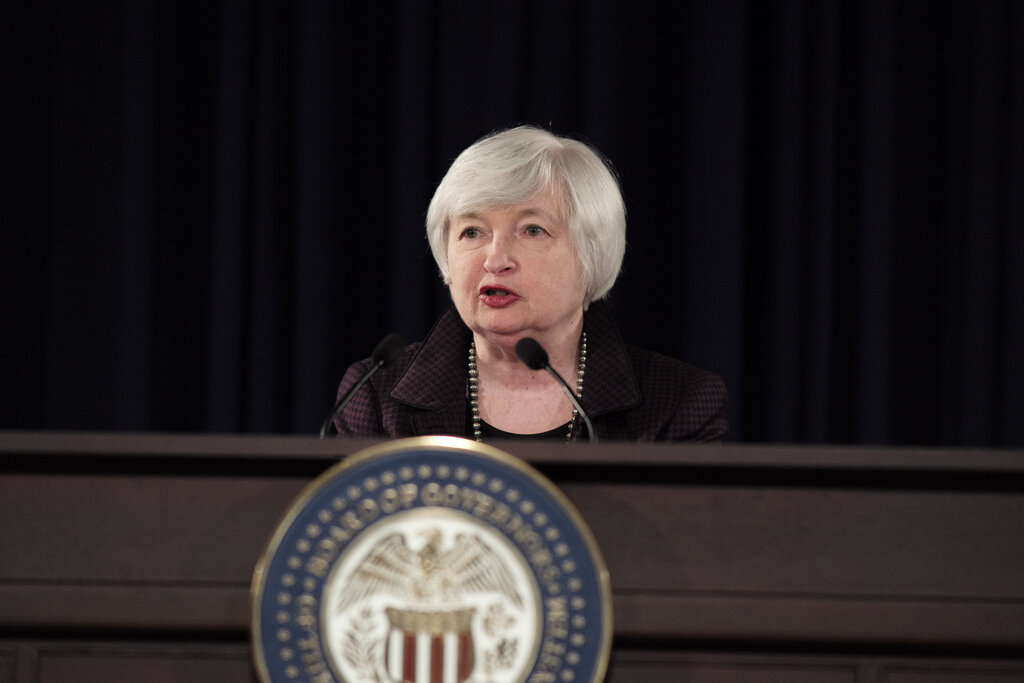
When interest rates rise, the opportunity cost of holding non-yielding assets like gold increases, often leading to lower prices.
The Dollar's Dominance
Globally, gold is priced in U.S. dollars. This creates another powerful inverse relationship for investors to watch: the one between gold and the . The DXY measures the dollar's strength against a basket of other major currencies. When the DXY rises, it means the dollar is getting stronger. For someone holding another currency, like the euro or the yen, a stronger dollar makes gold more expensive to buy. This typically reduces global demand and puts downward pressure on the gold price.
Conversely, a falling dollar is often a tailwind for gold. It makes gold cheaper for foreign investors, boosting demand. This dynamic is why gold is often seen as a hedge against a declining dollar. Watching the DXY provides a real-time gauge of the currency pressures affecting gold.
Economic Climates
Gold's performance varies dramatically depending on the broader economic environment. Its ideal climate is —a toxic mix of stagnant economic growth and high inflation. In this scenario, equities often suffer due to poor corporate earnings, while fixed-income investments lose value in real terms because of inflation. Gold, as a tangible asset that is sensitive to inflation and not dependent on economic growth, tends to thrive.
In a disinflationary environment, where inflation is slowing, or a deflationary one, where prices are falling, gold's appeal can wane. During these times, cash and government bonds become more attractive as their real value increases. It’s also crucial to monitor the activity of central banks, whose large-scale purchases or sales can serve as a powerful leading indicator of long-term sentiment toward gold and the U.S. dollar's role as the world's reserve currency.
The biggest shift in the gold market in recent years is increased demand from global central banks.
Using Ratios for Relative Value
Finally, sophisticated investors use ratios to assess gold's relative value against other assets. These don't predict price in isolation, but they offer crucial context.
The Gold-to-Silver Ratio: This tells you how many ounces of silver it takes to buy one ounce of gold. A high ratio (e.g., above 80) can suggest that silver is undervalued relative to gold, or that gold is overvalued. A low ratio (e.g., below 50) suggests the opposite. Traders watch this for signals of a potential reversal in the trend for precious metals.
The Gold-to-Oil Ratio: This ratio measures how many barrels of oil can be bought with one ounce of gold. A high ratio suggests gold is expensive relative to oil, which can sometimes precede economic slowdowns, as oil is a key industrial input. A low ratio can signal rising inflationary pressures, as energy costs are increasing relative to the price of gold.
Tracking these macroeconomic drivers—real rates, the dollar, the economic climate, and key ratios—provides a robust framework for analyzing the forces that truly move the price of gold.