Advanced GNN Architectures and Decentralized Computation
Graph Neural Networks
What Are Graph Neural Networks?
Most of the data we encounter fits neatly into spreadsheets or tables. But what about data that’s all about connections? Think of a social network, where people are linked by friendships. Or a map of a city, where intersections are connected by roads. This kind of data, made of nodes (the things) and edges (their relationships), is called a graph.
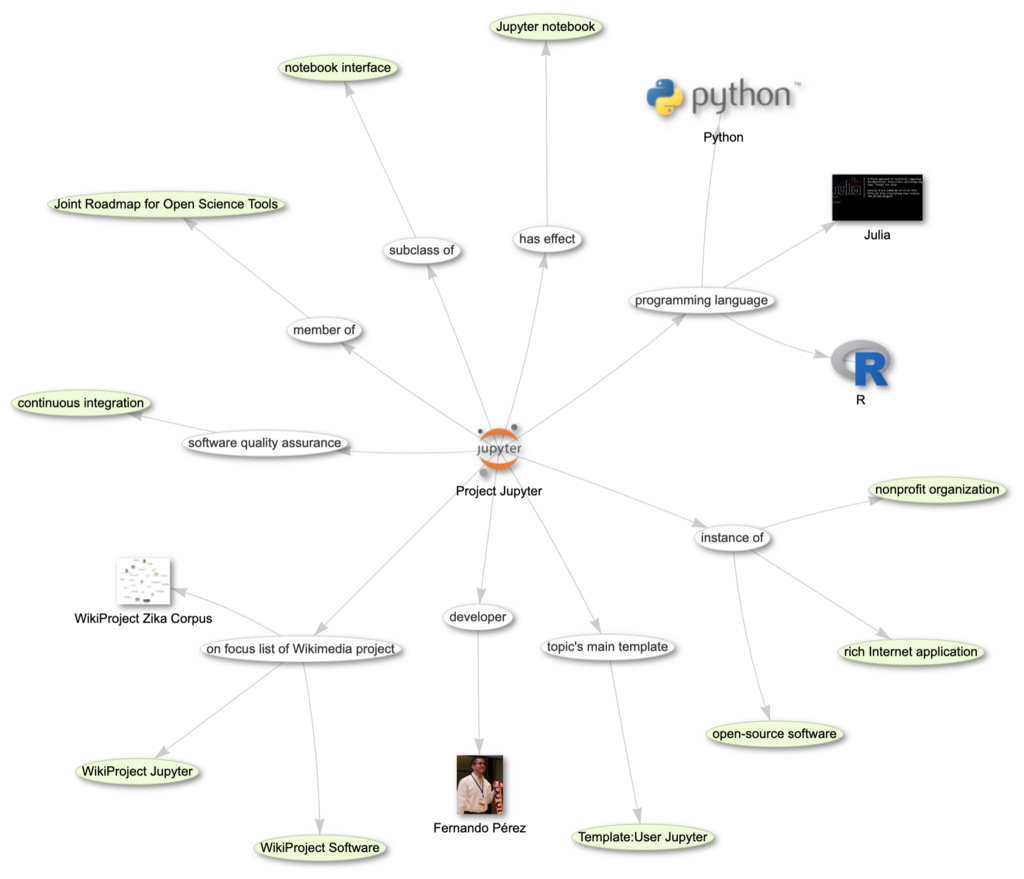
Traditional neural networks struggle with graphs because they expect fixed-size, ordered inputs, like an image or a sentence. Graphs are different. They don't have a specific beginning or end, and the number of connections for each node can vary wildly.
Enter Graph Neural Networks (GNNs). These are a special class of neural networks designed to work directly with graph-structured data. They can understand the context of a node by looking at its neighbors, making them powerful tools for analyzing complex relationships.
Graph neural networks (GNNs) have recently grown in popularity in the field of artificial intelligence (AI) due to their unique ability to ingest relatively unstructured data types as input data.
How GNNs Learn from Connections
The core idea behind GNNs is a process called message passing, or neighborhood aggregation. It's a way for each node to learn about its local environment.
Imagine you're trying to figure out someone's interests. A good strategy would be to look at their friends' interests. If many of their friends like hiking, there's a good chance they do too. A GNN does something similar. Each node gathers information, or "messages," from its direct neighbors.
This process is repeated in layers. In the first layer, a node learns from its immediate neighbors. In the second layer, it receives information from its neighbors' neighbors, expanding its receptive field. After several layers, the information for each node is a rich summary of its broader neighborhood within the graph.
This aggregation allows the network to create a special numerical representation for each node, called an embedding. This embedding captures both the node's own features and its position and role within the wider network structure.
Real-World Applications
Because graphs are everywhere, the applications for GNNs are vast and growing. They are solving problems in many different fields.
Node
noun
A fundamental unit of a graph. It can represent a person, a molecule, a city, or any other entity.
Social Network Analysis: GNNs can identify communities, detect fake accounts, and recommend new friends or content. By analyzing the structure of connections, they can understand influence and information flow.
Chemistry and Drug Discovery: Molecules can be represented as graphs, with atoms as nodes and chemical bonds as edges. GNNs are used to predict the properties of molecules, which helps scientists discover new drugs and materials much faster than traditional methods.
Recommendation Systems: GNNs power recommendation engines for services like e-commerce and streaming. By creating a graph of users and items, they can predict what you might want to buy or watch next based on the behavior of similar users.
Traffic Prediction: Transportation networks are natural graphs. GNNs can analyze real-time traffic data to predict congestion and estimate travel times, helping to optimize traffic flow in cities.
Essentially, if a problem can be framed in terms of relationships and connections, a GNN is likely a powerful tool to solve it.
Ready to test your knowledge on these powerful networks?
In the context of data, what are the two fundamental components that make up a graph?
Why are traditional neural networks often a poor choice for directly processing graph-structured data?
By learning from connections, GNNs unlock insights from complex, relational data that other models can't see.