Advanced Global Logistics and Trade Optimization
Advanced Multi-modal Synchronization
Architecting Resilient Multi-modal Chains
Effective multi-modal synchronization moves beyond orchestrating handoffs. It involves architecting a dynamic system that treats each leg—sea, rail, air—not as a discrete step, but as a fungible component in a larger cost and time optimization model. The core challenge is managing uncertainty, particularly in lead times across disparate modes and carriers.
Modeling this stochastic behavior is the first step. Instead of relying on deterministic transit times, we must model lead-time variability for each leg. The total transit time, , is the sum of transit times for each leg () and the drayage or transfer times between them (). Assuming independence, the variance of the total lead time is the sum of the individual variances.
This statistical view allows for a more nuanced strategy. For instance, a low-variance sea leg can be paired with a higher-variance rail leg, with buffer stock positioned at the intermodal transfer point to absorb delays. This is where strategic use of slow steaming comes into play. Instead of viewing it purely as a cost-saving measure, it can be employed to create a deliberate, rolling buffer on the water. This transforms a portion of in-transit inventory into a strategic buffer, absorbing upstream production variability without incurring warehousing costs.
By intentionally extending the sea leg, you can align vessel arrival more precisely with rail schedules or manufacturing capacity, effectively using the ocean itself as a mobile warehouse.
Data Integration and Visibility
Modeling is theoretical without real-time data. Achieving true multi-modal visibility requires integrating disparate data streams from carriers that often rely on different technologies. While many ocean and rail carriers still use for milestone updates (e.g., gate-in, vessel departure), air freight and last-mile logistics providers have largely shifted to APIs for granular, real-time tracking.
The technical task is to build a normalization layer that can ingest both batch EDI messages and real-time API calls, translating them into a unified data model. This single source of truth then powers predictive analytics, estimating arrival times at transfer points and automatically flagging shipments at risk of missing a connection. The goal is to make intermodal transfers data-driven, not reactive.
Synchronizing Physical Handoffs
Data visibility is a prerequisite for optimizing the physical transfer of goods. This is most critical in at ports and inland terminals. Efficient cross-docking requires precise alignment of inbound and outbound movements to minimize dwell time and eliminate the need for temporary storage. When a container is discharged from a vessel, the ideal flow is direct movement to an outbound train or truck, often within a few hours.
This level of coordination is especially vital for integrated rail-sea corridors, such as the 'Eurasian Land Bridge' connecting China and Europe. The value proposition of these corridors is a transit time faster than sea but a cost lower than air. This balance is only maintained through hyper-efficient transfers at terminals. A delay of 24 hours at a single rail-sea hub can negate the time savings of the entire rail leg.
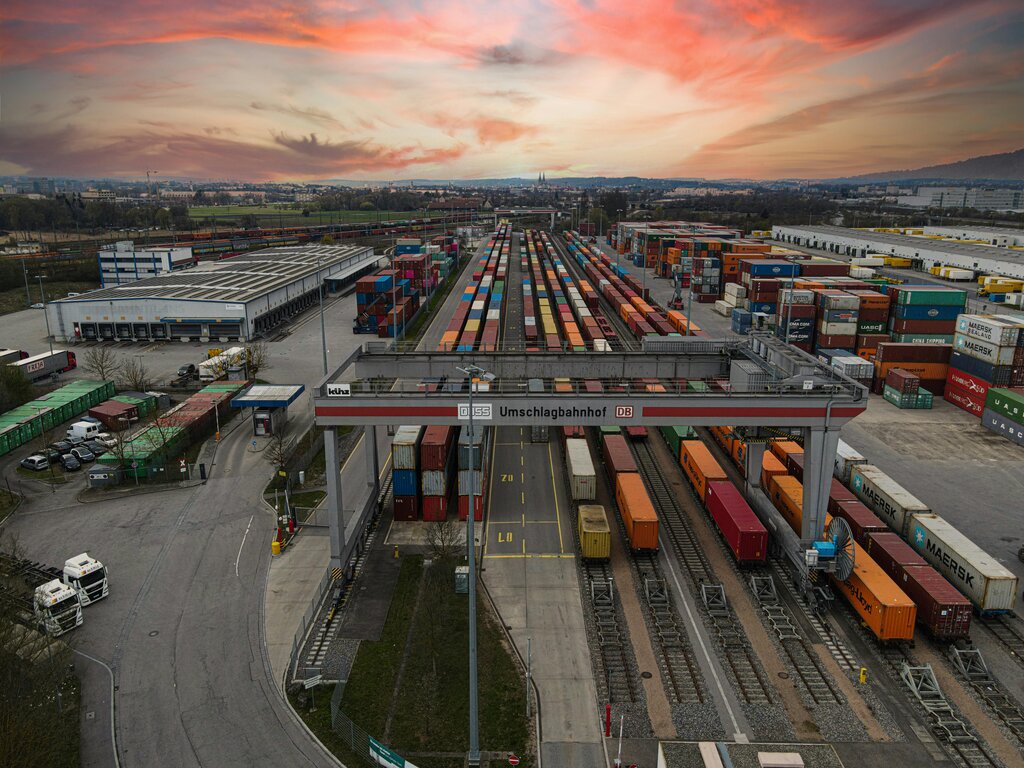
Ultimately, advanced multi-modal strategy is a game of managing trade-offs. It pairs slower, cheaper modes with faster, more expensive ones, using data to manage the seams between them. By modeling variability and achieving real-time visibility, logisticians can architect supply chains that are not just cost-effective but also resilient to the disruptions inherent in global trade.
Time to test your understanding of these advanced concepts.
In the context of multi-modal synchronization, what is the primary purpose of modeling lead-time variability instead of using deterministic transit times?
According to the text, a key technological challenge in achieving true multi-modal visibility is...
By mastering these techniques, supply chains can evolve from a series of reactive handoffs to a truly integrated, predictive, and resilient system.