Advanced Geodynamics and Seismic Rupture Mechanics
Elastic Rebound Physics
The Stick-Slip Cycle
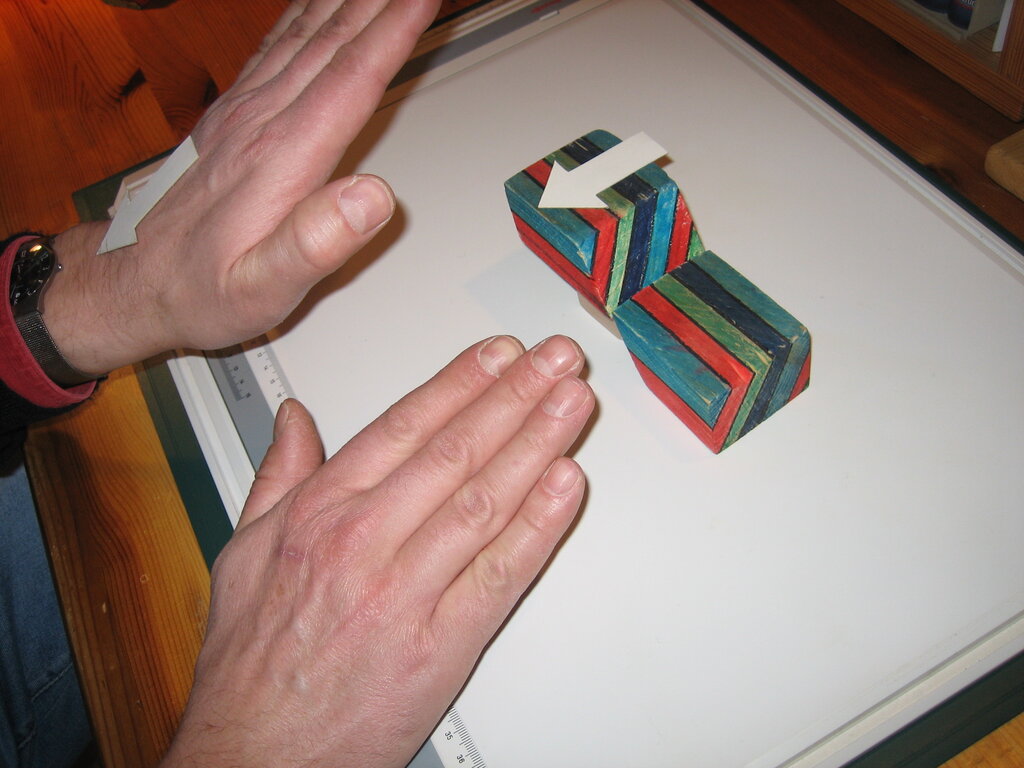
Tectonic plates don't slide past each other smoothly. For years, or even centuries, sections of a fault can remain locked, stuck together by immense friction. While the plates continue to move, the rock around the locked fault bends and deforms, storing energy like a compressed spring. This is the 'stick' phase of the cycle. Strain accumulates silently.
Eventually, the accumulated shear stress overcomes the frictional strength of the rock. The fault ruptures in a catastrophic failure, releasing the stored energy in seconds. This is the 'slip' phase, which generates the seismic waves we feel as an earthquake.
This process, known as stick-slip behavior, is the fundamental engine of most earthquakes. A classic example is the San Andreas Fault in California. Some segments creep along slowly, while others are locked, building up stress. These locked sections are identified as seismic gaps—areas that haven't ruptured in a long time and are considered prime candidates for future large earthquakes. The longer the 'stick,' the more energy is stored and the larger the potential 'slip'.
An Earthquake's Energy Budget
When a fault slips, the stored elastic strain energy doesn't just vanish. It's partitioned into three main components, much like a financial budget.
Only a small fraction of the total energy becomes the seismic waves that cause destruction. A tiny bit more is used as fracture energy to physically break the rock. The overwhelming majority, often over 85%, is instantly converted into frictional heat along the fault plane.
This intense heating can be so extreme that it melts the rock, creating a thin layer of molten material. This phenomenon, known as melt lubrication, drastically reduces friction during the slip, allowing the fault to move faster and farther than it otherwise could. This process is a key area of research for understanding the physics of very large, fast ruptures.
Asperities and Barriers
Faults are not smooth, uniform planes. They are complex, rough surfaces with variations in strength and stress. These variations control how earthquakes start, propagate, and stop.
An asperity is a patch on the fault that is stronger or more locked than its surroundings. These are the 'stuck' points that accumulate the most stress. Major earthquakes often initiate at an asperity, which acts as the nucleation point for the rupture. Once the asperity breaks, the rupture can propagate outwards.
Conversely, a barrier is a region on the fault that is strong enough to resist rupturing. A barrier can stop a propagating earthquake in its tracks, determining the final size of the event. Barriers can be geometric features, like a bend in the fault, or areas of rock with different properties that are harder to break.
The interplay between asperities and barriers creates the complex rupture patterns we observe. Understanding their distribution is key to assessing the potential size of future earthquakes on a given fault segment.
Time to test your knowledge of how faults accumulate and release energy.
What is the primary role of an 'asperity' on a fault line?
When the stored elastic energy in a fault is released during an earthquake, where does the vast majority of that energy go?
By understanding these physical mechanics—from the slow buildup of strain to the complex interplay of energy and friction during a rupture—we get a much clearer picture of why earthquakes behave the way they do.