Advanced Generative AI Integration
Generative AI Fundamentals
The Idea of Generative AI
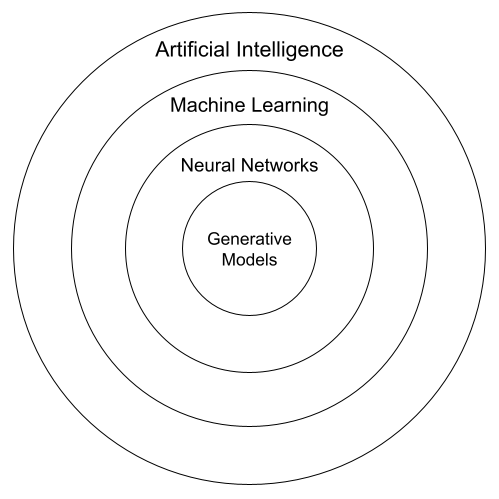
Generative Artificial Intelligence is a type of AI that can create new, original content. Instead of just analyzing or classifying existing data, it generates something that didn't exist before. This could be text, images, music, or code. Think of it as a creative partner rather than just an analytical tool.
This capability stems from models trained on enormous datasets. By learning the patterns, structures, and relationships within this data, the AI can then produce new outputs that are consistent with what it has learned. The engines behind most modern text-based generative AI are known as Large Language Models.
Inside Large Language Models
A Large Language Model (LLM) is a deep learning model that is massive in two ways: the number of parameters it contains and the size of the dataset it's trained on. Parameters are like the knobs and dials of the model, which are tuned during training to capture the nuances of language.
LLMs are not truly 'understanding' text in the human sense. They are sophisticated pattern-matching systems that predict the next most probable word in a sequence based on the input they receive.
The training process involves feeding the model terabytes of text from the internet, books, and other sources. During this phase, the model learns grammar, facts, reasoning abilities, and even biases from the data. The breakthrough that enabled today's powerful LLMs is a specific architecture called the Transformer.
The Transformer Architecture
Before Transformers, AI models processed text sequentially, word by word. This created a bottleneck, making it hard for them to remember the context of long sentences. The Transformer, introduced in 2017, changed everything by processing all the words in a sentence at once.
This parallel processing allows the model to draw connections between any two words in the text, no matter how far apart they are. The core components of a Transformer are the encoder and the decoder. The encoder's job is to read and 'understand' the input text. The decoder's job is to take that understanding and generate the output, one word at a time.
What makes this architecture so effective is a crucial mechanism working inside both the encoder and decoder: attention.
The Power of Attention
The attention mechanism is the secret sauce of the Transformer. It allows the model to weigh the importance of different words in the input text when it's processing a specific word. In other words, it helps the model 'pay attention' to the most relevant parts of the input to make better predictions.
Consider the sentence: "The robot picked up the ball, but it was too heavy." To understand what 'it' refers to, the model needs to pay more attention to 'robot' and 'ball' than to other words. The attention mechanism calculates a set of 'attention scores' that do just this. It identifies which words are most contextually relevant to the current word being processed.
This ability to dynamically focus on relevant context allows Transformers to handle long-range dependencies in text, a major weakness of older architectures.
This process, called self-attention, is what happens inside the encoder. A similar mechanism, called encoder-decoder attention, helps the decoder focus on relevant parts of the input sentence while it generates the output sentence. This is especially vital for tasks like translation, where aligning words between two languages is key.
What is the primary function of Generative AI?
What key architectural innovation enabled the development of modern Large Language Models?
Understanding these core components—the overall goal of generative AI, the function of LLMs, and the Transformer architecture powered by attention—is the first step to harnessing their capabilities.