Advanced Generative AI
Generative AI Foundations
What Is Generative AI?
Most artificial intelligence you might be familiar with is good at classifying things. Given a photo, it can tell you if it's a cat or a dog. This is called discriminative AI because it discriminates between different types of data.
Generative AI does the opposite. Instead of just recognizing patterns, it learns them so deeply that it can create new, original content that follows those same patterns. It doesn't just identify a cat photo; it can generate a brand new picture of a cat that has never existed. This ability to create is what makes it so powerful.
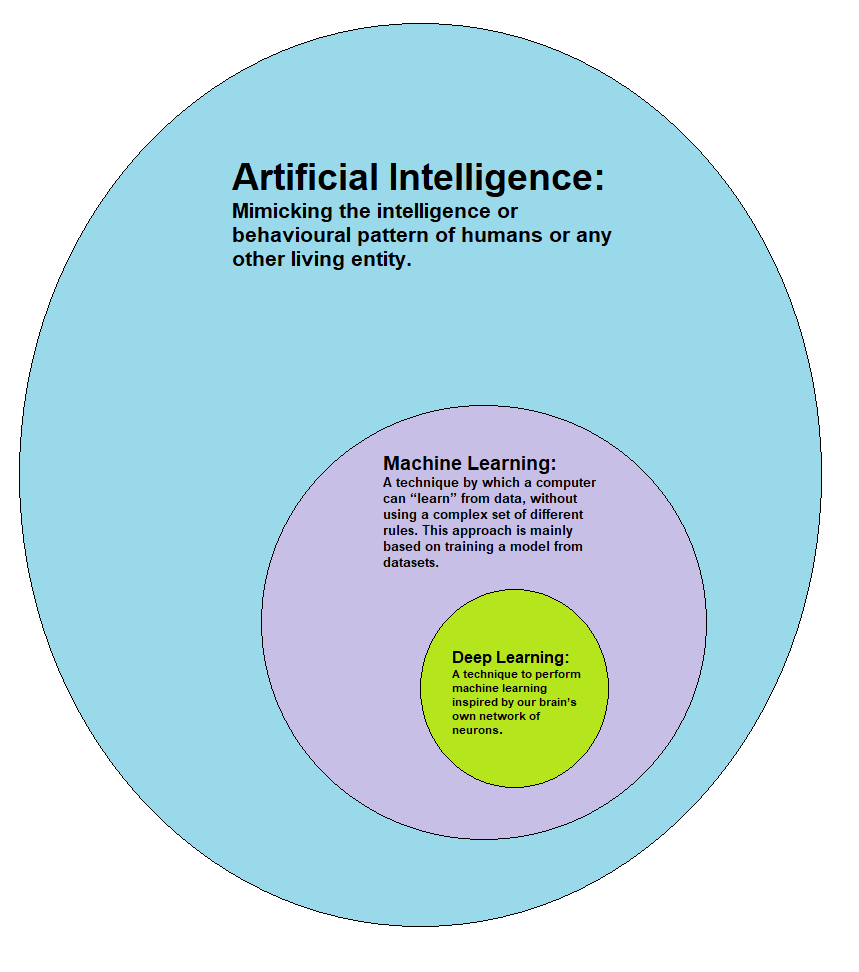
This creative capability isn't limited to images. Generative AI can produce text, music, code, and even complex data. It works by training on vast datasets and learning the underlying structure, style, and relationships within the data. The result is a system that can generate novel outputs that are both coherent and contextually relevant.
Where Is It Used?
Generative AI is already changing how work gets done across many fields. In marketing, it drafts ad copy and creates unique images for campaigns. Software developers use it to write code, find bugs, and even explain complex programming concepts.
The entertainment industry uses it to compose music, write scripts, and produce stunning visual effects. In science and medicine, researchers are using generative models to design new drug molecules and protein structures, accelerating the pace of discovery. It’s a tool for creation and problem-solving.
| Industry | Example Application |
|---|---|
| Marketing | Creating ad copy and images |
| Software | Writing and debugging code |
| Entertainment | Generating music and visual effects |
| Healthcare | Designing new drug molecules |
| Design | Prototyping new product concepts |
The applications are expanding rapidly as the technology evolves. But what powers this technology? The magic lies in specific types of models, each with a different approach to generation.
The Models Behind the Magic
The idea of teaching machines to create isn't new, but recent breakthroughs have made it far more effective. Early generative models were limited, but they laid the groundwork for the powerful tools we see today. Three key architectures have been central to this evolution: Variational Autoencoders (VAEs), Generative Adversarial Networks (GANs), and Transformers.
Each model type has a unique way of learning from data and generating new content, making them suited for different tasks.
Let's start with VAEs. A Variational Autoencoder learns to compress data into a simplified representation and then reconstruct it back to its original form. Think of it like summarizing a book. The VAE reads the book (input data), writes a short summary (the compressed representation), and then tries to rewrite the full book using only its summary. By getting good at this, it learns the essential features of the data. To generate something new, you can just tweak the summary slightly and see what new "book" it writes.
Next came Generative Adversarial Networks, or GANs. This architecture uses a clever two-part system: a Generator and a Discriminator. Their relationship is like an art forger and an art critic.
The Generator (the forger) creates fake images and tries to pass them off as real. The Discriminator (the critic) tries to tell the difference between the real images and the fake ones. They compete against each other. The Generator gets better at making fakes, and the Discriminator gets better at spotting them. Through this constant competition, the Generator becomes incredibly skilled at creating realistic, high-quality outputs.

Finally, we have Transformer-based models. These are the models that power systems like ChatGPT. The key innovation of the Transformer is its "attention mechanism." This allows the model to weigh the importance of different words in a sentence when processing language.
Imagine reading a sentence: "The cat sat on the mat." An attention mechanism helps the model understand that "sat" is strongly related to "cat" and "mat." By tracking these relationships across vast amounts of text, Transformers become exceptionally good at understanding context, which is crucial for generating coherent and relevant sentences, paragraphs, and even entire articles.
Now that you're familiar with the basic concepts, let's test your knowledge.
What is the primary difference between discriminative AI and generative AI?
In a Generative Adversarial Network (GAN), what are the roles of the Generator and the Discriminator?
These foundational models are the building blocks of the generative AI landscape. Understanding their core ideas is the first step to grasping how modern AI can create.