Advanced Gastrulation in Biotechnology
Signaling Pathways in Gastrulation
The Molecular Conductors
Gastrulation is like a complex dance with thousands of performers. But how do all these cells know their steps? They listen to molecular signals. These signals are sent through communication channels called signaling pathways. Think of them as the embryo's internal messaging system, sending precise instructions that tell cells where to go, what to become, and when to act. A handful of these pathways are the master conductors of the entire performance.
Nodal and the First Big Decision
One of the first and most critical signals is sent by a protein called Nodal. Its main job is to tell the early epiblast cells to form the mesendoderm, the precursor to both the mesoderm and endoderm layers. It does this by creating a concentration gradient—a gradual change in the amount of Nodal protein across a region of the embryo.
Cells exposed to high levels of Nodal receive one set of instructions, while those that see lower levels get another. This gradient-based signaling is a simple but powerful way to create different cell types in specific locations.
The Nodal pathway doesn't just kick things off; it also helps establish the embryo's left-right asymmetry later on. The location of the primitive streak, the site where gastrulation begins, is determined by the peak of Nodal activity.
Wnt and Setting the Body Plan
While Nodal sets the stage for new cell types, the Wnt signaling pathway is crucial for establishing the body's main axis. Think of it as defining the difference between head and tail, or anterior and posterior. A high concentration of Wnt signals marks the posterior end of the embryo, which is where the primitive streak will form.
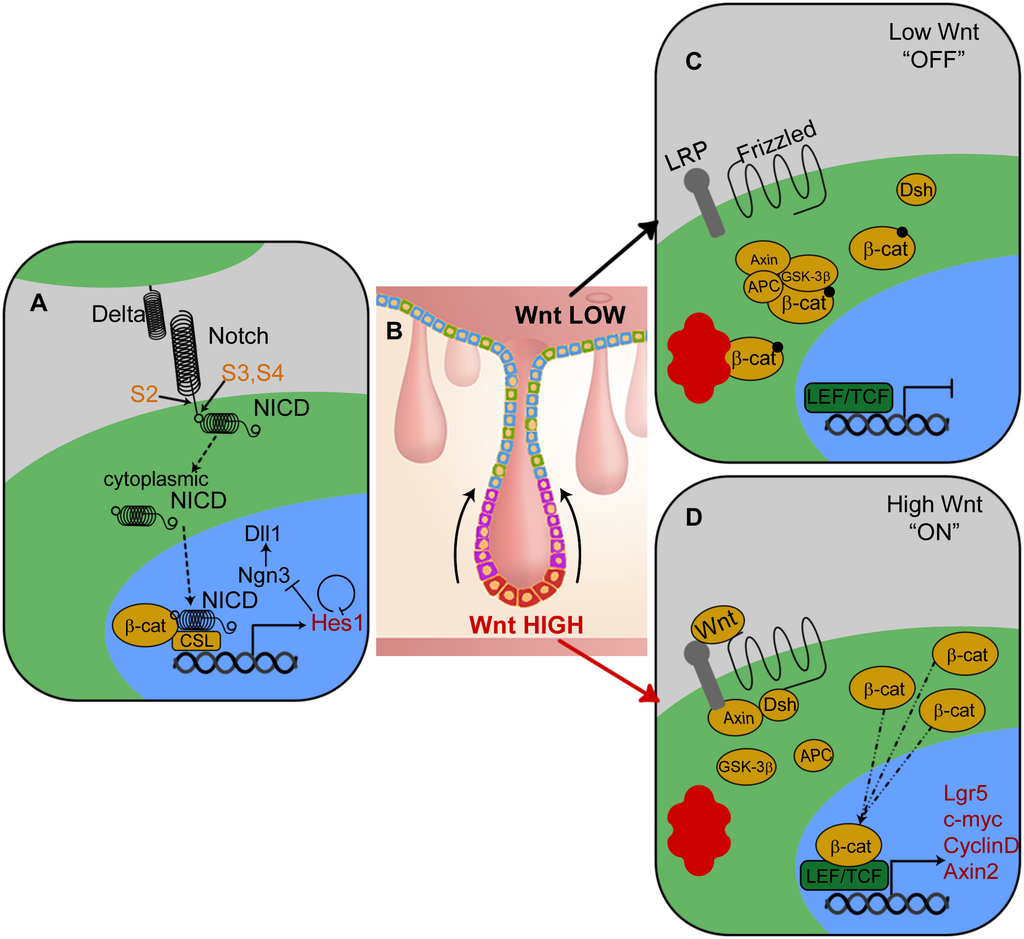
The Wnt signalling pathway transducing the stabilization of beta-catenin is essential for metazoan embryo development and is misregulated in many diseases such as cancers.
When Wnt proteins bind to receptors on a cell's surface, they trigger a cascade of events inside the cell. This cascade stops the destruction of a key protein called β-catenin. As β-catenin accumulates, it moves into the nucleus and activates genes that are essential for posterior development. This gradient of Wnt signaling, high in the back and low in the front, provides a clear blueprint for the embryo's layout.
BMP, Sculptor of a 3D Body
Once the anterior-posterior axis is set, the embryo needs to define its dorsal-ventral axis, or the difference between its back and belly. This is where Bone Morphogenetic Protein (BMP) signaling comes in.
Counterintuitively, high levels of BMP signaling actually promote the development of ventral (belly) structures. To form dorsal structures like the neural tube (the precursor to the brain and spinal cord), BMP signaling must be blocked. This is done by specialized proteins called BMP inhibitors, such as Chordin and Noggin. These inhibitors are released from a key region called the organizer.
By creating a gradient of BMP activity, with low levels on the dorsal side and high levels on the ventral side, the embryo sculpts its three-dimensional form and separates the future nervous system from the rest of the body.
FGF, the Traffic Controller
Gastrulation involves massive, coordinated cell movements. This is where Fibroblast Growth Factor (FGF) signaling plays a leading role. The FGF pathway acts like a traffic control system for migrating cells.
Cells moving away from the primitive streak follow trails of FGF signals. These signals guide their migration and also instruct them to undergo an important change called the epithelial-to-mesenchymal transition (EMT). During EMT, tightly connected epithelial cells loosen up, become migratory mesenchymal cells, and dive through the primitive streak to form the mesoderm and endoderm layers.
FGF signaling essentially tells cells, "It's time to break formation, start moving, and here is the path you should follow."
These four pathways, Nodal, Wnt, BMP, and FGF, don't work in isolation. They form a complex, interconnected network. They activate, inhibit, and fine-tune one another to ensure every cell performs its role perfectly, transforming a simple ball of cells into a structured embryo with a clear body plan.
Which signaling pathway is primarily responsible for initiating the formation of the mesendoderm and determining the location of the primitive streak?
An experiment blocks the destruction of β-catenin throughout the entire embryo. This manipulation would most directly interfere with the establishment of which body axis?
This intricate interplay of molecular signals is one of the most fundamental processes in developmental biology.