Advanced Gastric Physiology and Clinical Applications
Gastric Cell Secretion
The Gastric Gland Powerhouses
The stomach's inner lining isn't a smooth surface. It's pocketed with millions of tiny invaginations called gastric pits, which are the openings to the gastric glands below. Think of these glands as microscopic chemical factories, each staffed by a team of highly specialized cells. Each cell type has a distinct job, and their coordinated secretions create the potent digestive fluid known as gastric juice.
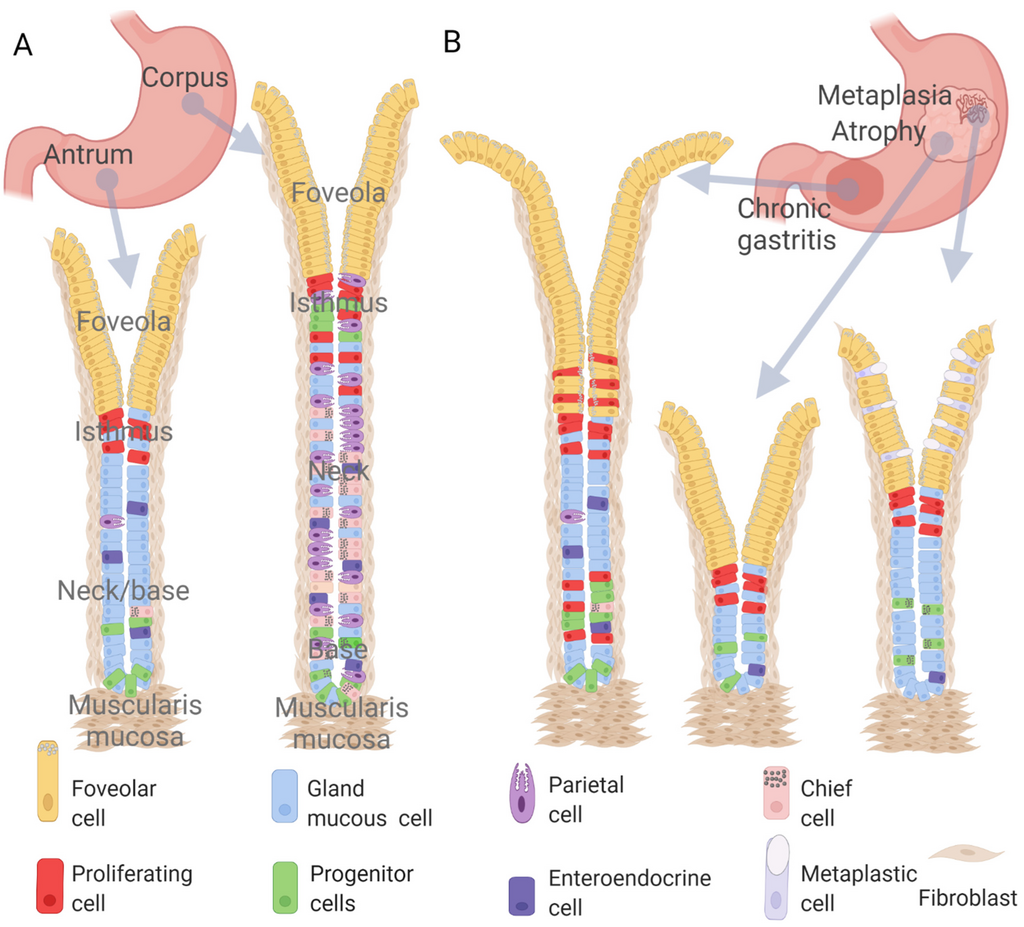
These glands are where the real action of chemical digestion begins. While the muscles of the stomach wall churn food mechanically, the cells within these glands release the substances that chemically dismantle it. Let's meet the key players on this assembly line.
Parietal Cells and the Acid Test
Parietal cells are the acid producers of the stomach. Their main job is to secrete hydrochloric acid (HCl), which gives gastric juice its incredibly low pH, typically between 1.5 and 3.5. This harsh environment is perfect for killing pathogens and denaturing proteins, causing them to unfold and expose their peptide bonds to enzymes.
To pump out this acid, parietal cells use a remarkable piece of molecular machinery: the proton pump. This protein, located in the cell membrane, actively transports hydrogen ions (protons, H⁺) out of the cell and into the stomach lumen, in exchange for potassium ions (K⁺). This process requires a significant amount of energy, which is why parietal cells are packed with mitochondria.
Parietal cells aren't just one-trick ponies. They also secrete a glycoprotein called intrinsic factor, which is absolutely essential for absorbing vitamin B12 in the small intestine. Without intrinsic factor, vitamin B12 passes through the digestive tract unabsorbed, which can lead to a condition called pernicious anemia.
Chief Cells and the Protein Puzzle
Located deeper within the gastric glands are the chief cells. Their primary role is to synthesize and secrete —an inactive form of a powerful protein-digesting enzyme.
Producing an inactive precursor is a crucial safety mechanism. If chief cells produced active pepsin, they would digest themselves from the inside out. Instead, pepsinogen is only converted into its active form, pepsin, when it encounters the hydrochloric acid secreted by the parietal cells. The low pH cleaves a small fragment from the pepsinogen molecule, changing its shape and exposing its active site.
Once activated, pepsin gets to work, breaking down large protein molecules from food into smaller pieces called peptides. This initial breakdown is a critical first step in protein digestion.
The Command and Control Cells
Digestion isn't a free-for-all. It's a tightly regulated process, coordinated by another class of cells scattered within the gastric glands: the enteroendocrine cells. These cells act like tiny sensors and signalers.
The most notable among them in the stomach are the G-cells, found mainly in the antrum (the lower part of the stomach). When food, particularly proteins, arrives in the stomach, G-cells are stimulated to release a hormone called directly into the bloodstream.
Gastrin doesn't act on the food itself. Instead, it travels through the blood and loops back to the stomach, where it powerfully stimulates the parietal cells to secrete more HCl and the chief cells to secrete more pepsinogen. This creates a positive feedback loop: the presence of protein triggers gastrin release, which in turn ramps up the production of the very substances needed to digest that protein.
Gastrin stimulates the secretion of gastric acid by the parietal cells of the stomach mucosa.
This elegant system ensures that the stomach produces its potent digestive juices only when they're actually needed, protecting its own lining from damage during periods of fasting.
What is the primary function of parietal cells in the stomach?
Why do chief cells secrete an inactive enzyme (pepsinogen) rather than the active enzyme (pepsin)?