Advanced Functional Neuroglia
Astrocyte Metabolic Shuttling
The Brain's Energy Delivery Service
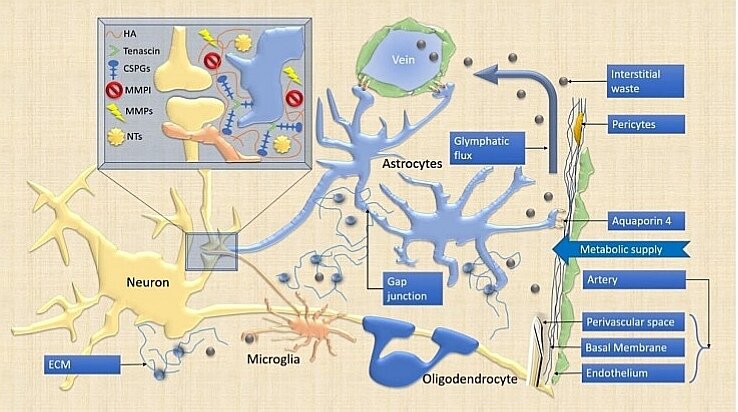
Neurons are the brain's superstars, but they can't perform without a dedicated support crew. Astrocytes, a type of glial cell, are much more than simple structural scaffolding. They are active metabolic partners, running a sophisticated energy delivery service that keeps neurons firing on all cylinders, especially during intense activity.
Imagine a marathon runner. They can't just stop mid-race to eat a complex meal. They need quick, easily accessible energy, like a sports drink. Neurons are similar. Their primary fuel is glucose, delivered via the bloodstream. But when a neuron is highly active, it needs energy now, and the process of pulling glucose from the blood and breaking it down can be too slow. This is where astrocytes step in with a clever metabolic workaround.
The Lactate Shuttle Hypothesis
The core of this partnership is the Astrocyte-Neuron Lactate Shuttle (ANLS) hypothesis. This model proposes that astrocytes absorb glucose from nearby blood vessels and, through a process called aerobic glycolysis, convert it into lactate. This lactate is then 'shuttled' over to active neurons, which readily use it as a high-efficiency fuel source. It’s like the astrocyte is a personal chef, prepping an easy-to-digest energy shot for the neuron next door.
Thus, astrocyte-neuron lactate transport is required for long-term memory formation.
What triggers this process? It starts with synaptic transmission itself. When a neuron fires, it releases the neurotransmitter glutamate into the synapse. Astrocytes have transporters that soak up this excess glutamate. This glutamate uptake acts as a signal, stimulating the astrocyte to ramp up its glucose consumption and glycolysis. More neuronal activity means more glutamate release, which in turn means more lactate production by the astrocyte. It's a beautifully simple and efficient supply-and-demand system.
Specialized Molecular Doors
This shuttle system relies on specialized proteins that act like selective doors, moving lactate across cell membranes. These are called monocarboxylate transporters (MCTs). Think of them as the loading dock crew and the receiving team.
Astrocytes primarily use MCT1 and MCT4 transporters to export the lactate they produce. Neurons, on the other hand, express a different type, MCT2. This transporter has a high affinity for lactate, meaning it's very effective at grabbing lactate from the extracellular space, even at low concentrations. This specialization ensures that the lactate produced by astrocytes is efficiently delivered to the neurons that need it most.
Once inside the neuron, lactate is quickly converted back into pyruvate, which then enters the mitochondria to be fully oxidized. This process is highly efficient at producing ATP, the main energy currency of the cell. By outsourcing the initial, faster stage of glucose breakdown to astrocytes, neurons can dedicate their metabolic machinery to the final, high-yield stage of energy production. This division of labor is critical for sustaining the brain's immense energy demands and supporting complex cognitive functions like learning and memory.
Ready to test your knowledge of this metabolic partnership?
What is the primary function of the Astrocyte-Neuron Lactate Shuttle (ANLS)?
What specific event acts as the direct signal for an astrocyte to ramp up its production of lactate?