Advanced French for Canadians
Advanced Listening Comprehension
Tune Your Ear to Real French
You've moved beyond basic phrases and can hold a simple conversation. The next leap forward is understanding French as it's actually spoken by natives. This means grappling with speed, accents, and the informal language you won't find in textbooks. The goal isn't just to hear the words, but to process them in real time, just like you do in your native language.
It can be jarring at first. Native speakers often blend words, drop syllables, and use idioms that don't translate literally. This is where active listening comes in. Instead of passively letting the sounds wash over you, you'll learn to focus on context, tone, and keywords to piece together the meaning, even when you don't catch every single word. It’s a skill, and like any skill, it improves dramatically with the right kind of practice.
Finding Your Listening Material
To get good at understanding real French, you need to listen to real French. Forget the slow, perfectly enunciated recordings from beginner courses. It's time to dive into authentic content made for native speakers.
Podcasts are a fantastic starting point. You can find a podcast on any topic imaginable, from cooking and history to technology and comedy. This allows you to learn about something you’re genuinely interested in, which makes the practice feel less like a chore. Start with shows that feature one or two hosts in a clear conversation. As you improve, you can move on to narrative podcasts or roundtable discussions with multiple speakers.
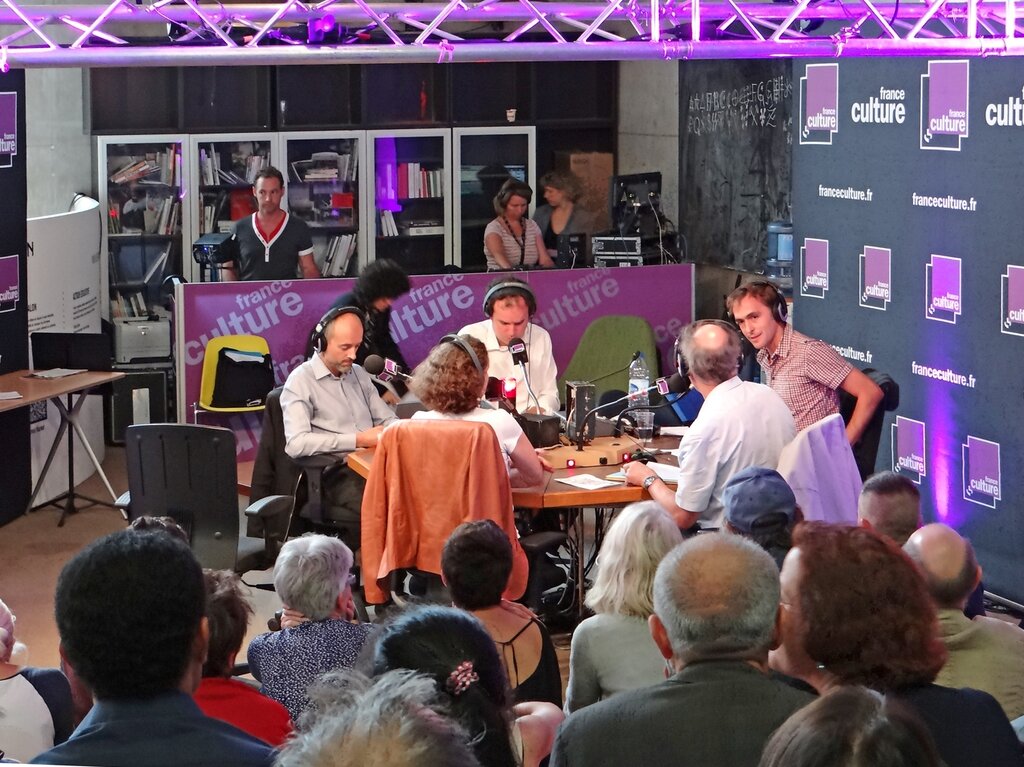
News broadcasts are another excellent resource. Broadcasters on channels like France 24 or radio stations like RFI (Radio France Internationale) speak clearly but at a natural, rapid pace. The topics are predictable, which gives you helpful context. You likely already know the major world events, so you can focus more on the language used to describe them rather than trying to understand a new concept from scratch.
Decoding Fast Speech and Slang
One of the biggest hurdles is the speed and rhythm of spoken French. Native speakers often use contractions and shortcuts that can make a sentence sound like one long word. For example, the formal "je ne sais pas" (I don't know) is almost always shortened to "chais pas" in casual conversation.
This is a key difference between written and spoken French. Learning to recognize these informalities is essential for comprehension.
| Formal Written French | Common Spoken French | Meaning |
|---|---|---|
Je ne sais pas | Chais pas | I don't know |
Tu es où ? | T'es où ? | Where are you? |
Il y a | Y'a | There is / There are |
Qu'est-ce que tu fais ? | Tu fais quoi ? | What are you doing? |
Accents add another layer of complexity. The crisp, standard French you might associate with Paris sounds quite different from the lilting accent of Marseille in the south, or the distinct sounds of French spoken in Québec or Senegal. Don't be discouraged by this variety. The more accents you expose yourself to, the more adaptable your ear will become. You'll start to recognize patterns and realize that the underlying language is the same.
Watching movies or series in French, with or without subtitles, will allow you to understand the context, learn common expressions, and listen to different accents.
Here's a practical approach to tackle a new piece of audio:
- First Pass: Listen once without pausing or using a transcript. Just try to get the gist. Who is talking? What is the general topic? What is the mood?
- Second Pass: Listen again, but this time, pause whenever you hear a word or phrase you don't recognize. Jot it down and look it up.
- Study with a Transcript: If a transcript is available, listen and read along. This connects the sounds you're hearing with the words on the page. Pay close attention to the parts you found difficult.
- Final Pass: A day or two later, listen one last time without the transcript. You’ll be surprised at how much more you understand.
Ready to test your knowledge on these listening strategies?
What is the recommended first step when tackling a new piece of French audio for listening practice?
In casual, spoken French, the formal phrase "je ne sais pas" is almost always shortened to what?
Improving your listening skills is a gradual process. The key is consistent, daily exposure. Even 15 minutes of focused listening each day will build momentum and dramatically improve your ability to understand and participate in real French conversations.