Advanced Foundations of Human Sexuality
Physiological Response Mechanisms
Modelling Sexual Response
Understanding the human sexual response isn't about a single, universal timeline. Instead, researchers have proposed several models to describe the physiological and psychological stages people experience. The most famous is the linear four-stage model from Masters and Johnson, which charts a path through excitement, plateau, orgasm, and resolution. It was groundbreaking for its time, focusing purely on observable physiological changes.
Later, Helen Singer Kaplan introduced her triphasic model, which added a crucial first step: desire. This acknowledged that for arousal to even begin, a psychological motivation often needs to be present. It was a simple but profound shift, integrating the mind's role into what was previously seen as a purely mechanical process.
More recently, Rosemary Basson proposed a non-linear model, particularly to better describe female sexual experience. This model suggests that desire can be responsive, arising after arousal begins, rather than preceding it. It places emotional intimacy and relationship satisfaction at the centre, viewing orgasm not as a mandatory goal but as one of many potential positive outcomes. It's a cyclical model where a satisfying experience can fuel the desire for future encounters.
The Body's Machinery
Regardless of the model, two fundamental physiological processes orchestrate the body's response: vasocongestion and myotonia. They happen in concert, building upon each other as arousal increases.
is the swelling of tissues with blood. During arousal, arteries supplying the genital regions expand, allowing more blood to flow in, while the veins that carry blood away constrict slightly. This traps blood, causing tissues to swell. In males, this is most obvious as the erection of the penis. In females, it results in the swelling of the clitoris and labia, as well as vaginal lubrication, which is plasma filtered through the engorged blood vessel walls.
Myotonia is the increase in muscle tension. It begins during the excitement phase and builds progressively. It can be voluntary, like purposefully tensing thigh muscles, or involuntary. Involuntary myotonia includes nipple erection, facial grimacing, and the spasms of the hands and feet (carpopedal spasm) that can occur at high levels of arousal. The peak of myotonia is orgasm, which is essentially a series of involuntary, rhythmic muscular contractions in the pelvic region.
The Nervous System in Control
The autonomic nervous system (ANS) acts as the master controller, directing these processes without our conscious thought. It's a system of two opposing forces: the parasympathetic and the sympathetic nervous systems.
A useful mnemonic for their roles in male sexual function is "Point and Shoot." The Parasympathetic system helps you Point (erection), while the Sympathetic system helps you Shoot (ejaculation).
The parasympathetic nervous system, often called the "rest and digest" system, takes the lead during the excitement and plateau phases. It relaxes the smooth muscle of arteries in the genitals, allowing the vasocongestion that leads to erection and lubrication. It promotes a state of relaxed arousal.
As arousal peaks, the sympathetic nervous system, known for the "fight or flight" response, takes over to trigger orgasm. It stimulates the rapid, rhythmic muscle contractions in the pelvis. After orgasm, during the resolution phase, the body returns to a parasympathetic-dominant state. Blood is released from the engorged tissues, and muscle tension dissipates.
Chemical Messengers
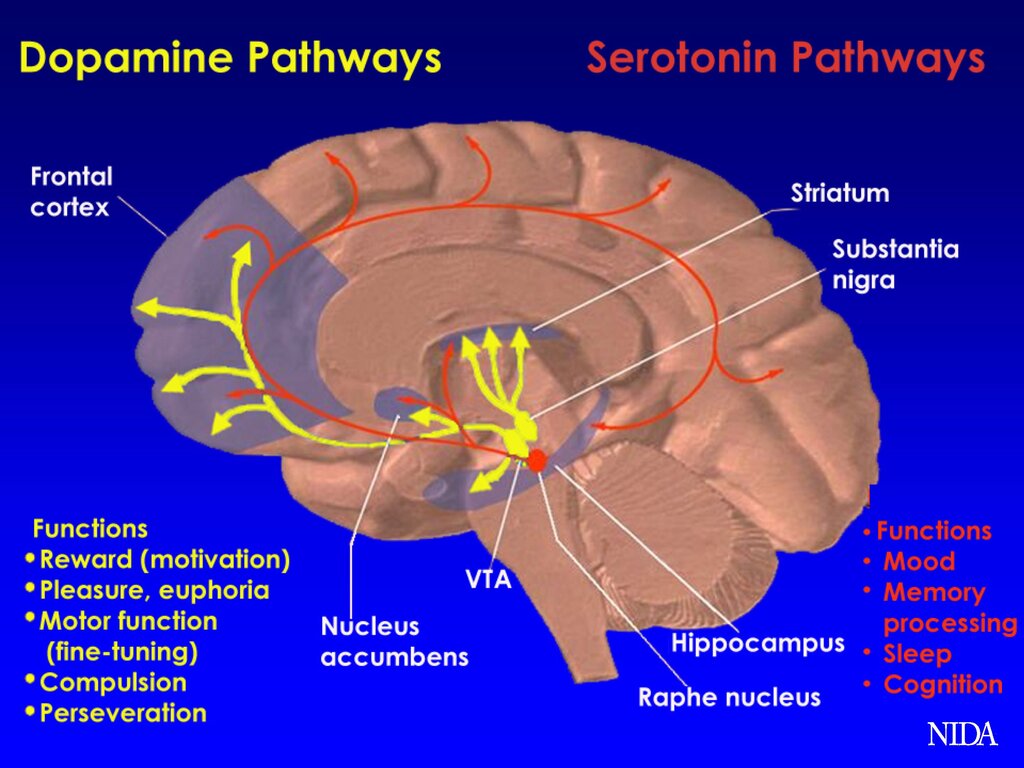
Beyond the nervous system's wiring, a cocktail of hormones and neurotransmitters fine-tunes the sexual response. Dopamine is a key player in the desire phase. It's a neurotransmitter associated with the brain's reward and pleasure centres. Its release creates a feeling of motivation and reinforces behaviours the brain finds rewarding, encouraging us to seek out sexual experiences.
Oxytocin, often called the "cuddle hormone," is released in large amounts during orgasm. It plays a significant role in social bonding and intimacy. Its release contributes to the feelings of closeness and attachment after sex. Other chemicals are also involved; for instance, norepinephrine contributes to the heightened alertness of arousal, while serotonin can sometimes have an inhibitory effect on sexual function.
So, while the experience of sexual arousal feels personal and unique, it's orchestrated by a predictable and elegant interplay of our nervous system, muscles, blood flow, and brain chemistry.
Which physiological process is primarily responsible for causing the erection of the penis and the swelling of the clitoris during sexual arousal?
Helen Singer Kaplan's triphasic model added which crucial psychological stage to the beginning of the sexual response cycle?