Advanced Foundations of Exoplanet Science
Detection Methodology Biases
The Searchlight and the Keys
Imagine losing your keys in a park at night. You start searching under the only working streetlight. It’s the most logical place to look, but it doesn't mean your keys are actually there. Finding them under the light tells you something about where you looked, not necessarily where all the keys in the park might be.
Astronomers face a similar problem when hunting for exoplanets. Our detection methods are like that streetlight. They are powerful, but they illuminate only certain types of planetary systems well. This creates observational biases, meaning our current catalog of exoplanets is not a complete or random sample of what's out there. Instead, it’s a reflection of the planets that are easiest for our current technology to find.
The Transit Method's Alignment Problem
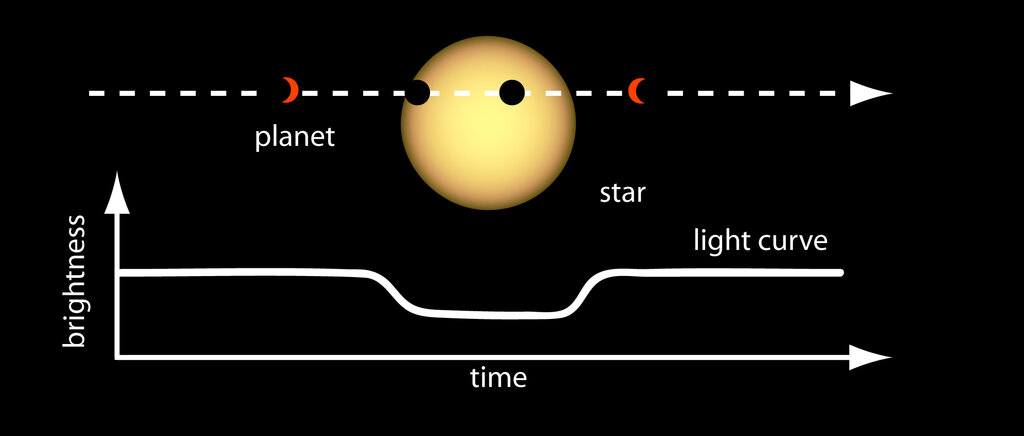
The transit method, which looks for the dimming of starlight as a planet passes in front of its star, has a major geometric bias. For a transit to be visible from Earth, the planet's orbit must be aligned almost perfectly edge-on with our line of sight. If the orbit is even slightly tilted, the planet will pass above or below its star from our perspective, and we'll never see it transit. This means we miss the vast majority of planets that exist.
The probability of this alignment occurring is higher for planets that orbit very close to their star. A planet in a tight, short-period orbit has a better chance of crossing our line of sight than one in a wide, long-period orbit. The relationship is straightforward:
This simple formula reveals a profound bias: we are much more likely to find planets that hug their stars. Furthermore, the transit method is more sensitive to larger planets, as they block more starlight and create a deeper, more obvious dip in brightness. A Jupiter-sized planet creates a much clearer signal than an Earth-sized one. Missions like NASA's space telescope have discovered thousands of planets, but their findings are heavily weighted toward large planets in short-period orbits due to these inherent limitations.
The Gravitational Tug-of-War
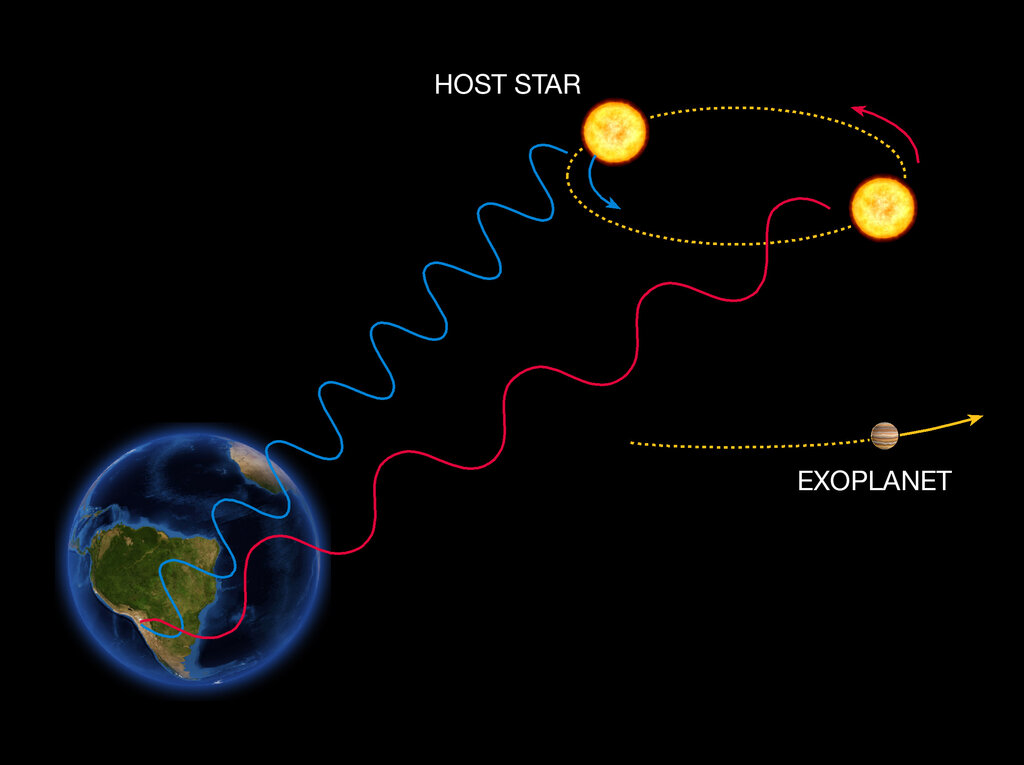
The radial velocity method detects the slight wobble a star experiences as it's pulled on by an orbiting planet's gravity. The magnitude of this wobble, and thus our ability to detect it, depends on two key factors: the planet’s mass and its distance from the star. A more massive planet exerts a stronger gravitational pull, causing a larger and faster wobble. Similarly, a planet that is closer to its star completes its orbit more quickly and yanks the star around more forcefully.
This relationship introduces a strong bias toward finding massive planets in tight orbits. It's much easier to spot a star being tugged by a giant planet than by a small, rocky one. This bias is the primary reason why the first exoplanets discovered were so-called —massive, Jupiter-like gas giants orbiting their stars in a matter of days. Their existence challenged our early theories of planet formation, which were based solely on our own solar system. While we now know smaller planets are more common, the hot Jupiters were simply the first ones we had the tools to see.
The Quest for Earth 2.0
Both the transit and radial velocity methods are fundamentally challenged when it comes to finding true Earth analogs: small, rocky planets in wide, temperate orbits. An Earth-sized planet transiting a Sun-like star causes a brightness dip of less than 0.01%. An Earth-like planet also induces a wobble of only about 9 cm/s on our Sun—a speed comparable to a slow walking pace and incredibly difficult to measure across interstellar distances.
Because of these selection effects, our current census of exoplanets is incomplete. We have found thousands of hot Jupiters and super-Earths in close orbits, not necessarily because they are the most common type of planet, but because they are the easiest to find with our current streetlights. Understanding these biases is the first step toward correcting for them and building a more accurate picture of the galaxy's planetary population.
The 'streetlight effect' is used as an analogy to explain observational bias in exoplanet hunting. What does the area illuminated by the streetlight represent?
The transit method has a major geometric bias. Why does this method fail to detect the vast majority of planets?