Advanced Floral Cupcake Artistry
Stiff Buttercream Chemistry
The Science of Stiff Buttercream
Standard buttercream is great for filling a cake or creating simple swirls, but for delicate, gravity-defying decorations like piped flowers, you need something with more structural integrity. This is where the chemistry of frosting comes into play. The key to a buttercream that can hold intricate shapes lies in carefully managing the ratio of fat to sugar and understanding how different fats behave at a molecular level.
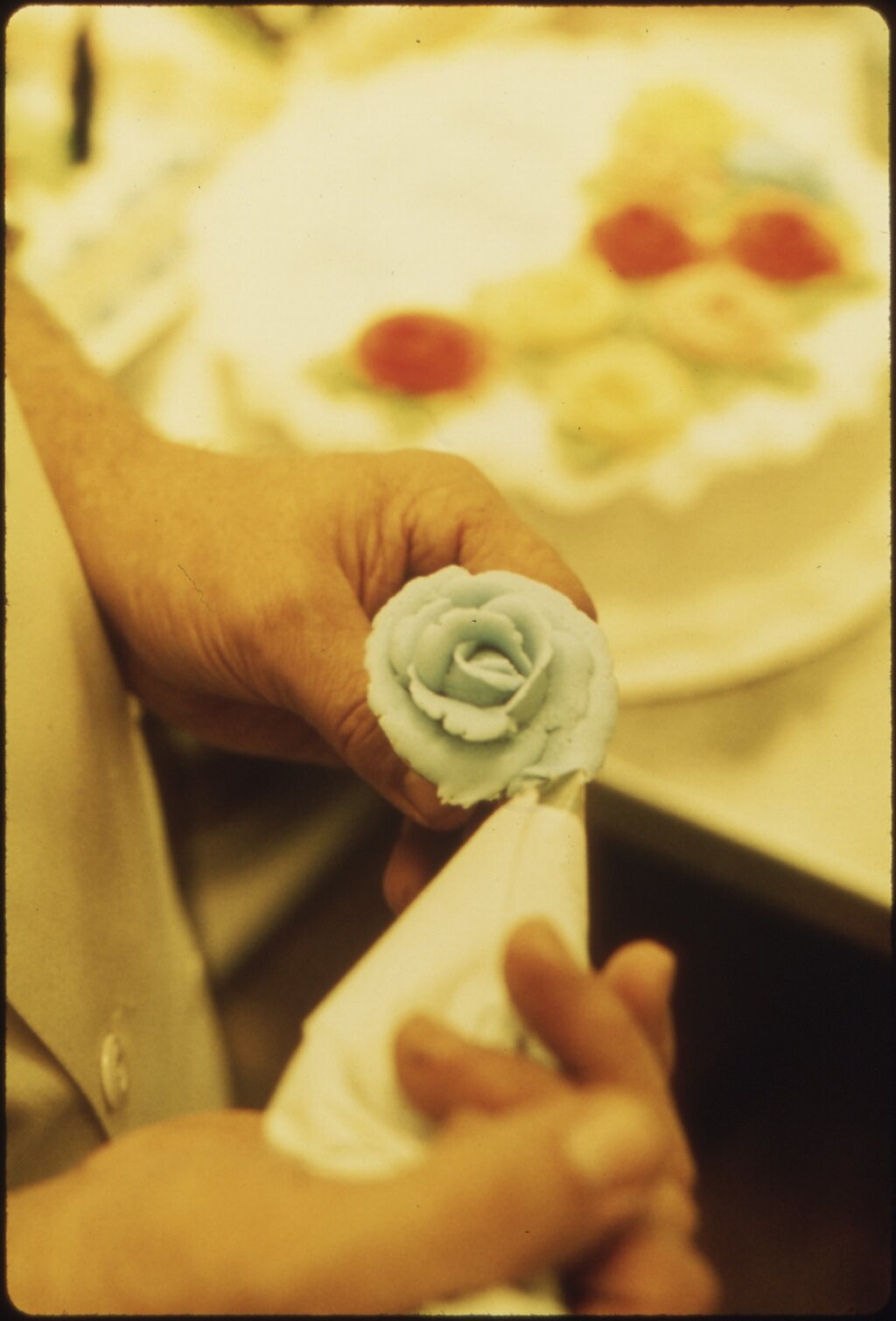
Building with Fat and Sugar
Think of stiff buttercream as a construction material. In this analogy, sugar is the aggregate—the bricks and mortar that create the solid structure. Fat, on the other hand, is the binding agent that provides smoothness and workability. The more sugar you have relative to fat, the denser and stiffer the final product will be. This is why frostings designed for piping flowers have a much higher sugar content than a simple cake filling.
A higher sugar-to-fat ratio creates a 'crusting' buttercream. The surface dries to a firm, non-sticky shell, protecting the soft interior and preserving fine details.
This balance is a trade-off. While more sugar adds stability, it also increases sweetness and can result in a gritty texture if not mixed properly. The goal is to find the sweet spot where the icing is strong enough to hold its shape but still pleasant to eat and smooth enough to pipe.
The Shortening Showdown
Not all fats are created equal. Butter offers unmatched flavor but has two major drawbacks for structural work: it contains water (typically 15-20%) and has a low melting point. The water can weaken the sugar structure, and the fat will soften quickly from the heat of your hands as you pipe.
This is where becomes essential. Unlike butter, it is 100% fat and was engineered specifically for baking. It has a higher melting point, making it far more resistant to heat and handling. Crucially, it contains emulsifiers, which help to bind ingredients together, resulting in an exceptionally smooth and stable frosting that resists breaking or separating.
High ratio shortening also provides excellent stability in high-temperature environments, ensuring that buttercreams and fillings remain consistent without breaking down.
For the best of both worlds, many decorators use a mix of butter for flavor and high-ratio shortening for stability. A common starting point for floral buttercream is a 50/50 blend.
Achieving the Stiff Peak
Even with the perfect recipe, technique and temperature are everything. The ideal consistency for piping flowers is known as a ''. This means that when you pull a spatula or beater away from the buttercream, the peak that forms holds its shape completely without curling over.
To achieve this, add powdered sugar to your fat mixture gradually. If your buttercream becomes too stiff, you can thin it with a tiny amount of milk or water. If it's too soft, add more powdered sugar. Always make adjustments in small increments.
Temperature is your final control. If your buttercream becomes too soft while you're working, refrigerate it for 10-15 minutes. If it's too firm, let it sit at room temperature or knead the piping bag with your hands to warm it up.
With these principles in mind, you can move beyond basic recipes and start manipulating your buttercream to achieve the exact properties needed for any design, from the most delicate peony petal to the sharpest architectural detail.
Ready to test your knowledge on buttercream chemistry?
In the chemistry of buttercream, what is the primary role of sugar?
Why is high-ratio shortening often preferred over butter for piping decorations that need to hold their shape?