Advanced First Principles Thinking
Deconstructing Mental Maps
Deconstructing Your Mental Maps
To solve a truly complex problem, you can't just refine existing solutions. You must first dismantle the way you think about the problem itself. This process isn't about redefining terms; it's about systematically taking apart your own understanding until you're left with only the most fundamental truths.
The philosopher René Descartes pioneered a method for this called Cartesian Doubt. His approach was to treat any belief that could be doubted as if it were false. He wanted to strip away every inherited idea, every assumption, and every analogy until he found propositions that were impossible to question. These unshakable truths would be the foundation upon which he could rebuild knowledge with certainty.
Think of it like demolishing a building. You don't just paint over the cracks; you take it down to the bedrock before constructing something new and more robust.
Interrupting Your Brain's Autopilot
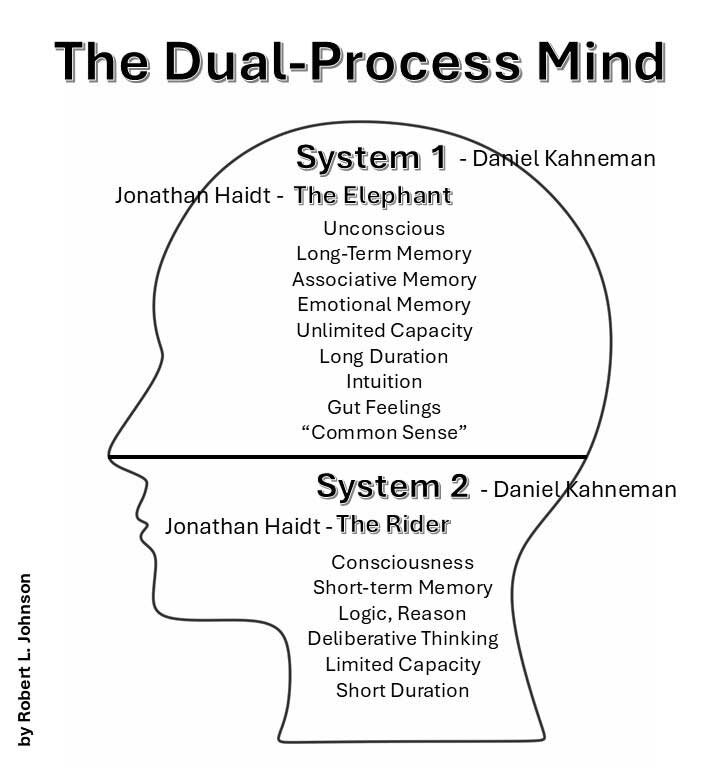
Our brains are wired for efficiency, not for first principles thinking. To navigate daily life, we rely on mental shortcuts and analogies. This heuristic bias is incredibly useful for making quick decisions with incomplete information. If something looks like a duck and quacks like a duck, we assume it's a duck without running a full biological analysis.
But for complex challenges in fields like engineering or social systems, this reliance on patterns becomes a weakness. We default to 'the way it's always been done' and fail to see novel solutions. The key is to consciously interrupt this autopilot. When faced with a multi-layered problem, you must actively question the analogies and assumptions your brain automatically serves up.
A practical tool for this deconstruction is the use of 'Semantic Trees'. This technique involves mapping a concept from its general definition down to its constituent parts, questioning the connections at every level. This process helps you separate what a thing is from what you assume it is.
Using this method, we can distinguish between different kinds of assumptions. A semantic assumption is about meaning. For a university, you might assume 'students' means young adults fresh out of secondary school. A structural assumption is about how things work. You might assume a 'campus' must be a physical location with buildings. By questioning these, you open up possibilities: what if students are professionals in their 50s? What if the campus is entirely virtual? This is how you move from 'what is' to 'what is possible'.
Isolating the Axioms
The ultimate goal of this deconstruction is to isolate the of the problem. These are the foundational truths that cannot be deduced from anything else; they are the truly immutable constraints. In physics, this might be the law of gravity. In logic, it's a statement that is taken to be true to serve as a premise for further reasoning.
Everything that is not an axiom is an assumption, and every assumption is a candidate for innovation. By stripping away layers of convention, analogy, and inherited knowledge, you expose the raw materials of your problem. Only then can you begin to reason up from these first principles to build something truly new.
What is the primary goal of applying Cartesian Doubt to a problem?
A car company has always built cars with four wheels and a petrol engine because 'that's what a car is'. Questioning these two core features is an example of dismantling what kind of assumptions, respectively?